AI Agents in Identity Verification
Are Not a Future Scenario

AI agents are becoming a practical challenge for identity verification — not because every AI-assisted interaction is fraudulent, but because identity systems were built around a core assumption: that a real person is present and acting directly. As automated and AI-assisted activity enters onboarding, login, recovery, support, and transaction flows, that assumption becomes harder to prove. Some interactions may support legitimate users; others may be used to scale fraud, manipulate identity evidence, or make separate signals look trustworthy in isolation.
This report explores how organizations are adapting to that shift. The survey data shows that many businesses already have identity checks in place, but the harder question is whether those checks can still provide assurance in an AI-driven environment: Is the document authentic? Was the biometric captured live? Do the document, face, device, and session belong together? And can the organization reconstruct and explain the decision when it is challenged?
This report explores how organizations are adapting to that shift. The survey data shows that many businesses already have identity checks in place, but the harder question is whether those checks can still provide assurance in an AI-driven environment: Is the document authentic? Was the biometric captured live? Do the document, face, device, and session belong together? And can the organization reconstruct and explain the decision when it is challenged?
Report Highlights
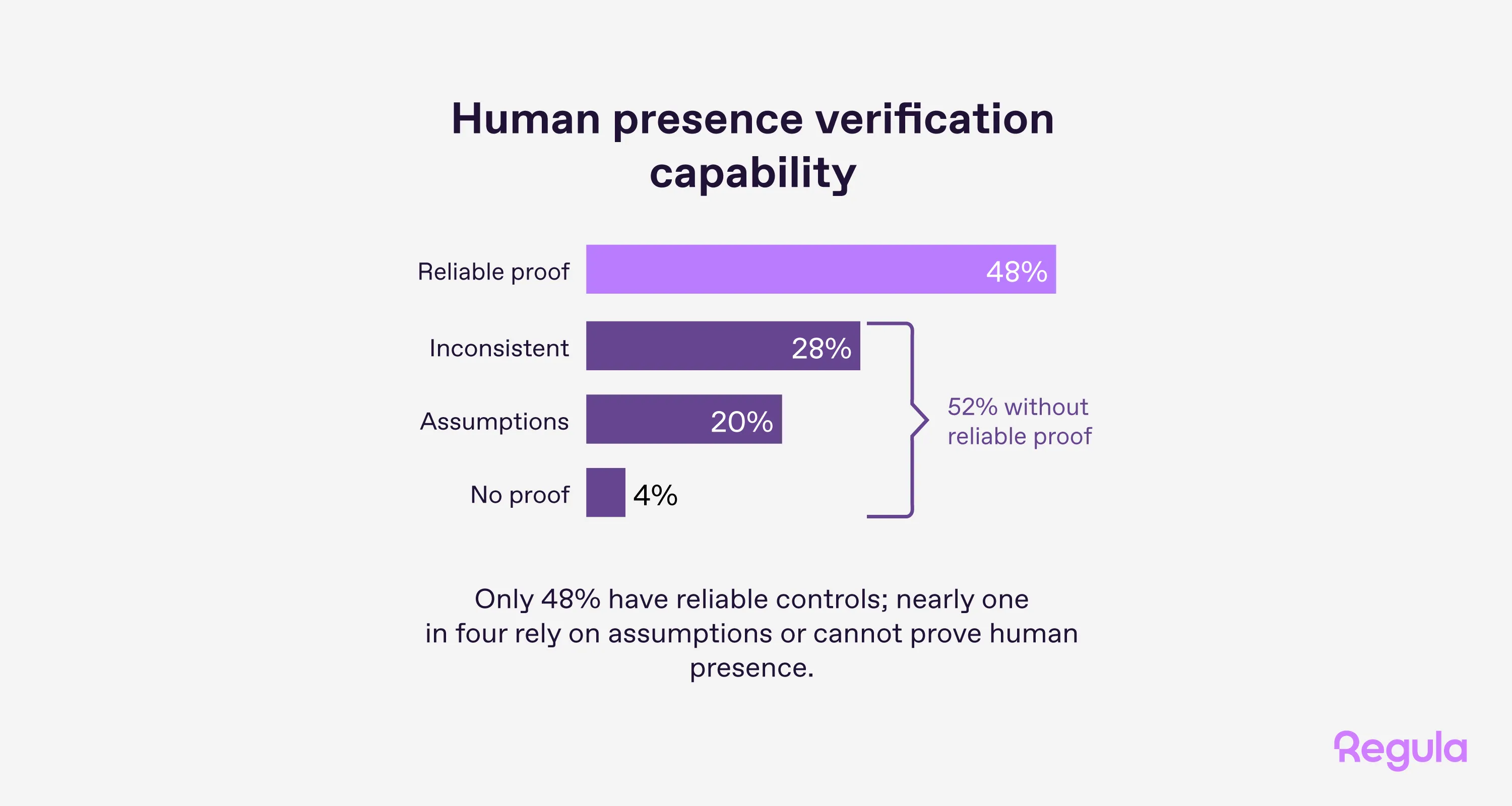
48%
consider their human presence controls reliable
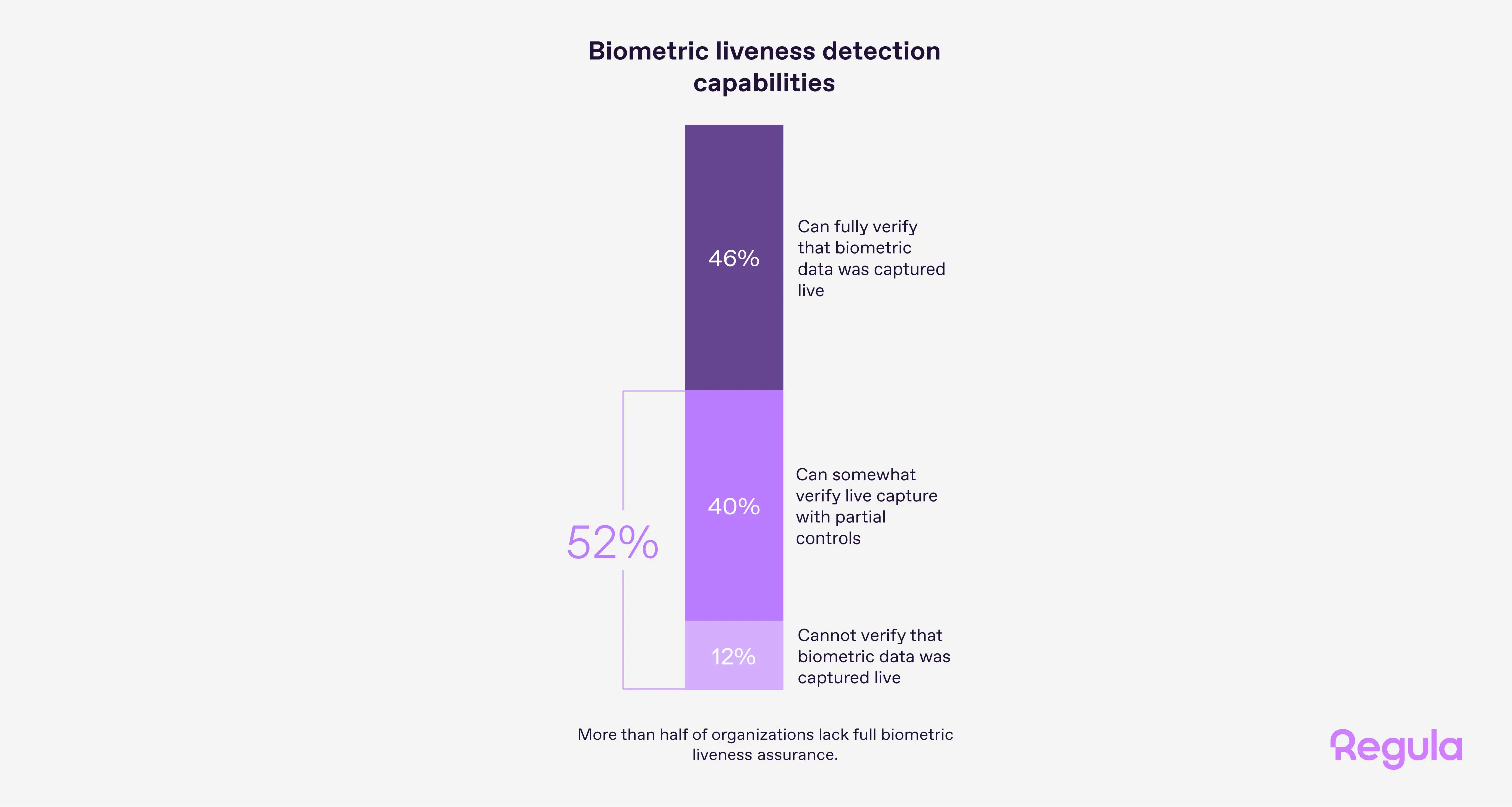
52%
cannot always prove the biometric was captured live
41%
cannot always detect tampered identity data
50%
can fully explain how an identity decision was made
82%
have had to justify identity decisions externally
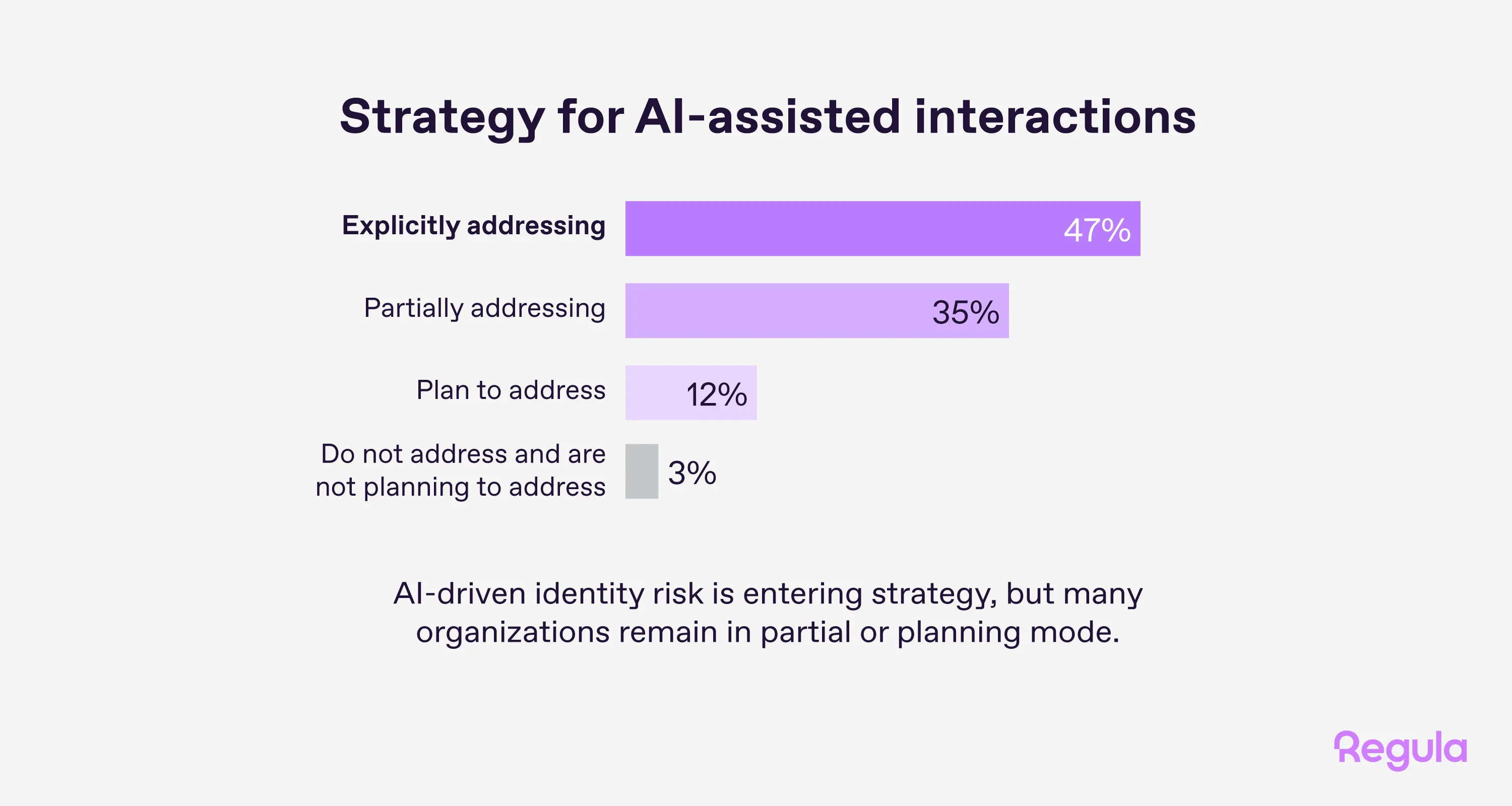
47%
explicitly address AI-assisted interactions in their identity strategy
See where your market and industry stand
Explore web versionThe full report includes country-level benchmarks across the UK, US, Germany, Singapore, UAE, Brazil, and Mexico — with industry breakdowns, AI activity trends, visibility gap data, and operational readiness findings across six sectors.
.webp)
.webp)
.webp)