
Report Highlights

The Rules of Identity Verification
Have Changed
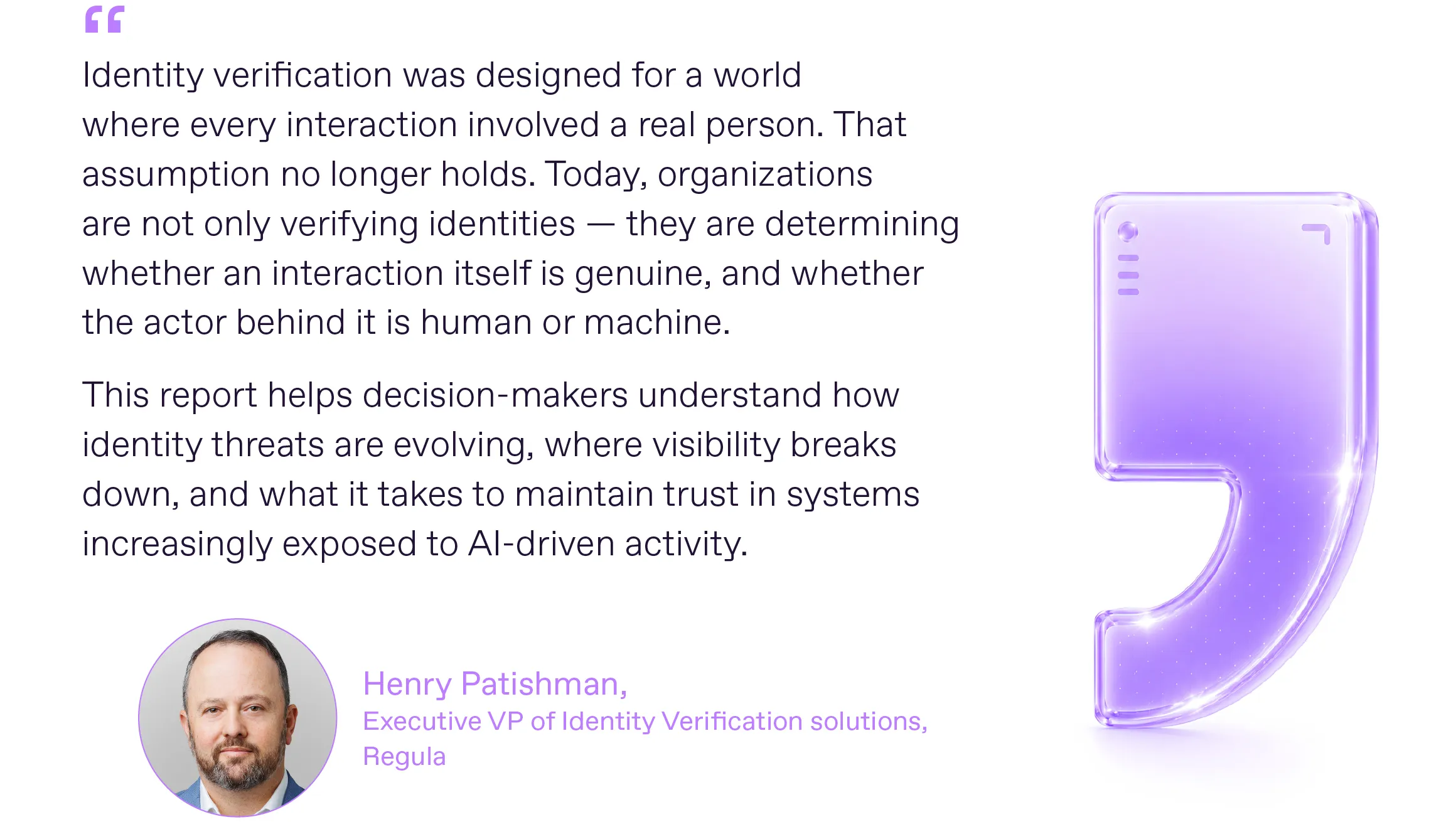
That assumption no longer holds.
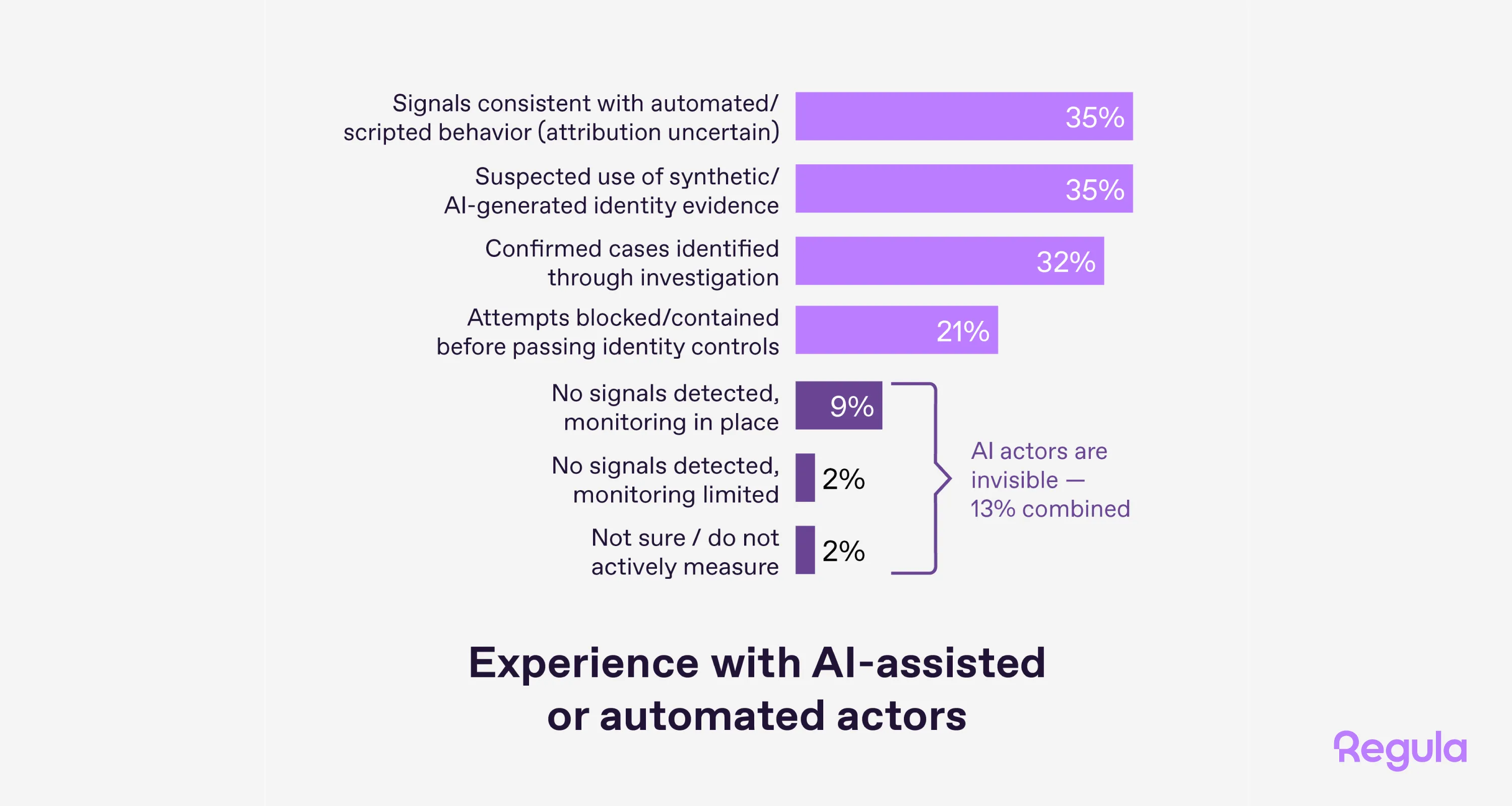
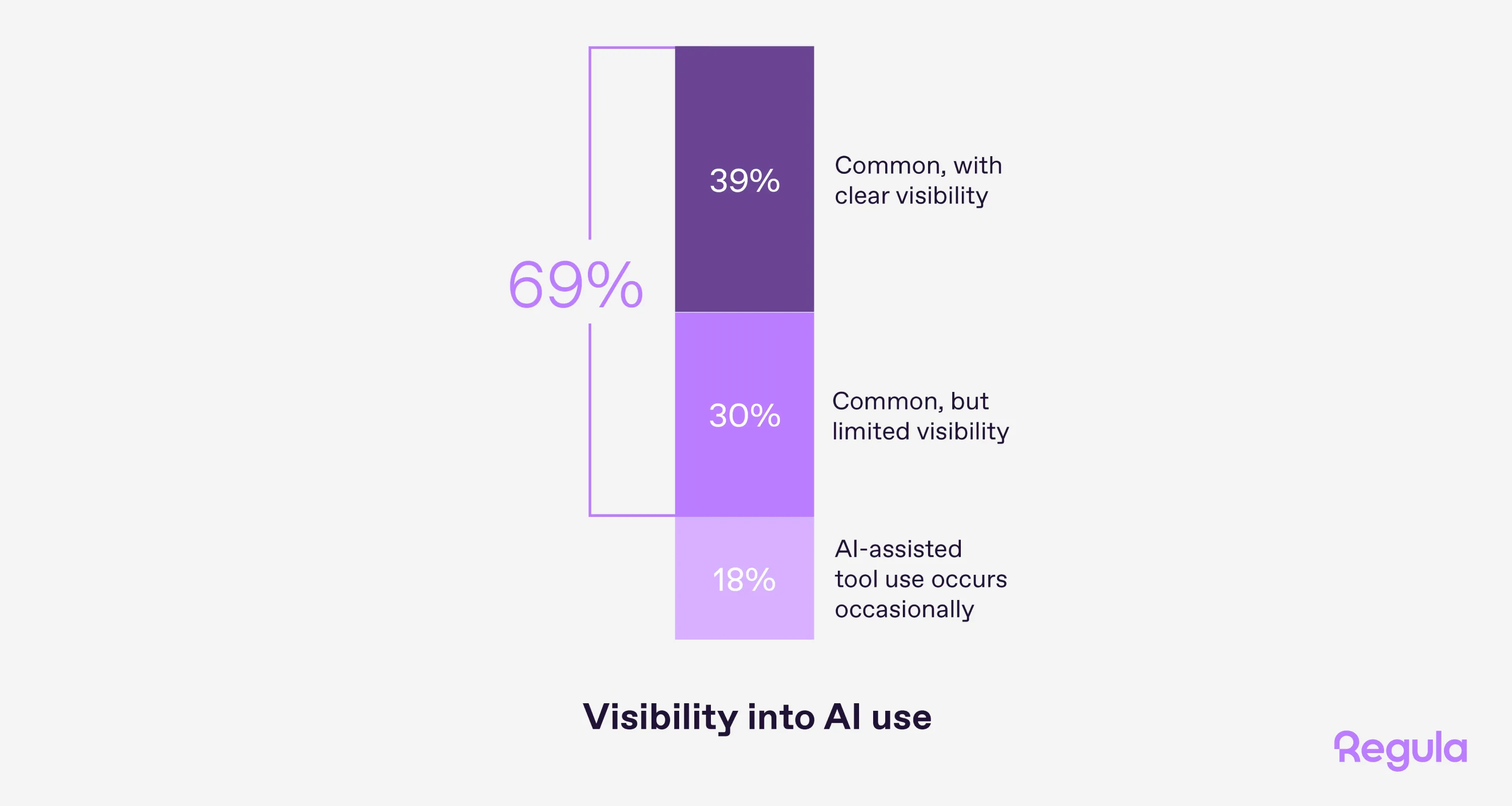
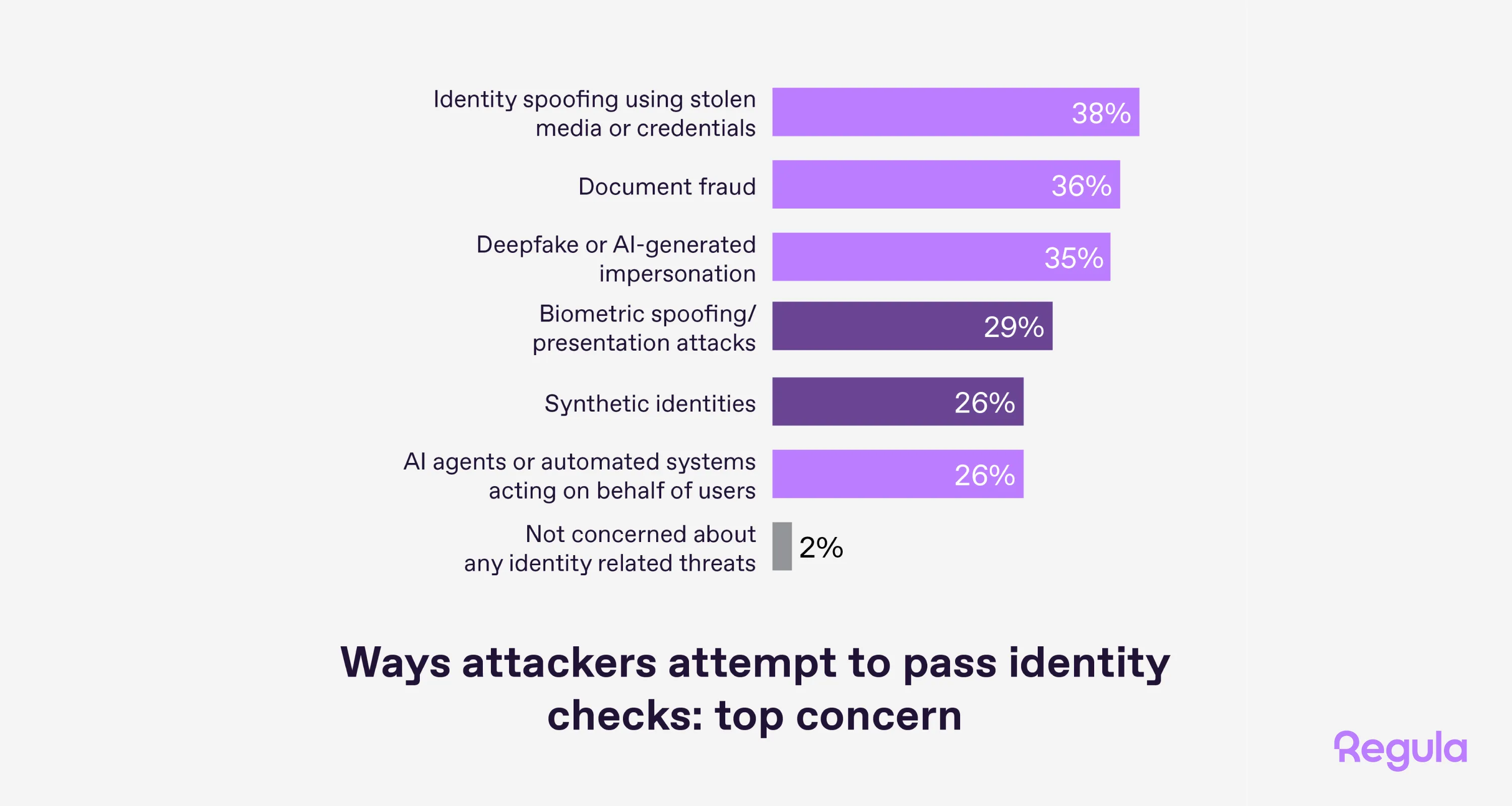
Across seven major markets, fraud and financial crime teams are reporting the same pattern: AI-assisted tools, synthetic identity evidence, and automated actors are already interacting with onboarding flows, authentication systems, and account recovery processes. The threat has moved beyond fake documents and manipulated selfies — organizations now face a harder question: do your identity signals still represent a real, accountable human?
Industry Insights
Financial Services & Banking
Deepfakes, identity spoofing, and AI-assisted onboarding attacks are increasing pressure on fraud prevention and customer verification. Financial institutions increasingly face synthetic identity activity and non-human behavior inside identity systems.
Government
Remote citizen verification and digital public services continue to create fraud and trust challenges. Government organizations show elevated concern around document fraud and identity spoofing, while AI-driven threats are emerging unevenly.
Telecom
SIM registration, account recovery, and remote customer verification remain persistent attack surfaces. Telecom providers increasingly encounter automated onboarding attempts, credential-based identity abuse, and AI-assisted activity.
Gaming & Gambling
High-velocity onboarding and account abuse are making identity spoofing and synthetic impersonation growing operational risks. Gaming and gambling organizations report particularly elevated concern around deepfake-enabled fraud.
See where your market and industry stand
Explore web versionThe full report includes country-level benchmarks across the UK, US, Germany, Singapore, UAE, Brazil, and Mexico — with industry breakdowns, AI activity trends, visibility gap data, and operational readiness findings across six sectors.
.webp)
.webp)
.webp)