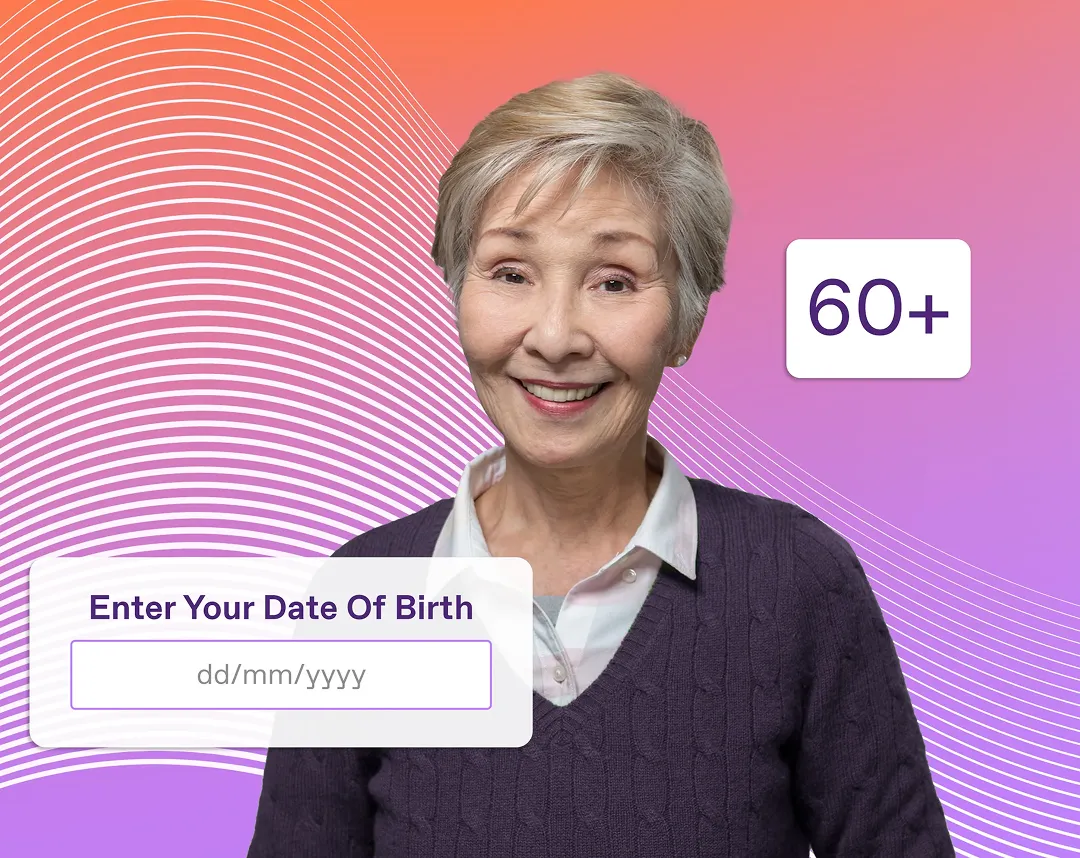
Verify Age Without Adding Friction
Verify age online with age estimation, ID scanning, and biometrics — while keeping UX fast and compliance under control.
.webp)
.webp)
.webp)
.webp)
Compliance risk in numbers
Age-restricted businesses face growing pressure to protect minors, verify age reliably, and prove compliance across markets.
But stronger compliance does not have to mean more friction for every user. The key is to apply the right level of age assurance for each journey — from a quick selfie-based age estimate to stronger ID and biometric checks when risk is higher.
- 10%
- of qualifying worldwide revenue or £18M under the UK Online Safety
- 6%
- of global annual turnover per violation across EU member states
- $53K
- FTC enforcement — per child, per violation no revenue cap
Age Verification Scenarios
Different age-restricted journeys require different levels of assurance. Regula helps businesses combine age estimation, age verification, and step-up checks to match user risk, compliance requirements, and UX goals.
Choose the Right Age Verification Flow
Use Regula when customer identity is granted, restored, challenged, or reviewed.
| Priority | Recommended flow | |
|---|---|---|

|
Fast access with minimal friction |
Selfie age estimationGives a quick age signal without asking every user to scan an ID. |
|
Proof of date of birth |
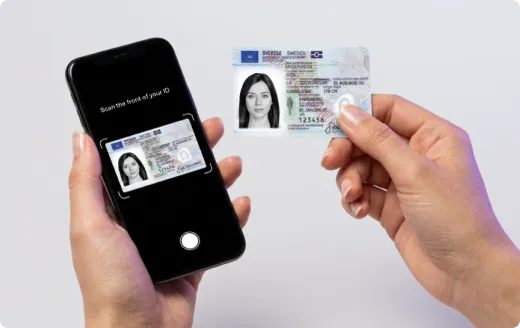
ID-based age verificationConfirms age from an identity document and supports stronger compliance needs. |

|
Fraud-resistant onboarding |
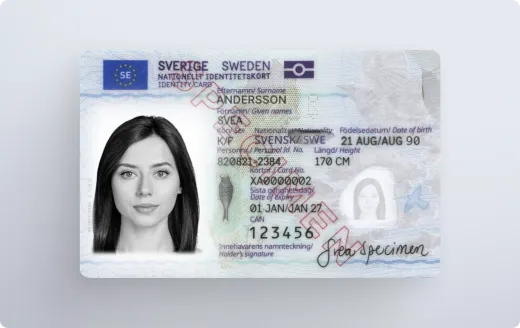
ID + biometrics + livenessConfirms that the document is authentic and belongs to the real person present. |
|
Balance conversion and compliance |
Step-up age assuranceStarts with a lighter check and triggers ID verification only when risk is higher. |

- #1 in NIST
- top result across multiple demographic groups
- 16,500+
- supported ID templates
- 254
- countries and territories

Try Regula Age Verification in Action
Take a selfie and see how Regula estimates age in seconds. This demo shows how age estimation can support fast, privacy-friendly online age verification without asking every user to scan an ID.
Why Basic Age Gates Are Not Enough
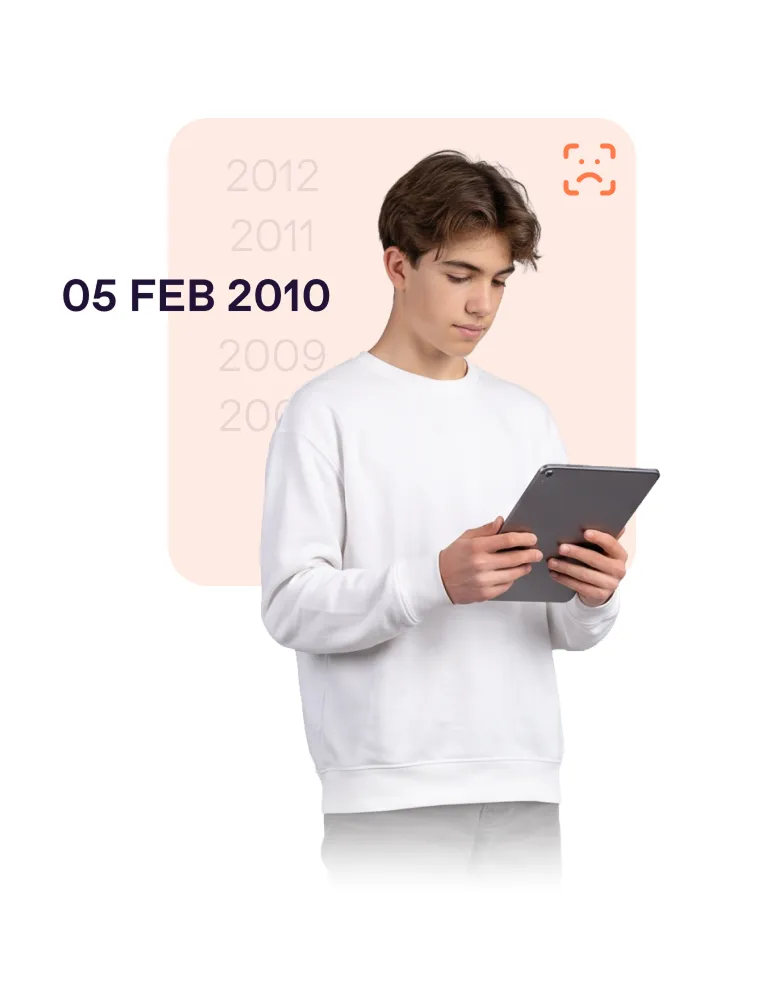
A checkbox or date-of-birth field is easy to bypass. Businesses need to protect minors, prevent fraud, meet regulatory requirements, and keep the user experience smooth.
-
Prevent underage access to restricted products, services, and content.
-
Reduce manual review and operational costs.
-
Detect fake, borrowed, expired, or manipulated identity documents.
-
Apply step-up checks only when the risk is higher.
-
Support online age verification across web and mobile channels.











As part of our strategy to fully digitize the airline, we aim to provide a seamless travel process for our guests. The digital and contactless procedure, which includes online check-in anywhere, anytime with a mere click of a button, is a strong way to restore confidence in air travel. The solution provided by Regula greatly complements our overall vision to become a leading travel and lifestyle super app and our transformation strategy to automate across all key customer touch points.
We used Regula to support us in the challenging task of migrating thousands of our customers to the new network. The tool was very reliable and delivered as per the expectations. We are using Regula SDK for activating new customers, network portability, sim change, and many other operations. Our team is relying on the Regula tool in many of our processes and this has resulted in disabling the manual editing of the readings since it is not required anymore.
SEF Mobile has become an essential tool to increase the efficiency and safety of SEF inspectors on the various land border posts. Simply and instantly, it allows the gathering and validation of a set of data from several identifying documents, without the need for physical contact between said documents and the inspectors.
Regula’s invaluable expertise and know-how play a key part at LCX to prevent identity document fraud and deliver a frictionless customer experience.
Regula SDK is a cornerstone of this project. It makes travelling easier for passengers, increasing their loyalty and satisfaction. It helps us avoid errors associated with manual typing of personal data. It simplifies a number of vital procedures that the company is now revising.
Regula Document Reader SDK lies at the core of Luciditi platform – it is responsible for fast and convenient remote user onboarding and reverification, in case an ID is expired or replaced. We are truly satisfied with the Regula solution. Our market research showed that it’s the most comprehensive ID verification technology for our requirements, which gives us the needed level of assurance of our own product quality.
For flagship events like MWC Barcelona, the GSMA looks for cutting edge solutions to not only show technology at its best, but also to support their event security requirements. Regula offers an effective ID reading solution that allows GSMA to be more efficient and supports the improvement of the overall customer experience.
Regula appeared to be the best solution for Freedom Finance Insurance needs. The solution helps to eliminate typos and decreases document processing time. Service support is prompt and accurate.
We pride ourselves on operating to the highest standards around test security. One of the challenges we faced was designing an efficient process to validate IDs as authentic and valid – no matter which country in the world they come from. Regula’s technology offers global coverage and fast verification of government-issued identification documents. With Regula, not only have we enhanced our fraud prevention process, but we continue to offer a consistent candidate experience.
At Pegasus Airlines our number one priority is to ensure our passengers have the very best customer experience. Working with Regula and their understanding of this market, coupled with their software knowledge helps us to achieve this from the 1st step of the passenger’s journey.
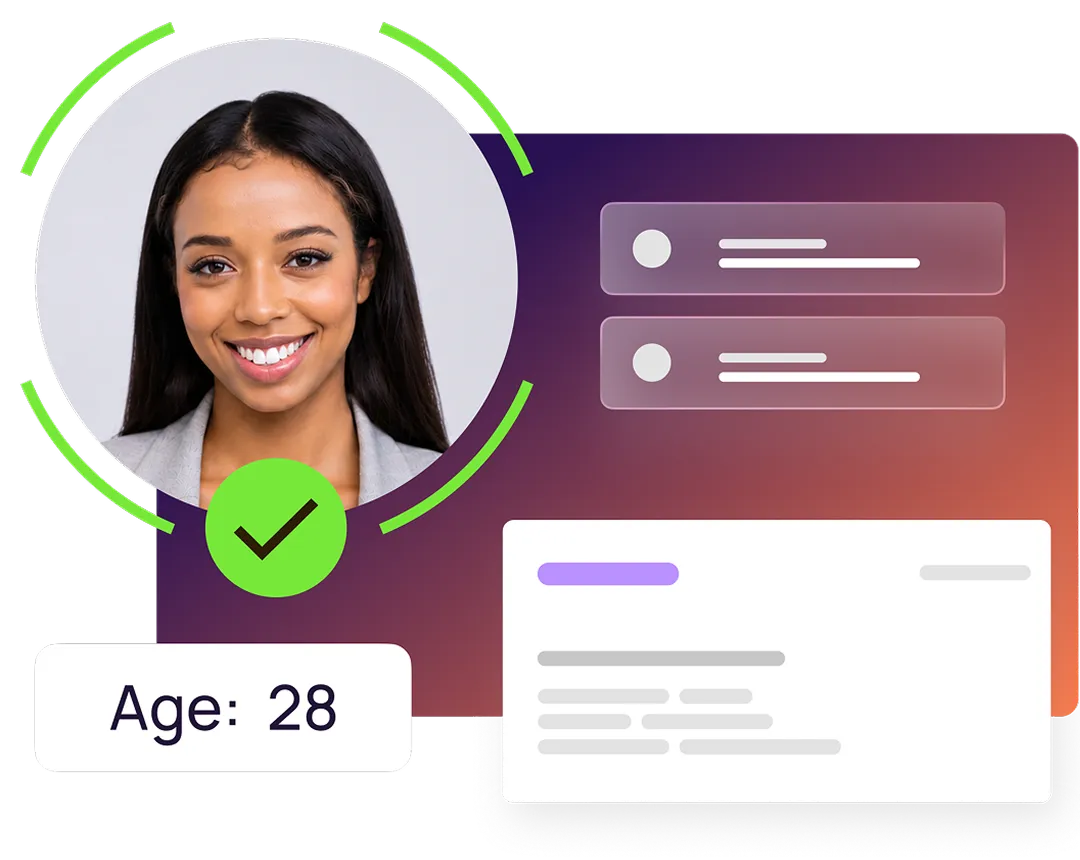
Ready to build a safer age-restricted journey?
See how Regula helps protect minors, reduce fraud, and keep verification fast across web and mobile channels.
Industries and Use Cases
FAQ
What is age verification?
Age verification is one of the methods used in age assurance. It confirms a person’s age or date of birth using reliable evidence, such as an identity document or verified digital identity data.
Age assurance is a broader concept. It refers to the set of processes and methods used to verify, estimate, or infer a person’s age or age range, so organizations can make age-related eligibility decisions with different levels of certainty.
Depending on the scenario, age assurance may include:
- age verification, based on evidence such as an ID document;
- age estimation, based on signals such as a selfie;
- age inference, based on already verified information or account data.
Regula helps businesses choose the right age assurance flow for each use case — from simple selfie-based age estimation to ID-based age verification and stronger workflows with biometrics, liveness detection, and document authenticity checks.
How does age verification work?
Age verification confirms whether a user meets a required age threshold. Regula can estimate age from a selfie, extract date of birth from an identity document, verify document authenticity, and match the user to the ID portrait.
Who is age verification best for?
Age verification is best for businesses that need to verify users against specific age thresholds, protect minors, meet regulatory requirements, and keep the user experience fast.
Regula is especially useful for businesses that need to:
- verify users aged 13+, 15+, 18+, 21+, 25+, or another custom threshold;
- protect minors from age-restricted content, products, or services;
- meet regional age assurance and identity verification requirements;
- reduce document collection when a selfie-based check is enough;
- trigger stronger ID verification only for higher-risk or near-threshold users.
Which industries need age verification checks?
Age verification is used in social media, gaming, gambling, alcohol and tobacco e-commerce, adult content, fintech, telecom, delivery, events, travel, and hospitality.
What is the difference between age verification and age estimation?
Age estimation predicts a likely age from a selfie. Age verification confirms age using a stronger signal, such as an identity document. Many businesses use both in a step-up workflow.
Can users verify age without scanning an ID?
Yes. For some use cases, selfie-based age estimation can confirm whether a user is likely above or below the required threshold without collecting an ID document from every user.
What age verification methods does Regula support?
Regula supports age estimation, ID scanning, document authenticity checks, face matching, liveness detection, and configurable step-up workflows.
Can Regula be deployed on-prem?
Yes. Regula supports flexible deployment options, including cloud, hybrid, Docker, SDK, API, mobile, web, desktop, and on-prem environments.
How does Regula protect user privacy?
Regula can reduce unnecessary document collection through selfie-based age estimation and supports deployment models that help businesses control sensitive data handling.
Are there regulations related to age verification?
Yes. Age verification is becoming a regulatory requirement in many markets, especially for online safety, adult content, gambling, alcohol and tobacco sales, social media, gaming, fintech, and other age-restricted services.
Examples include the UK Online Safety Act, EU Digital Services Act guidelines for the protection of minors, France’s SREN Law and ARCOM age verification guidelines, and Australia’s Social Media Minimum Age framework for under-16 users. Requirements vary by country, industry, product, and risk level, so businesses need configurable age verification workflows that can support different age thresholds and assurance levels.
More on the Topic
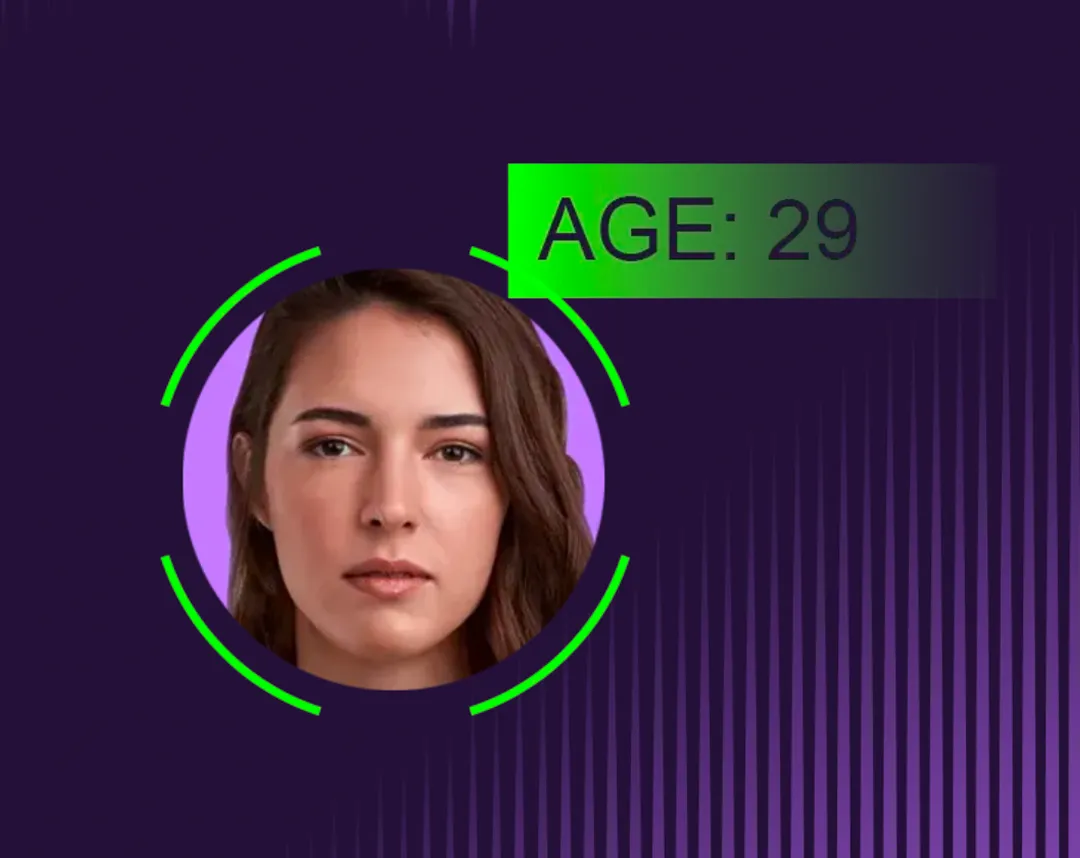
Age Verification Explained: Key Terms, Rules, Risks, and How to Get It Right
How Age Verification Solutions Fit Into a Modern IDV System
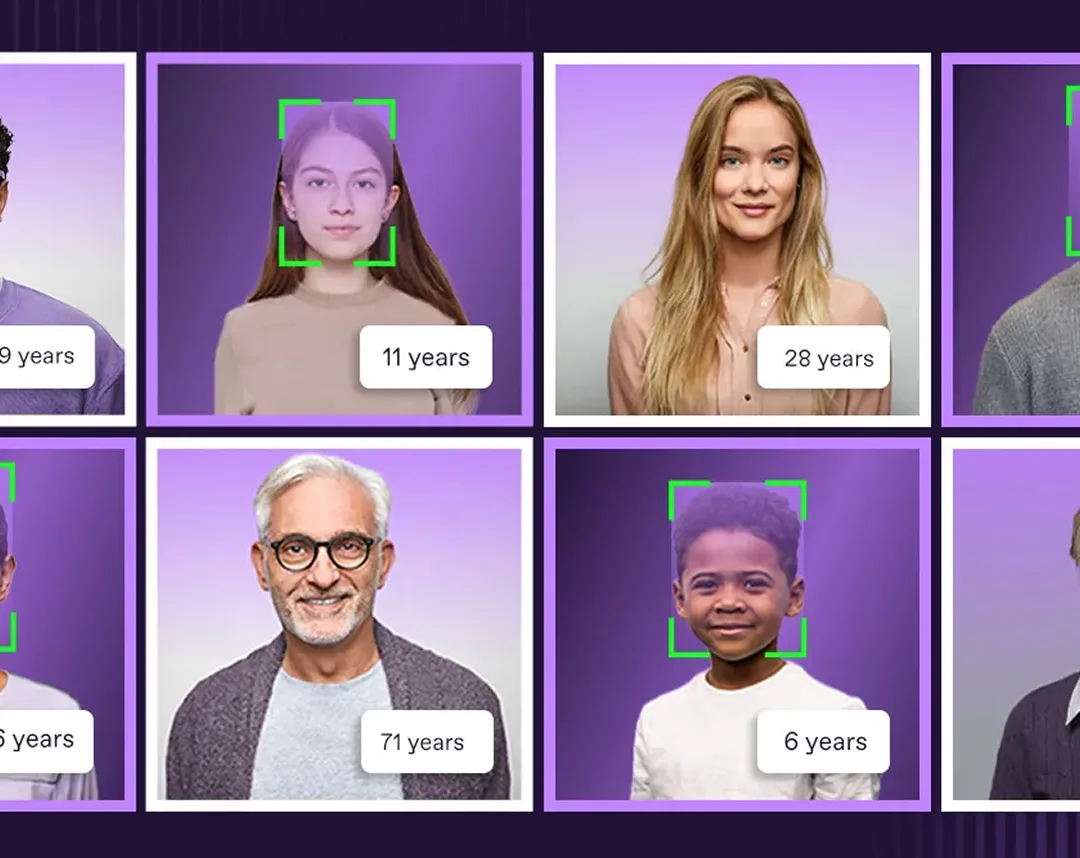
Regula Hits NIST Test: The Only Vendor Recognized Among Top Performers in All Critical Age Estimation Scenarios