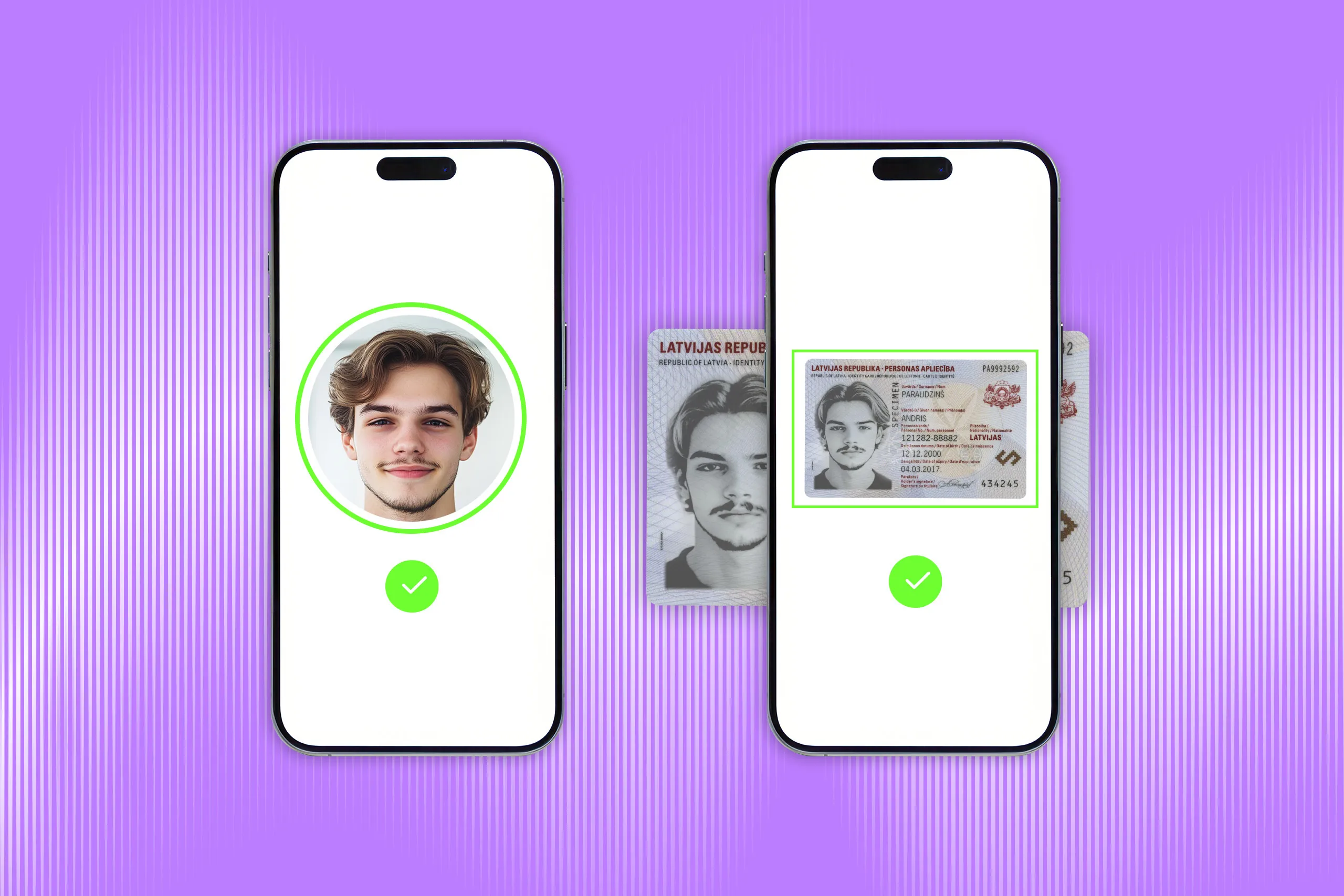

A few years ago, while working as a Product Manager responsible for an enterprise document-to-selfie identity verification application, I reviewed hundreds of thousands of transactions under appropriate security, privacy, and operational controls to understand how the facial biometric algorithm was performing in the real world.
In some fraud cases, the face match worked exactly as expected. The selfie matched the face on the identity document.
But the identity document itself was fake, manipulated, or not tied to the real-world identity of the person behind the application.
That experience taught me an important lesson: biometrics can confirm that two biometric samples match, but it cannot, by itself, prove the true identity of a person.
This is one of the biggest misconceptions about biometrics. Many organizations assume that adding a face match automatically strengthens identity. In reality, biometrics is only one signal in a broader trust framework. To establish stronger identity confidence, it must work alongside document validation, device intelligence, phone and email risk, behavioral signals, fraud history, and other contextual data.
Subscribe to receive a bi-weekly blog digest from Regula
Misconception 1: Biometrics can reveal true identity by itself
Facial biometrics can answer a specific question: Does this face match another face?
It cannot fully answer: Is this a real, legitimate person with a trustworthy identity?
In practical impersonation attacks, the biometric system may still work as designed, but the context around the biometric sample may be misleading. I remember one case where the submitted selfie appeared to show a man taking a picture of his wife or girlfriend while she was sleeping next to him. It was her application for opening an account, but the biometric capture did not represent an intentional, informed, live participation by the applicant. It may very well be an impersonation attack.
This is an important distinction. A face may match, but that does not always mean the right person is knowingly participating in the journey.
Similarly, if the identity document is synthetic, stolen, altered, or fraudulently obtained, a successful face match may only confirm that the same person is connected to compromised identity evidence.
This is why biometrics should not be treated as a stand-alone identity solution. It is powerful, but it must be connected to other signals that validate the identity behind the biometric sample, the integrity of the session, and the legitimacy of the user’s participation.
Misconception 2: Biometrics will work equally well for everyone
Another misconception is that a biometric system that performs well in a demo will work equally well for every user.
Real-world cases show the risk of that assumption. Robert Williams, a Detroit resident, was wrongfully arrested after facial recognition incorrectly matched his driver’s license photo to surveillance footage. The technology produced a possible match, but the broader process failed.
This matters because biometric systems may perform differently across age groups, genders, ethnicities, skin tones, image qualities, and capture environments. A single accuracy number does not tell the whole story.
Organizations need to ask: For whom does this system work well, under what conditions, and where is it more likely to fail?
Without demographic testing, bias analysis, and operational safeguards, biometrics can create unfair outcomes for certain groups of people. In a digital onboarding journey, that may mean certain users are more likely to be rejected, routed to manual review, or asked to retry multiple times. In higher-risk environments, the consequences can be far more serious.
Misconception 3: Facial recognition automatically solves presentation and injection attacks
Face matching and liveness detection are often treated as the same thing. They are not.
Face matching answers: Do these two faces match?
Liveness detection answers: Is this sample coming from a live person?
Presentation attack detection asks whether someone is using a printed photo, mask, video replay, or screen image.
Injection attack detection asks whether the image or video was actually captured through the expected camera flow, or digitally injected into the system.
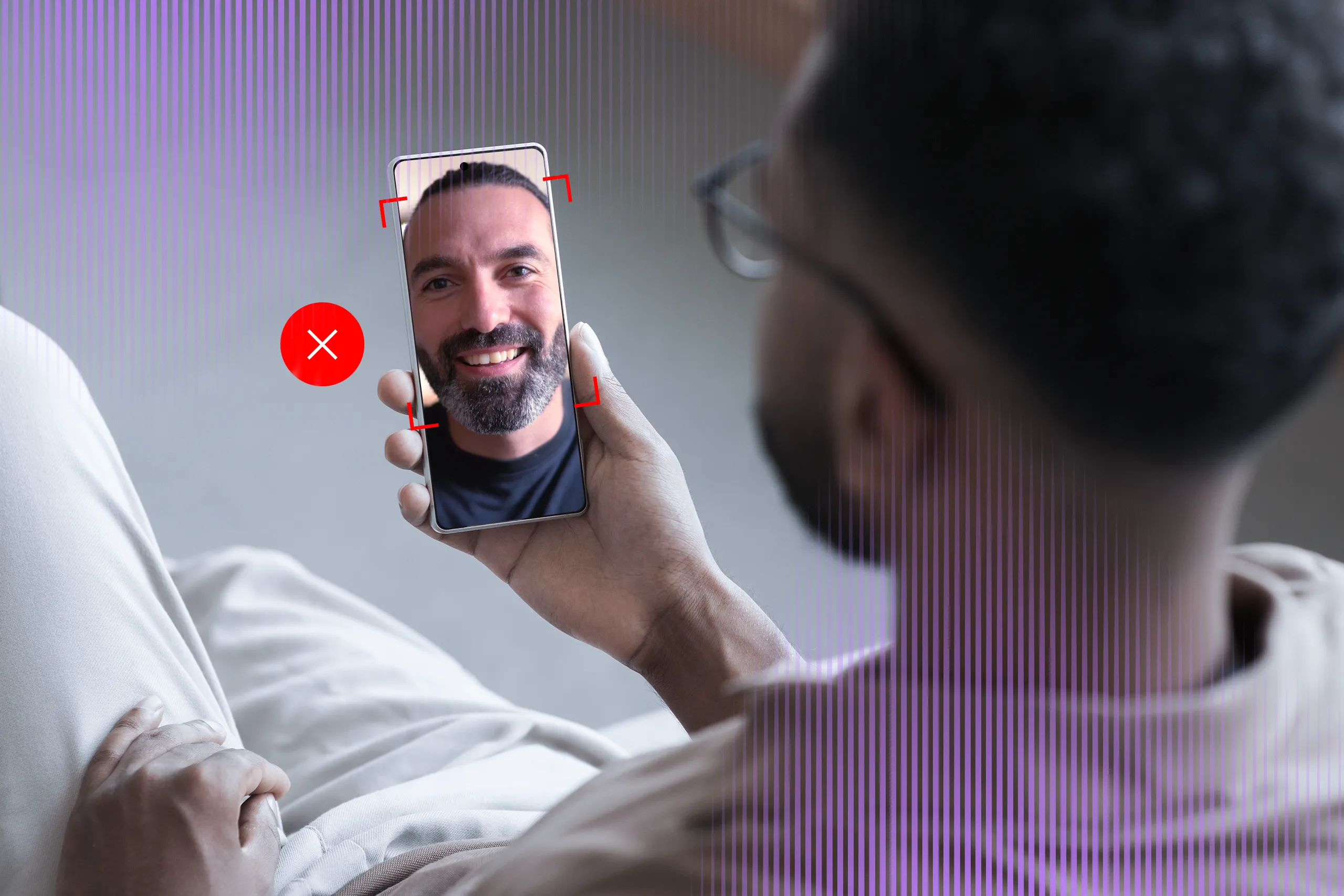
In real deployments, one of the most frequent attacks I saw involved people taking a selfie of a photo displayed on another phone. Capturing selfies from a desktop screen was another common way attackers tried to fool facial biometric systems.
A basic facial recognition system may match that displayed image to the face on an identity document. But that does not mean a live person was present in the journey.
As fraudsters use deepfakes, emulators, virtual cameras, camera bypass tools, and synthetic media, organizations need more than face matching. They need liveness detection, injection attack detection, device integrity checks, and session-level security.
Biometrics can confirm similarity between faces. It cannot, by itself, confirm that the biometric sample was captured from a live person through a trusted capture process.
Misconception 4: Biometrics can decide business policy
A biometric system can generate a score. It can return a match, non-match, or inconclusive result.
But it cannot decide the business rules for a use case.
For example, facial verification at an airport kiosk is very different from facial capture at a DMV office. The airport may have poor lighting, busy backgrounds, rushed users, and inconsistent camera angles. A DMV environment may be more controlled, assisted, and standardized.
Both use face comparison, but they require different thresholds, fallback options, consent models, retention policies, and operational processes.
Biometrics does not decide how long data should be stored, whether users can opt out, when manual review is needed, or what happens when the system fails. Those decisions require input from privacy, security, legal, compliance, risk, product, operations, and governance teams.
The biometric system can support policy decisions, but it cannot replace them.
Misconception 5: Biometrics can overcome poor deployment context
Even the best algorithm can underperform if the deployment environment is weak.
Camera quality, lighting, background, motion blur, user guidance, channel, assisted versus unassisted capture, indoor versus outdoor conditions, and image quality all affect biometric performance.
I have seen users capture selfies in low-light conditions inside their homes. In those situations, camera features such as auto-exposure, focus, detecting the most predominant face, and image quality checks can play a significant role in improving the capture before the biometric algorithm even performs the match.
Another example goes back to 2018, when I was consulting for an identity verification vendor. My team noticed that some users were submitting cover photos of their passports instead of the photo page. At first, we were confused. Why would someone submit the passport cover when the system needed the photo page for comparison?
After further analysis, we found that the on-screen instruction said something like “scan your passport, followed by your selfie.” Some users interpreted that literally and scanned the passport cover. In those cases, there was no face image from the document to compare against the selfie.
The biometric capability existed, but the deployment design prevented the biometric system from working properly.
This is why product teams should not only ask, “How accurate is the algorithm?”
They should ask: How accurate is it for our users, our environment, our camera flow, our instructions, our risk tolerance, and our operational process?
That is the difference between buying a biometric tool and deploying a biometric system.
What biometrics can solve
Biometrics can still solve important problems.
It can help bind a person to an identity document. It can reduce account takeover risk. It can support passwordless authentication. It can detect duplicate enrollments. It can improve physical access, travel, banking, and digital identity experiences.
But biometrics is not a universal trust engine.
- It does not automatically prove identity.
- It does not automatically eliminate fraud.
- It does not automatically work equally well for everyone.
- It does not automatically detect spoofing or injection attacks.
- It does not automatically satisfy privacy or legal requirements.
- It does not automatically fix poor deployment design.
The right way to think about biometrics
The question is not whether biometrics is good or bad.
The better question is whether it is being used for the right problem, in the right environment, with the right safeguards.
A responsible biometric program should include identity context, demographic performance testing, liveness and injection attack protection, clear consent and retention policies, use-case-specific deployment testing, human review and fallback processes, and ongoing monitoring after launch.
- A face match is not the same as true identity.
- A high-performing algorithm is not the same as a fair system.
- A biometric score is not the same as a business decision.
- A successful demo is not the same as a production-ready deployment.
Biometrics is most effective when it is treated not just as an algorithm, but as part of a broader trust system.
Organizations that succeed with biometrics will be the ones that understand both its power and its limits.