
In brief: Identity profiles keep customer identity data and verification results connected across multiple interactions. They help companies reduce repeated data collection, preserve verification history, and support subsequent identity checks without starting from scratch.
Cookies have long helped websites recognize returning visitors. Your shopping cart stays filled, your preferences are remembered, and you don't have to start from scratch every time you come back.
A similar principle can make identity verification more convenient. If a customer has already submitted their ID, completed a biometric check, and passed screening, why ask them to provide the same information again when another check is needed?
Regula IDV Platform lets businesses keep identity data and verification history in reusable customer profiles. They can draw on previous checks during later interactions, add new information over time, and request fresh verification when needed.
What is an identity profile, and what does it contain?
An identity profile is a persistent record of a person's identity data and verification history. Unlike a verification session, which captures a particular check at a particular time, the profile brings together information from multiple checks and can be updated as new data becomes available. This creates a reusable digital identity record that businesses can refer to throughout their relationship with a customer.
In Regula IDV Platform, a profile can contain:
-
Personal information: Names, dates of birth, contact details, and other attributes collected during verification
-
Identity documents: Passports, ID cards, driver's licenses, and their processing results
-
Biometric data: Selfies, fingerprints, and retinal images collected during verification
-
Screening results: Potential matches against sanctions lists, AML/PEP databases, and other compliance watchlists
-
Verification history: Previous sessions, their statuses, and the workflows performed
-
Timeline: The complete history of creation and modification of all profile data
-
Additional context: Supporting files, device and location information, and a timeline of changes to the profile
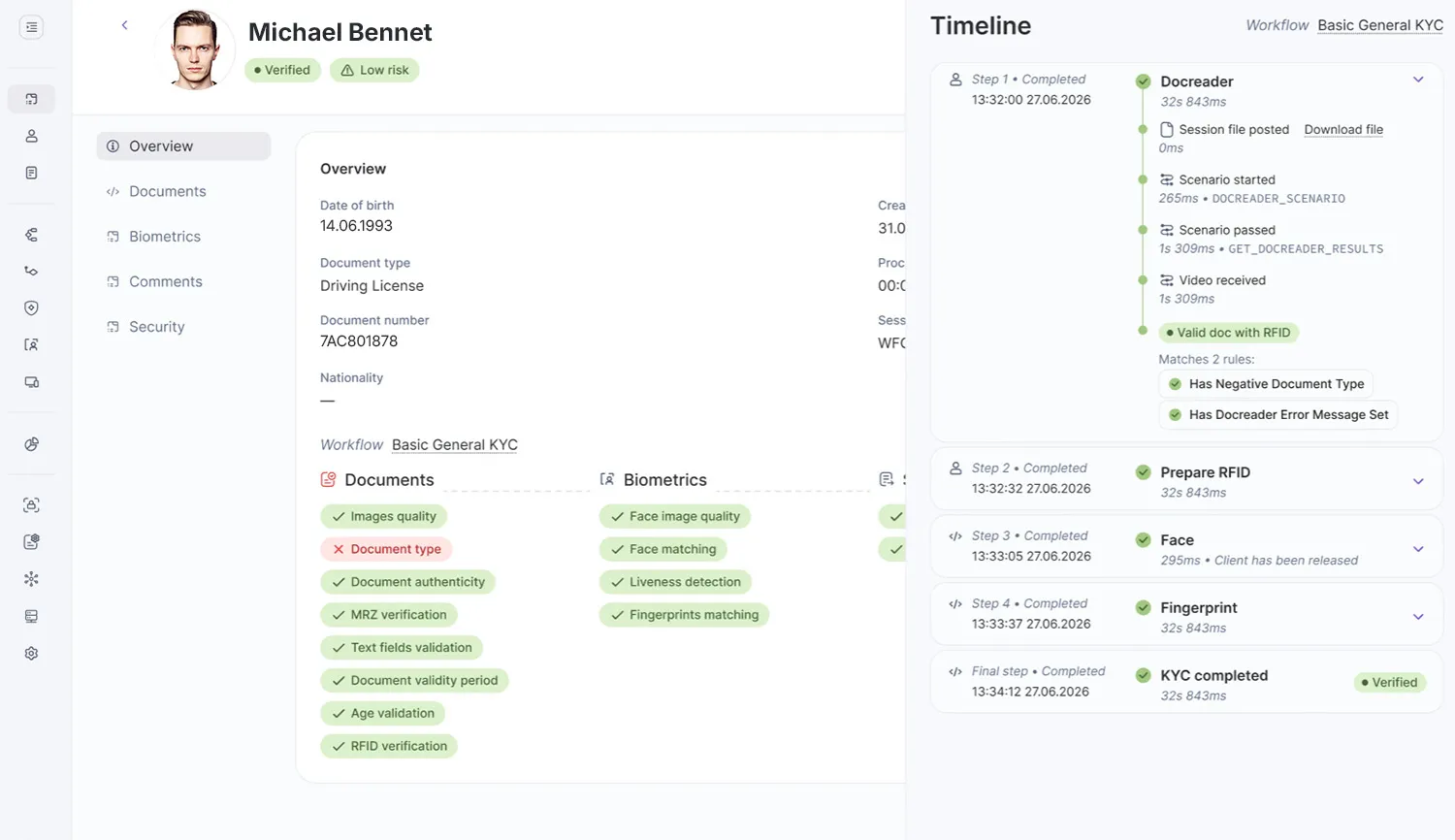
A customer profile shows the evidence behind each identity decision, all available for future references.
The exact contents depend on the organization's verification workflows. Profiles can be created and populated automatically through these workflows or managed manually through the admin panel.
As new checks are completed, their results are linked to the existing profile, preserving the history of previous interactions. This gives teams a single place to review what information has already been collected, which checks were performed, and what has changed over time.
How can businesses reuse identity data in subsequent checks?
Suppose a bank customer completed identity verification when opening an account. Several months later, they request a change to the phone number associated with it. Before approving the change, the bank may need to confirm that the request comes from the legitimate account holder.
With Regula IDV Platform, the bank can use the customer's existing identity profile as the starting point for this check, drawing on previously collected information rather than repeating the entire onboarding process.
Here's how it can work:
-
Find the existing profile. The platform supports searching profiles using textual or biometric data collected during a verification session.
-
Use previously collected information. The workflow retrieves relevant identity data and verification results from the profile.
-
Cross-check new information. Depending on the configured workflow, a fresh selfie can be compared with previously collected biometric data. Risk checks can also help identify inconsistencies in device or location information.
-
Perform additional checks if needed. Based on the business rules and verification results, the customer may need to provide their identity document to confirm ownership or other supporting evidence.
-
Update the profile. New verification results can be linked to the existing profile, adding to the customer's verification history.
The same approach can support other interactions, such as account recovery, access to sensitive services, or changes to personal information.
When are identity profiles particularly useful?
Identity profiles are particularly useful when a business needs to confirm that a returning person is the same individual it verified earlier, or update their identity records without losing previous verification evidence. These needs arise in a range of scenarios across different industries:
| Scenario | How identity profiles help |
|---|---|
| Banking: Account recovery | When a customer loses access to their account, the bank can compare a newly captured selfie against previously collected biometric data and perform a liveness check to help confirm that the person requesting access is the legitimate account holder. |
| Telecom: SIM replacement | When a subscriber requests a replacement SIM or eSIM, the operator can refer to their existing identity profile and perform additional checks to reduce the risk of handing control of the number to an impostor. |
| Workforce: Employee and contractor access | When an employee needs to regain access to corporate systems or a contractor returns after a period of inactivity, the organization can use previous identity verification records and issued credentials as a reference for ongoing employee checks. |
| Financial services: Ongoing and event-triggered KYC reviews | Instead of rebuilding customer records, compliance teams can use existing profiles to review previous checks, update customer information, and perform additional screening as required. |
| Car rental: Driver's license renewal | When a returning customer has renewed their driver's license, the rental company can verify the new document and add its details to the existing identity profile while preserving previous verification records. |
Verification workflows can also involve digital credentials, with the results linked to the same customer profile alongside previous document and biometric checks.
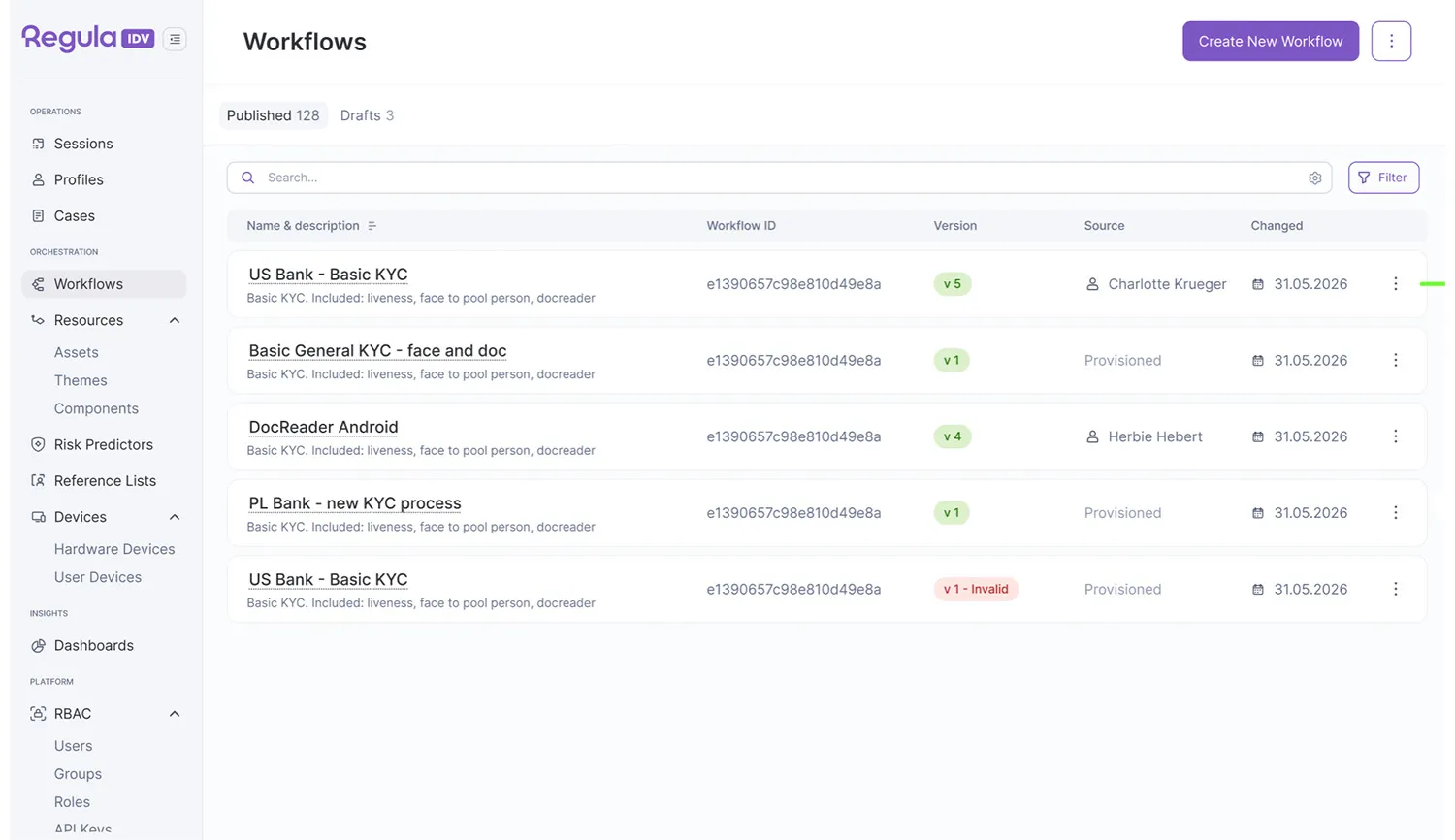
Regula IDV Platform provides pre-built verification workflows, with results from multiple checks linked to the same customer identity profile.
How can businesses keep identity profiles up to date?
Regula IDV Platform includes an Identity Refresh feature that lets organizations run verification workflows for selected customer profiles, either on demand or on a schedule.
For example, a financial institution may need to repeat compliance screening for existing customers at regular intervals. With Identity Refresh, the team can:
-
Select relevant customers: Use filters to choose which profiles within a Profile Group should be processed
-
Define the checks: Assign a preconfigured verification workflow to the selected profiles
-
Set a schedule: Run the workflow automatically at specified intervals or launch it manually
-
Avoid redundant checks: Set a delay period to exclude profiles processed recently
-
Review the results: Access the resulting verification sessions and related profiles to examine the outcomes
The checks performed depend on the selected workflow. If new information needs to be collected from a customer, the process can be configured accordingly. Results can then contribute to the existing identity profile, keeping previous verification records available for reference.
How can identity profiles support risk-based verification?
By keeping identity data and previous verification results in one profile, businesses can adjust verification requirements based on what they already know about a customer.
For example, a financial service might allow customers to make transactions up to a certain limit after basic identity verification. To unlock higher limits, customers would need to provide additional documents or complete biometric checks. The new verification results are then added to their existing profiles for future use.
Over time, this accumulated evidence can help businesses reduce unnecessary verification steps. Say, a returning customer making a routine transaction from a familiar device may require fewer checks than someone initiating a high-value transfer from an unfamiliar one.
How сan identity profiles help prevent fraud?
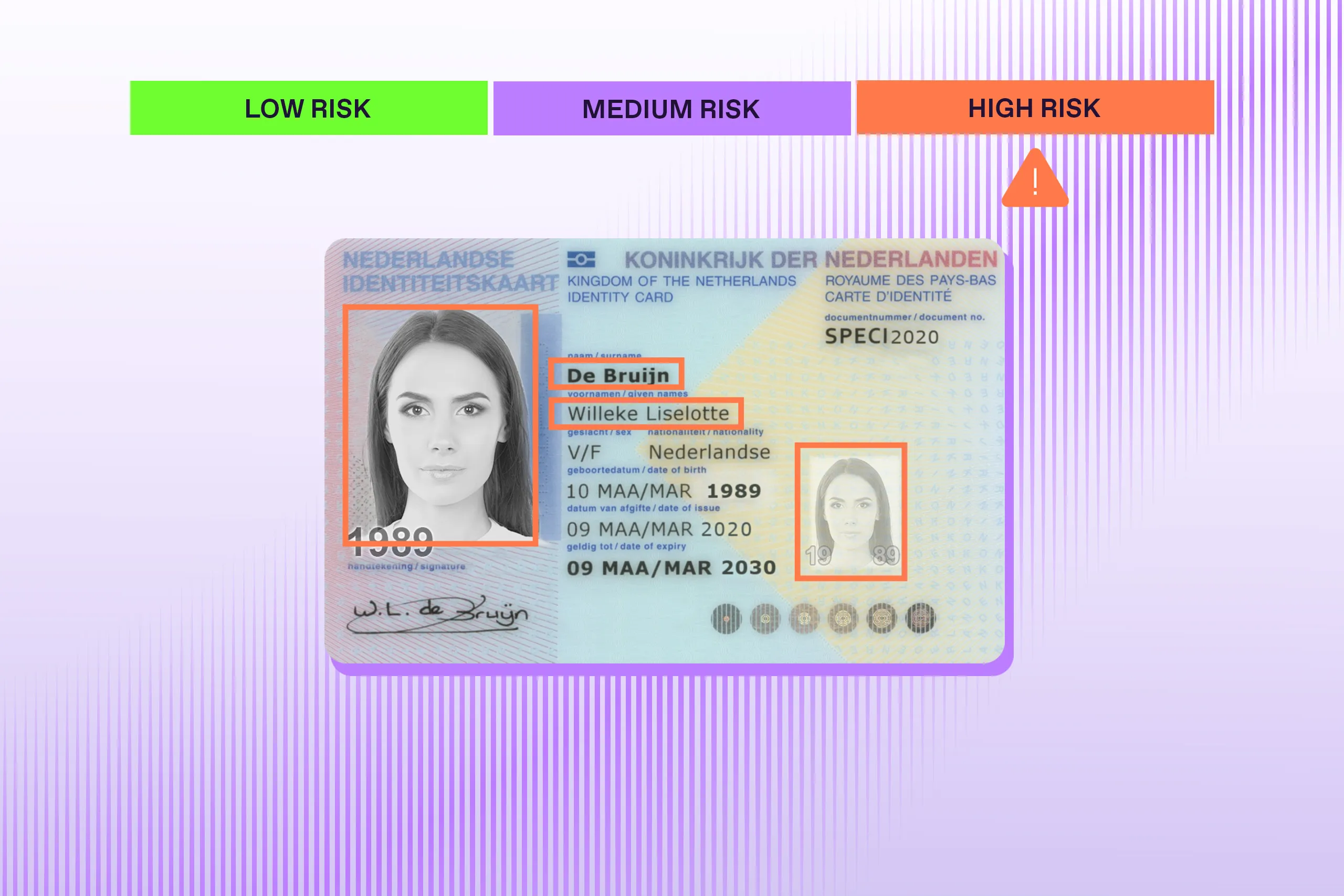
Suppose a returning customer submits a new identity document with personal details that don't match their earlier records. This could be a legitimate change, or it could signal an attempt to impersonate someone else. Either way, the business needs to understand the discrepancy before approving the request.
Regula IDV Platform keeps previous verification sessions, documents, biometric images, and other identity evidence connected to the customer's profile. Depending on the configured workflow, new information can be checked against existing records, while risk predictors can flag suspicious device or location activity. These findings can trigger additional verification or review before the business proceeds.
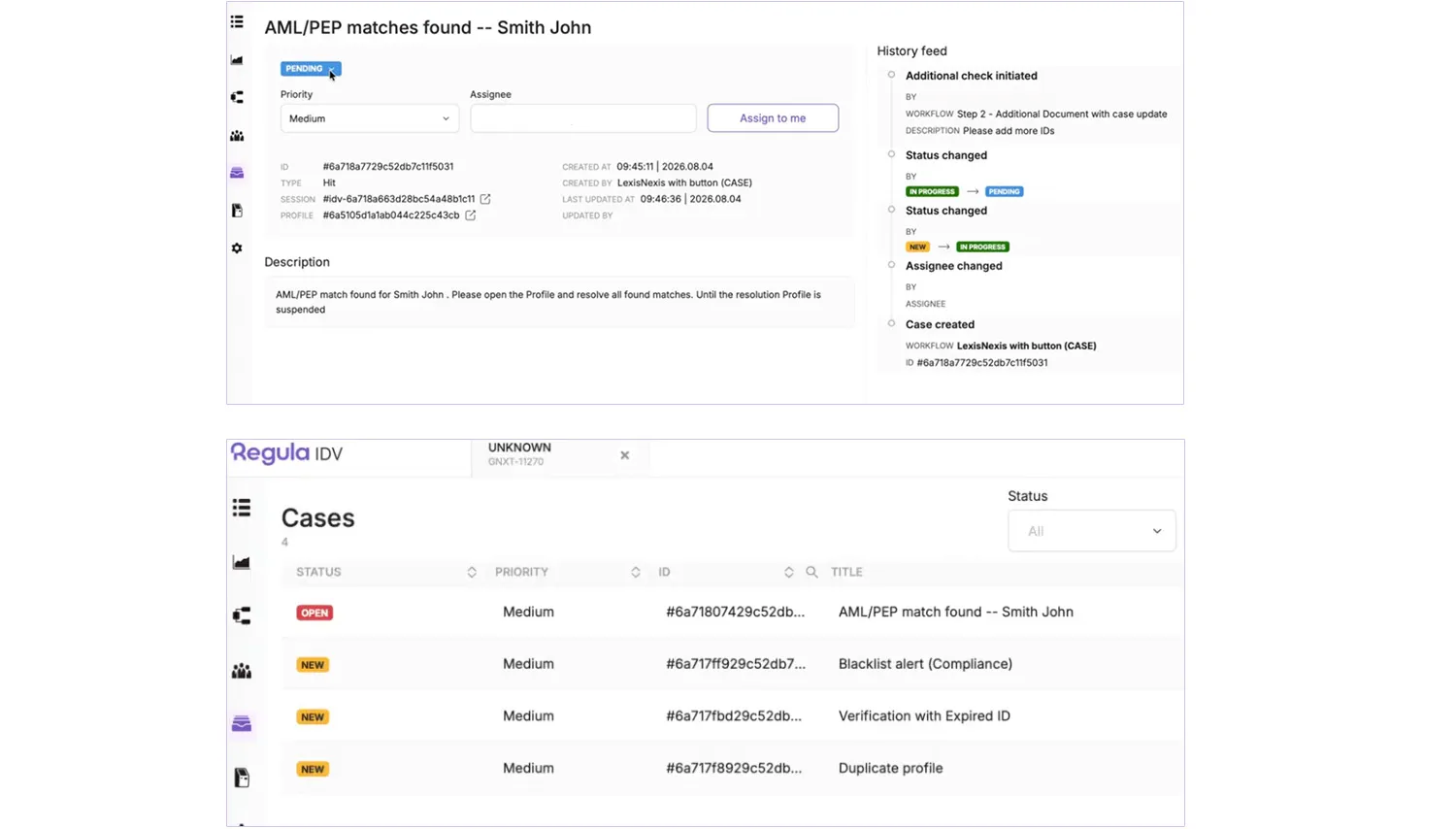
The case management queue gives reviewers access to cases that need attention. They can open any case to examine verification results, supporting evidence, and the context behind it.
Verification history is also valuable when a decision needs to be explained later. The profile's Timeline records changes to customer information, including when they occurred and who or what made them. Alongside previous verification results and supporting evidence, these records help teams investigate suspicious cases and explain the actions taken.
Comparing information collected at different points in time also supports identity signal integrity, particularly the consistency of identity evidence across multiple interactions.
💡The need to explain identity decisions extends beyond internal investigations. According to Regula's 2026 global research, 82% of organizations have been required to justify identity decisions externally. A connected record of verification evidence and profile changes can make those decisions easier to reconstruct and defend.
How do identity profiles impact verification costs?
For businesses that verify the same customers repeatedly, active-user licensing can be more economical than paying for each verification.
Regula IDV Platform offers this option. For example, if a customer completes onboarding and then re-verifies their identity 10 more times during the same license period, they still count as one active user. Unlike transaction-based pricing, this model doesn't charge separately for each repeat verification.

Make previous identity checks useful for future ones
The next time a customer needs to confirm their identity, their previous checks can provide a solid foundation. The organization already has verification evidence to work with and can decide what information is still relevant and what needs to be checked again.
Regula IDV Platform helps connect these interactions through persistent identity profiles, keeping verification records available as customers return, update their information, or undergo additional checks.
Want to see how identity profiles could work with your existing verification processes? Contact our team to discuss your use case.