Language

MRZ

What is an MRZ?

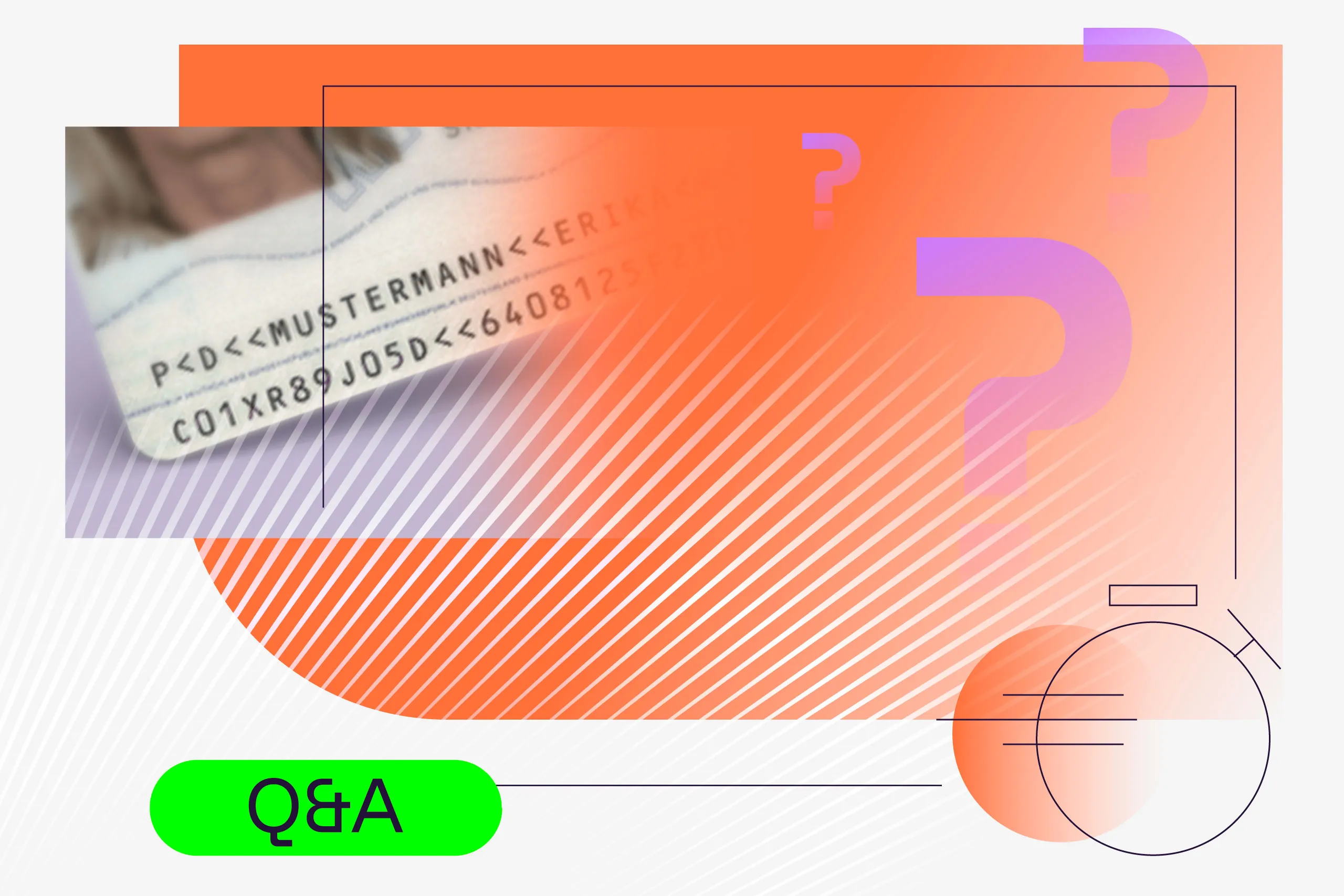
An MRZ, or machine-readable zone, is an area of an identity or travel document where selected information is printed in a standardized format for automated reading. It commonly appears as two or three lines of letters, numbers, and filler characters on passports, identity cards, residence permits, and visas.
A camera or document reader can capture information from the MRZ. Its structure varies according to the type and size of the document. The specifications for machine-readable travel documents are set out in ICAO Doc 9303.

What information does an MRZ contain?

An MRZ typically contains selected details that also appear in the document’s visual inspection zone. These details are arranged in fields with defined positions. Depending on the document format, they may include:
  • Document type and issuing state or organization
  • Holder’s name and nationality
  • Document number
  • Date of birth
  • Expiration date
  • Sex marker
  • Optional or document-specific data
  • Check digits used to test the consistency of specified fields
The < character is used as a separator or filler in unused positions. Names may be shortened, transliterated, or represented differently from the text in the document’s visual zone because the MRZ has limited space and follows specific formatting rules. The exact fields, field positions, and number of lines depend on the document format.

How is an MRZ read and checked?

A camera or document reader captures an image of the MRZ. Optical character recognition (OCR) converts the printed characters into structured data, after which the system interprets the fields according to the expected document format.
The system can calculate the applicable check digits and compare the results with those printed in the MRZ. A mismatch may indicate an OCR error, damaged print, incorrectly entered data, an unexpected document structure, or possible alteration. The system may also compare MRZ data with information from the visual zone, barcode, or electronic chip where these sources are available.

How is the MRZ used with an e-passport chip?

An e-passport contains both a printed MRZ and a contactless chip. Information derived from selected MRZ fields, typically the document number, date of birth, and expiration date, may be used to establish access to the chip through protocols such as Basic Access Control (BAC) or Password Authenticated Connection Establishment (PACE).
After accessing the chip, a verification system can compare its data with the printed MRZ and the passport’s visual inspection zone. Where the chip’s digital signatures can be validated against trusted issuing-country certificates, they provide evidence of the origin and integrity of the chip data.

How can Regula help with MRZ verification?

Regula Document Reader SDK reads and parses MRZ data from supported identity and travel documents. Depending on the selected components and license, it can check the MRZ structure and check digits, compare information across the visual zone, barcode, and RFID chip, and perform document-specific authenticity checks.
Where a supported electronic document and compatible NFC-enabled device or RFID reader are available, the SDK can also read chip data and perform supported chip-security checks. Information obtained from the chip can then be compared with the printed MRZ and other document data.
These capabilities help organizations capture identity data accurately and identify inconsistencies during onboarding, border inspection, and other document verification processes. The results should be considered together with the document’s security features and, where required, verification of the person presenting it.

FAQ

Is an MRZ the same as a barcode?

No. An MRZ consists of printed characters arranged in a standardized machine-readable format. A barcode encodes data using a different visual structure. Some identity documents contain an MRZ, a barcode, or both.

Does a valid MRZ prove that an identity document is genuine?

No. A correctly formatted MRZ with valid check digits shows that specified data is internally consistent. A counterfeit or altered document can contain a plausible MRZ with correctly calculated check digits. Authenticity verification must also examine document security features and available electronic data.

Do all identity documents have an MRZ?

No. MRZs are common on passports, visas, residence permits, and many identity cards, but document designs vary. Some documents use barcodes, electronic chips, or other methods for storing machine-readable information. A verification system should determine which features are expected for the specific document type and issuing authority.

Why might MRZ data differ from the visible text?

The MRZ has limited space and follows strict formatting and transliteration rules, so long names may be shortened or represented differently. Accents, punctuation, and other characters may also be omitted or converted. Differences can additionally result from OCR errors, damage, or alteration, so the system should assess their cause before treating them as suspicious.

Does an MRZ contain the holder’s facial image?

No. The MRZ contains text data. A portrait may be printed in the visual part of the document and, for an e-passport, stored separately in its RFID chip. A biometric comparison uses one of those portraits as a reference.
On our website, we use cookies to collect technical information. In particular, we process the IP address of your location to personalize the content of the site

Cookie Policy rules