


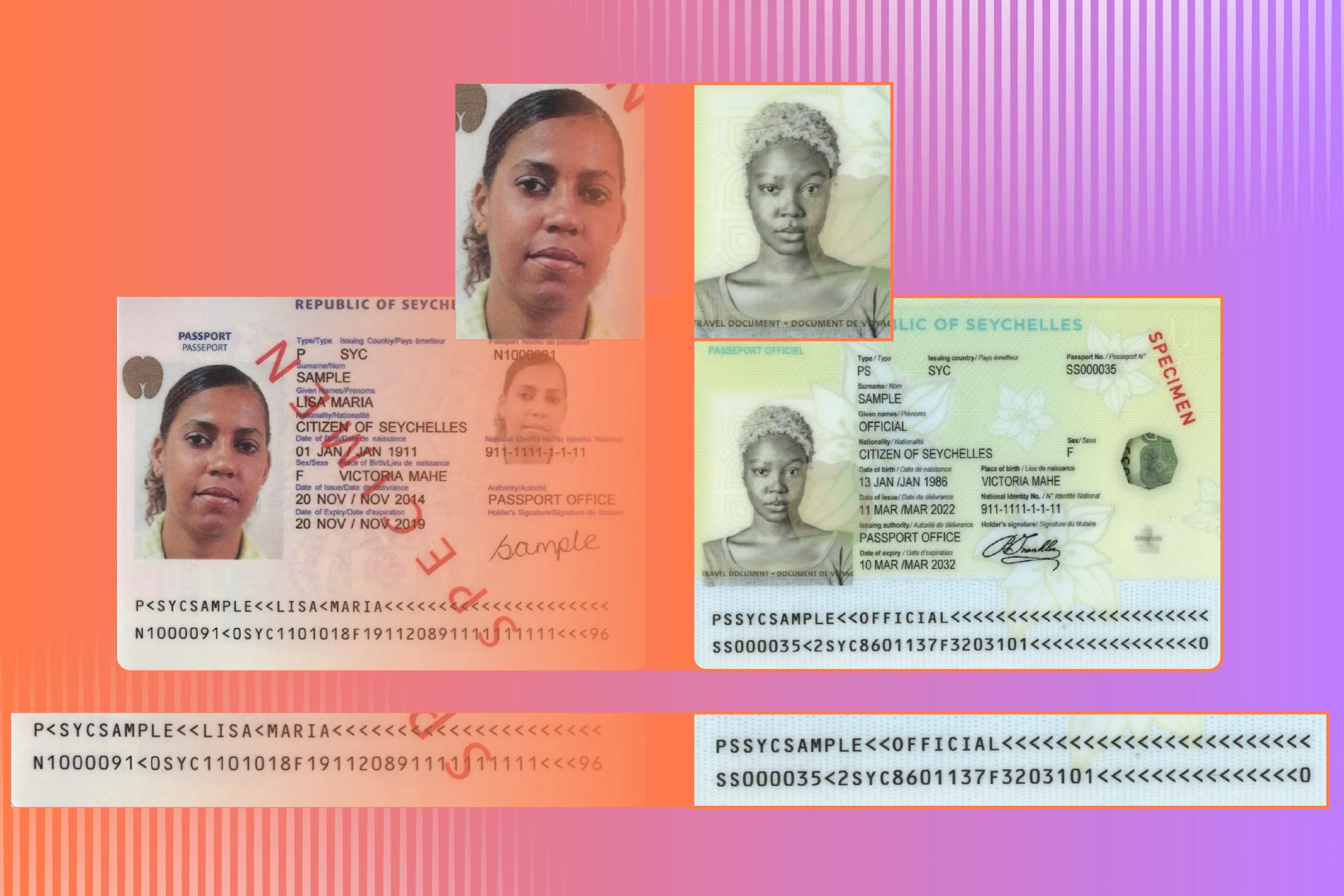
Originally published in July 2024, this article has been updated with newer passport examples and recent changes in international document standards.
A passport update may look like a facelift: a new cover, brighter UV elements, cleaner typography, or a more elegant data page. But most new passport designs serve a practical purpose — they make travel documents harder to counterfeit and easier to verify.
In this article, we’ll explain what drives passport updates and review recent examples that show how travel documents are changing worldwide.
How often does passport design change?
A standard international practice for countries is to renew their passports every five to ten years. In reality, countries update their travel documents at their own pace.
Some do so rarely but notably, like Iceland, which set a new trend with its portrait-oriented identity card, the first change since 1967. Others add small details more often to their current passports. For instance, Germany did it three times in recent years: in 2017, 2021, and 2024.
Get posts like this in your inbox with the bi-weekly Regula Blog Digest!
Why do countries update passports?
Renewing national identity documents is expensive, especially for countries with large populations. Still, passport designs have to evolve when they fall behind modern security, travel, or verification requirements.
A new series may introduce stronger anti-counterfeit features. Some changes help border officers and automated systems read the document more reliably. Design updates also give countries room to reflect national symbols, regional agreements, or political changes.
Machine-readability and ICAO compliance
As primary travel identity documents, all passports worldwide must comply with the ICAO’s requirements outlined in Doc 9303. The standard — in its 8th edition now — is regularly updated to meet new challenges and address new threats.
For example, starting from November 2015, the ICAO banned the use of non-machine-readable passports for air travel.
Recently, ICAO has also introduced harmonized two-letter passport type codes (such as PP for ordinary passports) to help machines recognize document types more consistently. Countries that already use a second character must align with the new coding system from January 2026, while broader implementation continues toward 2028.
These changes push issuing authorities to keep new passport designs aligned with current international requirements.
Biometric upgrade
Many passport updates happen when a country moves to an electronic passport. An ePassport includes an RFID chip that stores the holder’s identity data and biometric information, protected by cryptographic mechanisms.
When transitioning to ePassports, countries often undertake complete document renewal, including redesign.
Security enhancement
Passport fraud evolves with printing, scanning, and image-editing technologies. Along with the growth in illegal migration, they create more challenges for countries. To stay ahead, countries add stronger security features to new passport series.
Common upgrades include polycarbonate data pages, laser engraving, transparent windows, Multiple Laser Image (MLI), tactile elements, UV-reactive features, optically variable ink (OVI), holograms, and more complex background patterns. These features help officers and automated verification systems detect tampered and counterfeit documents.
Regional and political harmonization
Some updates reflect regional agreements or shared document design rules. For example, El Salvador, Guatemala, Honduras, and Nicaragua issue navy blue passports under the Central America-4 Border Control Agreement. Bolivia, Ecuador, and Peru use bordeaux-colored passports as members of the Andean Community, with union-related inscriptions such as “Comunidad Andina.”
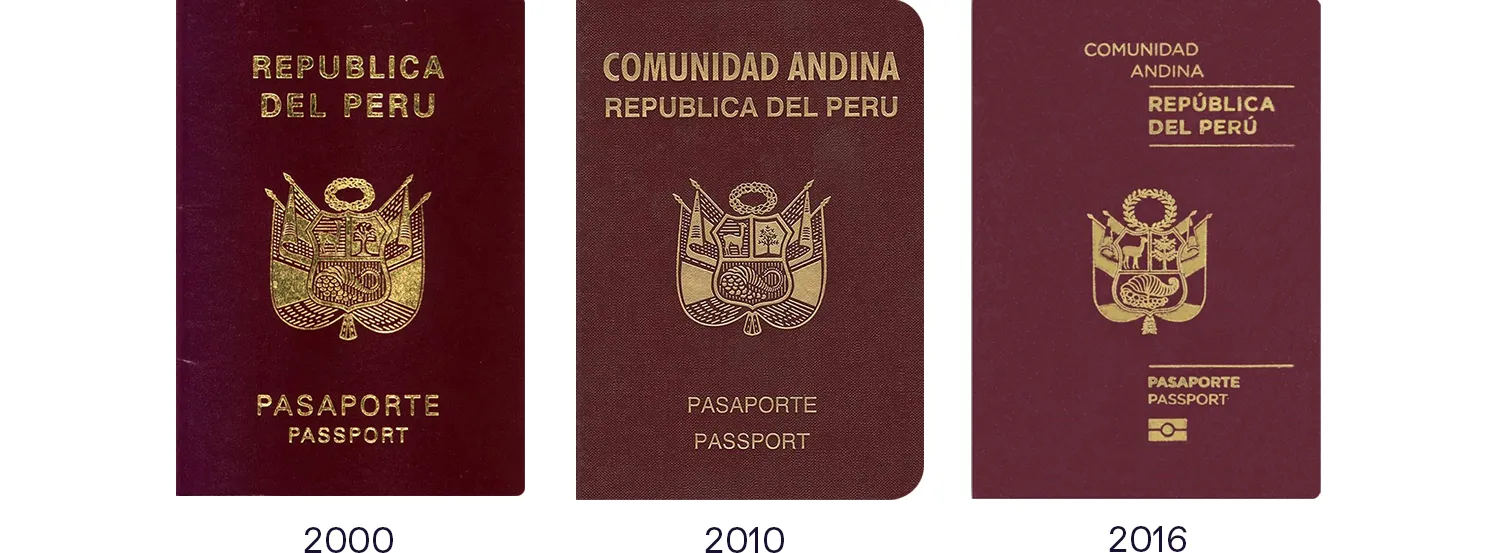
Peru started issuing passports with the legend “COMUNIDAD ANDINA” in gold on a bordeaux cover in 2016.
Examples of recently updated passports across the globe
Although passports must follow international standards, their design is far from uniform. Countries can choose from many security features, printing techniques, colors, and symbols. This gives them enough room to make passports both secure and distinctive, turning a standardized travel document into something that reflects national identity, culture, and history.
For this overview, we selected examples from different regions to show how countries use this creative space in practice.
Argentine passport (2026 series)
Argentina’s 2026 passport is a clear material upgrade. Unlike earlier series, the 2026 passport has its first two pages made of polycarbonate, with the data page personalized using laser engraving. The holder’s information is applied inside the material layers rather than on the surface, so the document is more resistant to wear, tampering, and data alteration.
The 2026 series also adds several modern security features, including a transparent window, variable ink, OVD and MLI elements, and MIRAGE images. Together with the embedded electronic chip, these updates align the Argentine passport with modern ePassport standards.
.webp)
Argentina moved from a laminated personal data page to a polycarbonate data page with laser engraving.
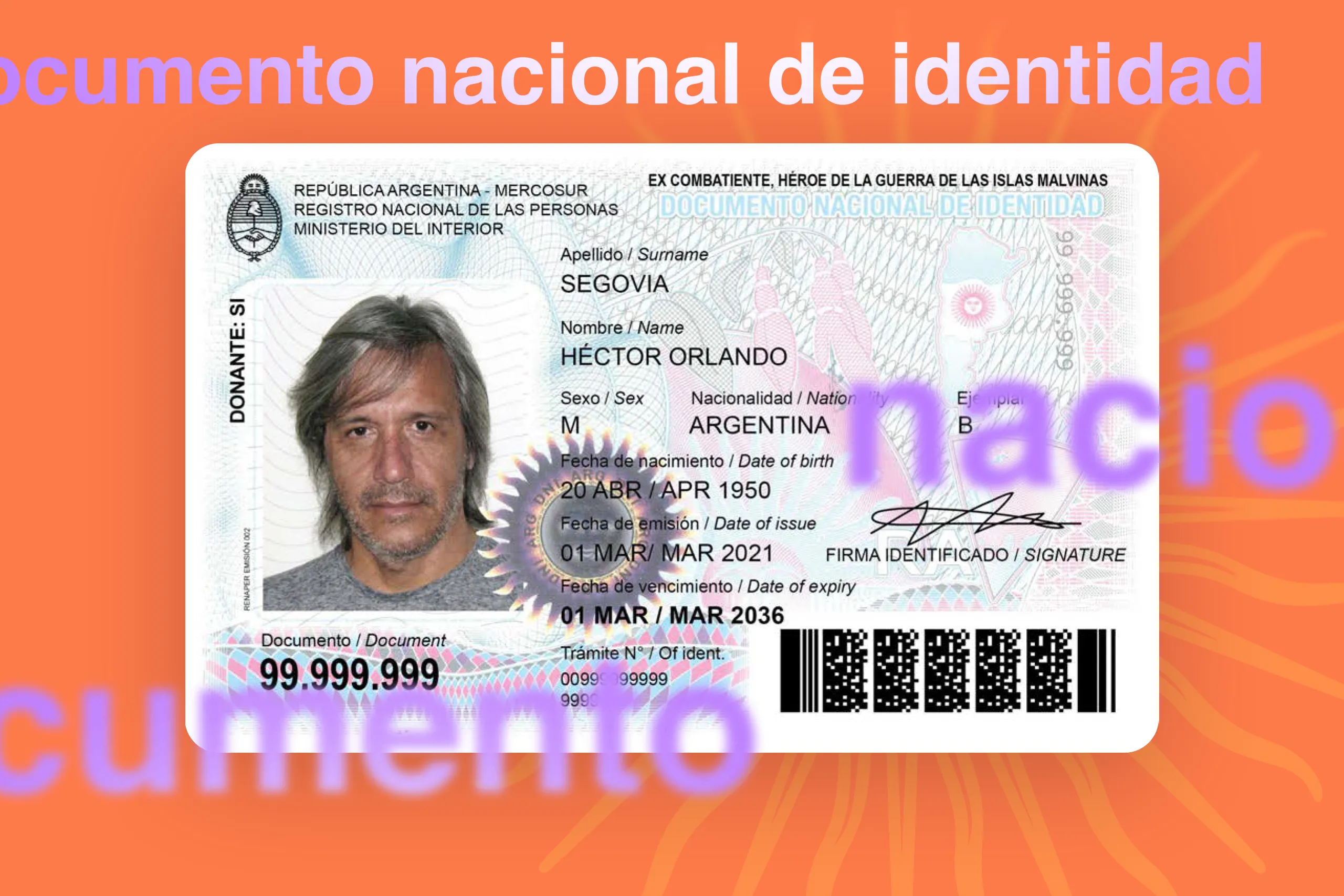
Australian passport (2022 series)
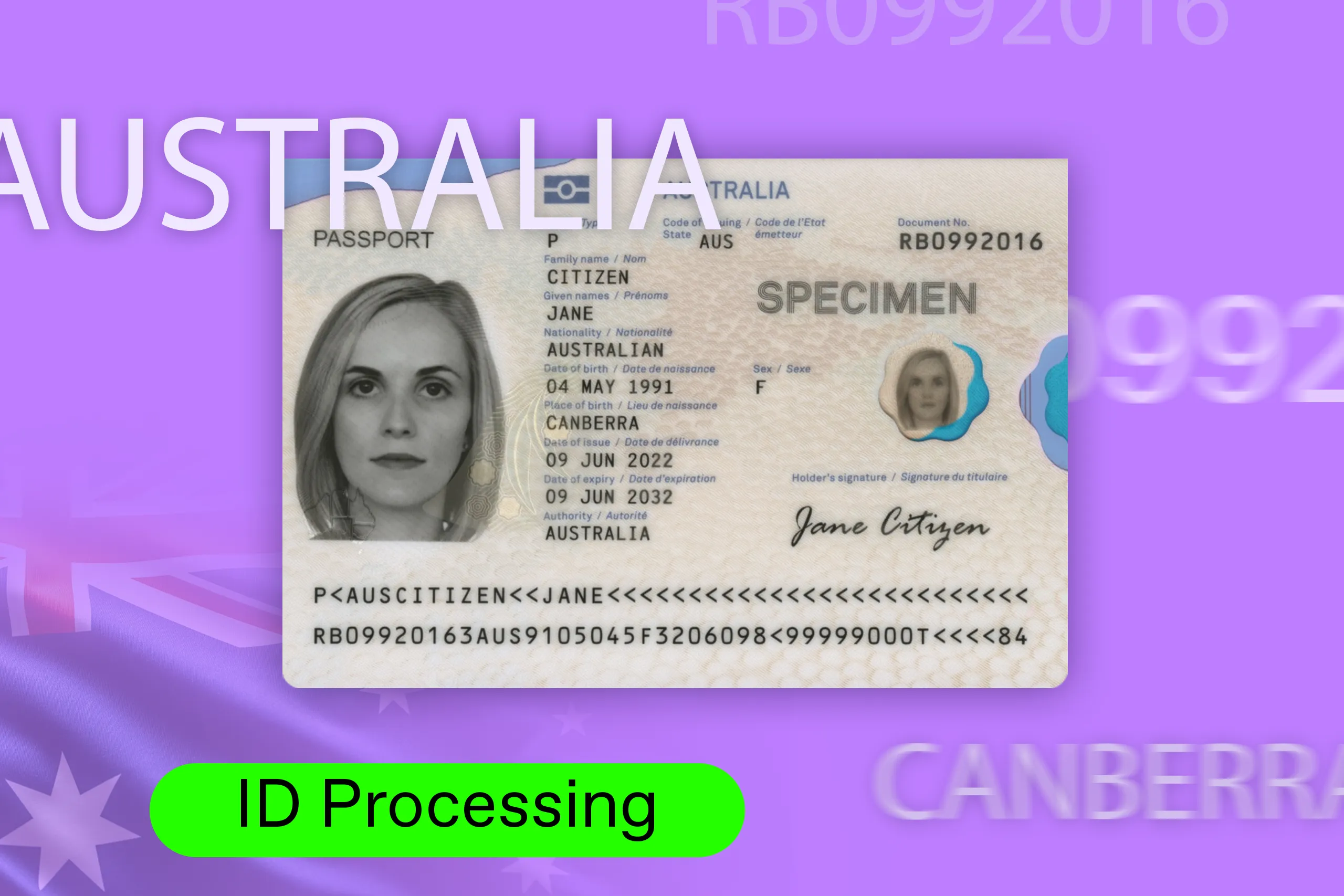
Australia’s R Series passport is a strong example of a security-focused update with limited visual change. Australia was among the pioneers to introduce a half window at the top of the data page, which is now made of polycarbonate. There is also a hologram partially covering the holder’s photo and a transparent window on the right of the page.

When updating its passport for the first time since 2014, Australia invested in enhancing the security of the document. Interestingly, you can now see the antenna of the RFID chip embedded on the right side.
Colombian passport (2026 series)
Colombia is an interesting example here showing that a new passport series doesn’t always mean a more complex set of physical security features.
The previous electronic passport was already a highly protected document. It included a polycarbonate data page and several dynamic security elements, such as OVI, MLI, and a hologram. In the 2026 series, the visible dynamic feature set appears less complex, with the hologram becoming the main noticeable dynamic element.
That doesn’t necessarily make the new passport less secure — it remains an electronic document with a contactless chip and modern security controls.
The update is also about production control. For years, Colombian passports were produced under a private-contractor model, with Thomas Greg & Sons involved in passport production since 2007. Under the new 2026 model, personalization is handled by the state-owned Imprenta Nacional. The new setup is intended to give the state stronger control over passport issuance.
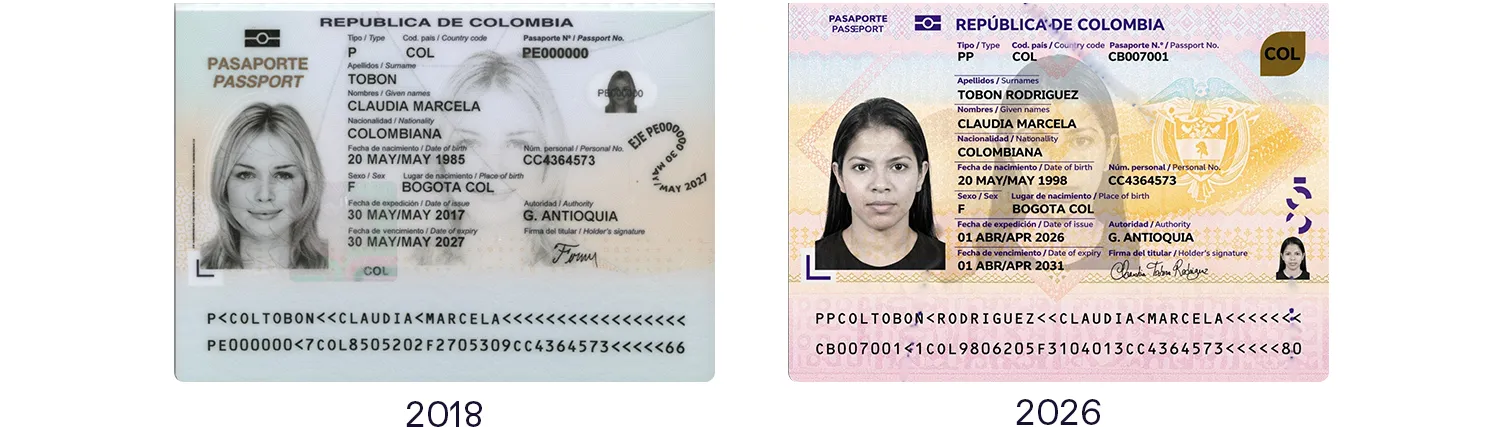
Colombia’s 2026 passport update moved personalization from a private-contractor model to the state-owned Imprenta Nacional, strengthening state control over passport issuance.
Ethiopian passport (2025 series)
Ethiopia introduced its first electronic passport in 2025, replacing the 2004 series with a chip-based travel document.
The physical design was also upgraded. The 2025 series has a polycarbonate data page, a transparent window, and dynamic security elements, including MLI and a hologram.
Compared with the previous passport, which was issued for five years, the new ePassport is valid for up to 10 years for eligible adult holders.
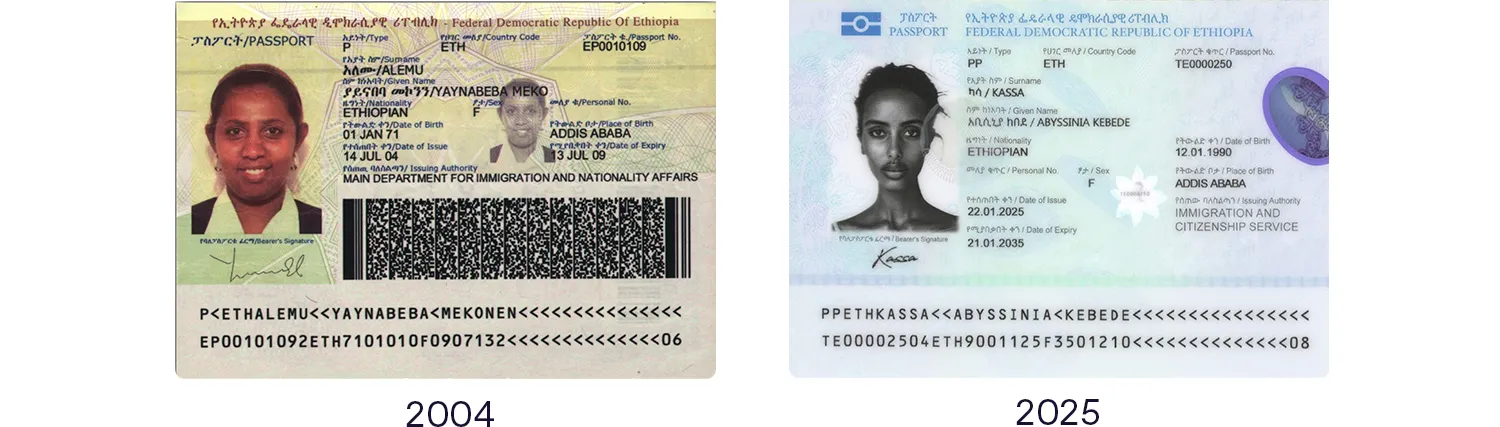
Ethiopia’s 2025 series introduced the country’s first ePassport.

Georgian passport (2025 series)
Georgia’s new ePassport and eID card suite won the Best New Document Series award at High Security Printing EMEA 2026. The series is built on a single design and security platform, with six passport types and four identity cards sharing aligned materials, features, and visual language.
The recognition is easy to understand from the document concept.
The concept, “A Journey Through History, Secured by Design,” turns Georgian geography, culture, and heritage into part of the document’s security architecture. Regional motifs, cartographic fine-line artwork, UV-reactive narratives, watermarks, a national-flag security thread, intaglio printing, OVI, embossing, and a polycarbonate data page with a transparent window all work together to make the document both harder to counterfeit and more distinctly Georgian.
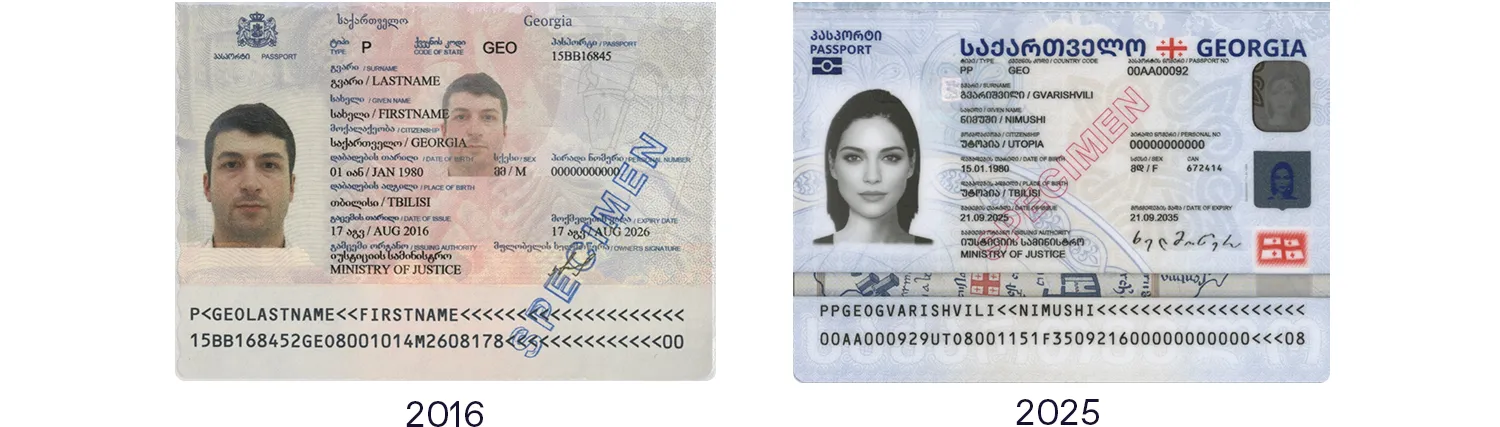
Georgia’s 2025 passport series features a polycarbonate data page, a transparent window, OVI, FUSE-ID, Dynaprint, and holographic protection.
Jordanian passport (2025 series)
Jordan introduced its first electronic passport in 2025 as part of the country’s broader digital transformation agenda.
The physical passport also changed. The 2025 series has a polycarbonate data page for durability and tamper resistance, a transparent window, and dynamic security elements, including OVI, MLI, and a hologram.
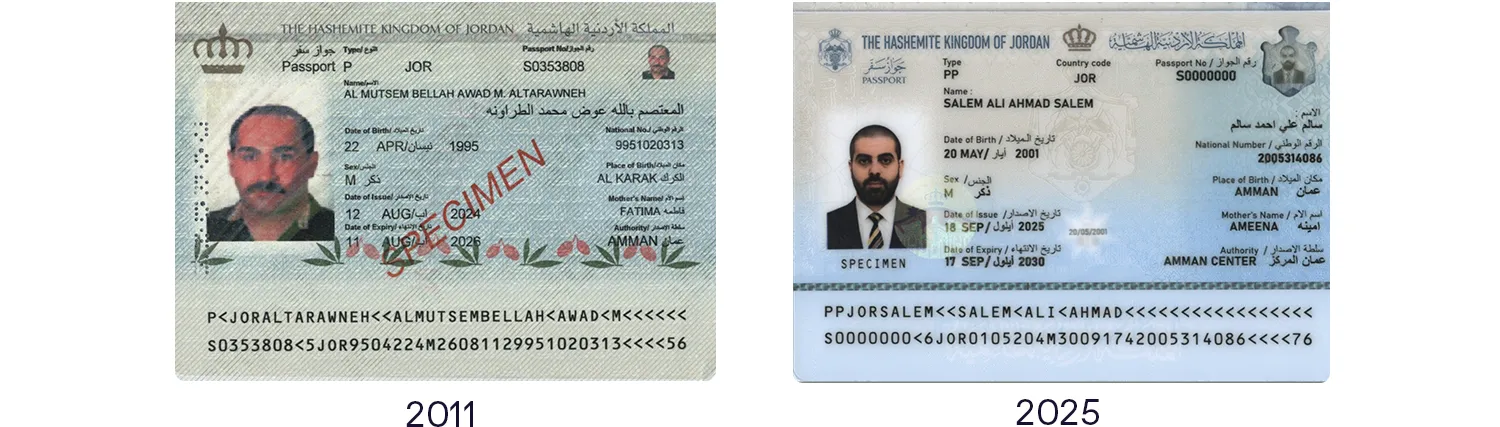
Jordan’s 2025 ePassport keeps the same five-year validity period as the traditional passport.
Liechtenstein passport (2026 series)
Liechtenstein’s new passport took the Best New Passport 2026 award at High Security Printing EMEA. The redesigned series standardizes regular, diplomatic, and service passports on a single technical and design platform.
The update brought several modern passport features, including a polycarbonate data page, laser and inkjet personalization, a transparent window, and dynamic security elements such as OVI, MLI, and a hologram. The holder’s portrait is also duplicated on the first paper page as a letter-screen image made from micro-characters, providing an additional verification point on a different substrate.
What makes this example especially interesting is page design. The previous passport used repeated page backgrounds. The 2026 series gives each page its own motif linked to Liechtenstein’s municipalities, landscapes, and cultural elements. That choice has a practical security effect: counterfeiters can no longer rebuild one background and repeat it across the booklet.
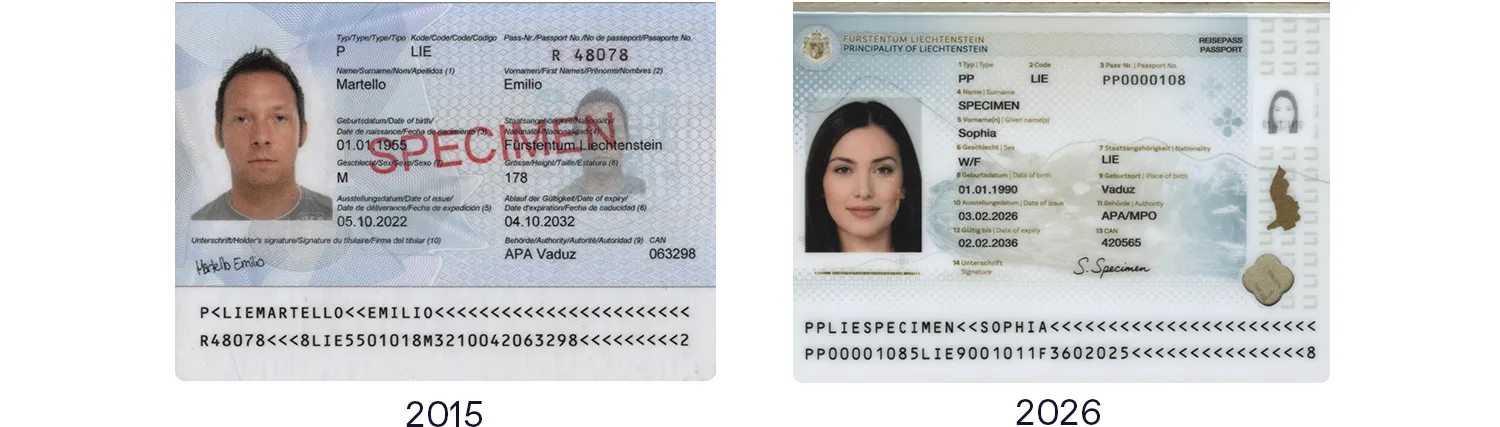
Liechtenstein’s new passport also has an updated data field: place of birth instead of height.
Key takeaway about passport updates
It’s fascinating to watch how passports are changing. Across recent updates, we see one pattern: many countries are adding more dynamic security features.
That may be partly driven by the growing role of document liveness checks. Dynamic features are hard to reproduce in a printout or edited screenshot because they change their appearance depending on the movement. This makes them useful not only for manual inspection, but also for remote identity verification, where a system needs to confirm that a real physical document is being presented to the camera.
For verification systems, however, every new passport series becomes a moving target. The system must know what a legitimate document looks like, which dynamic elements it should contain, and how those elements should behave during inspection.
That is why Regula’s identity document template database is regularly updated as new passports and other identity documents enter circulation worldwide. The collection now includes over 16,000 templates, helping businesses verify identity documents across countries, document types, and passport series.
If your business verifies passports across countries and document series, get in touch with Regula to see how our document verification technology can help.


.webp)
