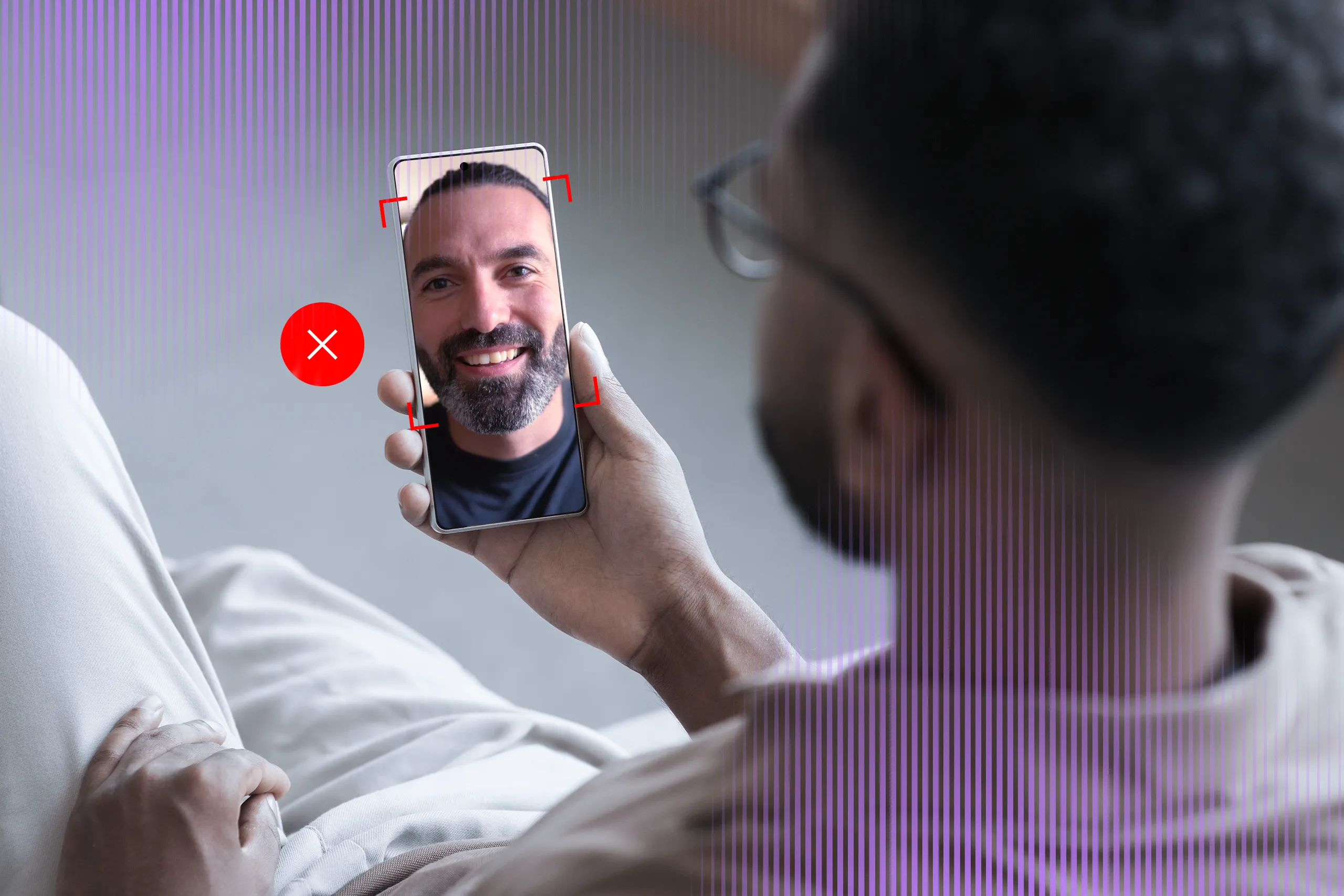

Germany’s Federal Office for Information Security (BSI) is launching a new benchmark for facial image background removal technologies, Biometric Update reports. The initiative will evaluate how accurately these tools separate people from their surroundings without introducing artifacts that affect image quality.
Removing a background may sound straightforward, but hair, headwear, shadows, and blurred edges make it difficult to determine where a person ends and the background begins. This creates a potential problem for biometric verification: image processing intended to improve a photo can also alter details needed to assess its authenticity.
Does a uniform background really matter?
A uniform background may be required for identity photos, but it is not necessarily essential for accurate face matching. Sharpness, contrast, lighting, and the visibility of facial features have a much greater impact on recognition performance.
“The real challenge with background removal is ensuring that the processing does not alter the face or introduce artifacts along its boundaries. Algorithms cannot always determine precisely where the subject ends, so even seemingly harmless adjustments can affect hairlines, facial contours, and other transition areas.”
– Andrey Terekhin, Head of Product
Why capture integrity matters more than a perfect match
Face matching algorithms determine whether two facial images belong to the same person. Their accuracy is important, but even a highly accurate matcher cannot, on its own, establish whether the input image came from a genuine camera capture.
An image may be sharp, well-lit, and perfectly suitable for matching, yet still be synthetic, manipulated, or substituted before reaching the matcher.
Background removal adds another complication. Face-swapping and other AI-based manipulations can leave subtle inconsistencies around facial boundaries. If legitimate image processing modifies those same regions, it may obscure the very artifacts that fraud detection systems need to examine.
“The most important rule is not to interfere with the facial region. When image processing is allowed to modify the boundaries of a face, it becomes much harder to distinguish legitimate processing artifacts from traces of face swapping or morphing. These transitions are often where the most valuable evidence of manipulation can be found.”
– Andrey Terekhin, Head of Product
Protecting capture integrity involves several checks throughout the verification process:
-
Checking where the image comes from. The system should be able to detect attempts to feed prerecorded, synthetic, or substituted images into the capture process.
-
Keeping facial details intact. Any image processing should preserve the original facial information, especially around areas where manipulation artifacts may appear.
-
Knowing what happened to the image. Organizations should understand which transformations were applied before the image reached the matcher.
-
Protecting the entire data path. Biometric input needs safeguards against substitution or tampering during capture, transmission, and processing.
These measures help establish whether the matcher is working with trustworthy input, rather than simply an image that meets its technical quality requirements.
BSI's new benchmark draws attention to the risks of altering facial images, even for routine tasks such as background removal. For organizations using biometrics to verify identity, the lesson goes further: a reliable match is only meaningful when there is sufficient confidence in the authenticity of the image being matched.