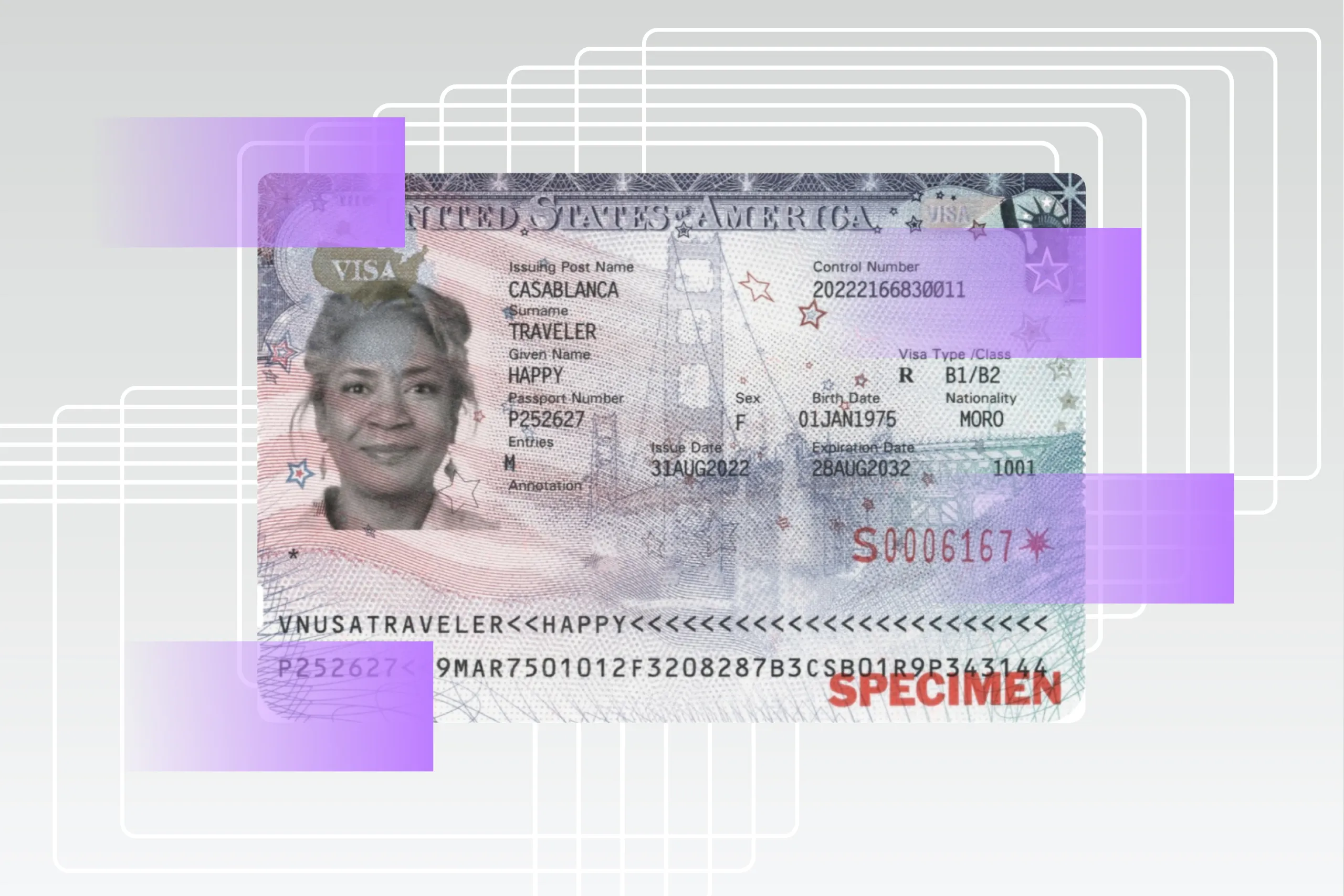


Physical passports could become unnecessary for international travel within five years, according to Paul Griffiths, CEO of Dubai Airports. As Gulf News reports, Griffiths believes the technology is already available. The remaining challenge is getting governments, airlines, and airports to recognize digital identities across borders.
Dubai is already moving in that direction. More than 200 biometric cameras have been installed across Terminal 3 at Dubai International Airport, allowing registered passengers to use facial recognition at participating check-in, immigration, lounge, and boarding points.
Registration still involves verifying passport details, capturing a photograph, and obtaining consent to use biometric information. Griffiths envisions taking the next step: allowing travellers to complete an international journey without carrying the physical document.
A passport-free journey starts with a verified identity
Facial recognition can establish that the same person is moving through an airport. But it cannot, on its own, establish whether that person's identity was genuine in the first place.
This makes the initial enrolment check critical. A passport must be authenticated and linked to its rightful holder before the passenger's biometrics can be used for subsequent checks. That includes examining the document's security features, authenticating its electronic chip where available, and matching the ID’s portrait to the traveller.
Otherwise, a fraudulent or incorrectly assigned identity could pass through multiple automated checkpoints without the underlying problem being detected.
What fraud specialists trust
Regula's 2026 study, The New Shape of Identity Threats, provides an interesting perspective on the importance of reliable identity evidence.
Among 100 fraud prevention and financial crime decision-makers surveyed in the UAE, 40% selected chip-verified government ID as their most trusted evidence when investigating suspected AI manipulation or synthetic identity interactions. This was the highest share across the seven markets covered by the study.
The findings concern fraud investigations rather than airport operations. Still, they highlight why checking the authenticity of the underlying identity document matters before relying on a digital representation of its holder.
Cross-border recognition is the next challenge
Establishing a trusted identity at enrolment is only the first step. For passport-free travel to work internationally, that identity must also be verifiable by airlines and border authorities in other countries.
“The next challenge is making that trust work across borders. An airline or border authority accepting a digital credential needs to verify who issued it, whether it remains valid, and whether it belongs to the traveller. It must also check that the passenger meets the destination's entry requirements. A valid digital identity, for example, does not necessarily mean the traveller has permission to enter a country.
The passport may eventually stay at home. The evidence behind the passenger's identity still has to stand up at every border.”
– Arif Mamedov, CEO at Regula Forensics, Inc.
The importance of getting that first identity check right is already evident in aviation. AirAsia, for example, integrated Regula Document Reader SDK into its FACES biometric system, enabling passengers to verify their identity documents during remote enrolment before using contactless airport services.
The example illustrates a key principle behind passport-free travel: biometrics can make the passenger journey more seamless, but their reliability depends on the identity verification that comes first. As airports move toward fully digital journeys, maintaining that link between a traveller and a trusted identity will be essential.