Face Matching
What is face matching?
How does face matching work?
- Reference selection. The system retrieves a portrait from a verified identity document, its RFID chip, or an earlier enrollment.
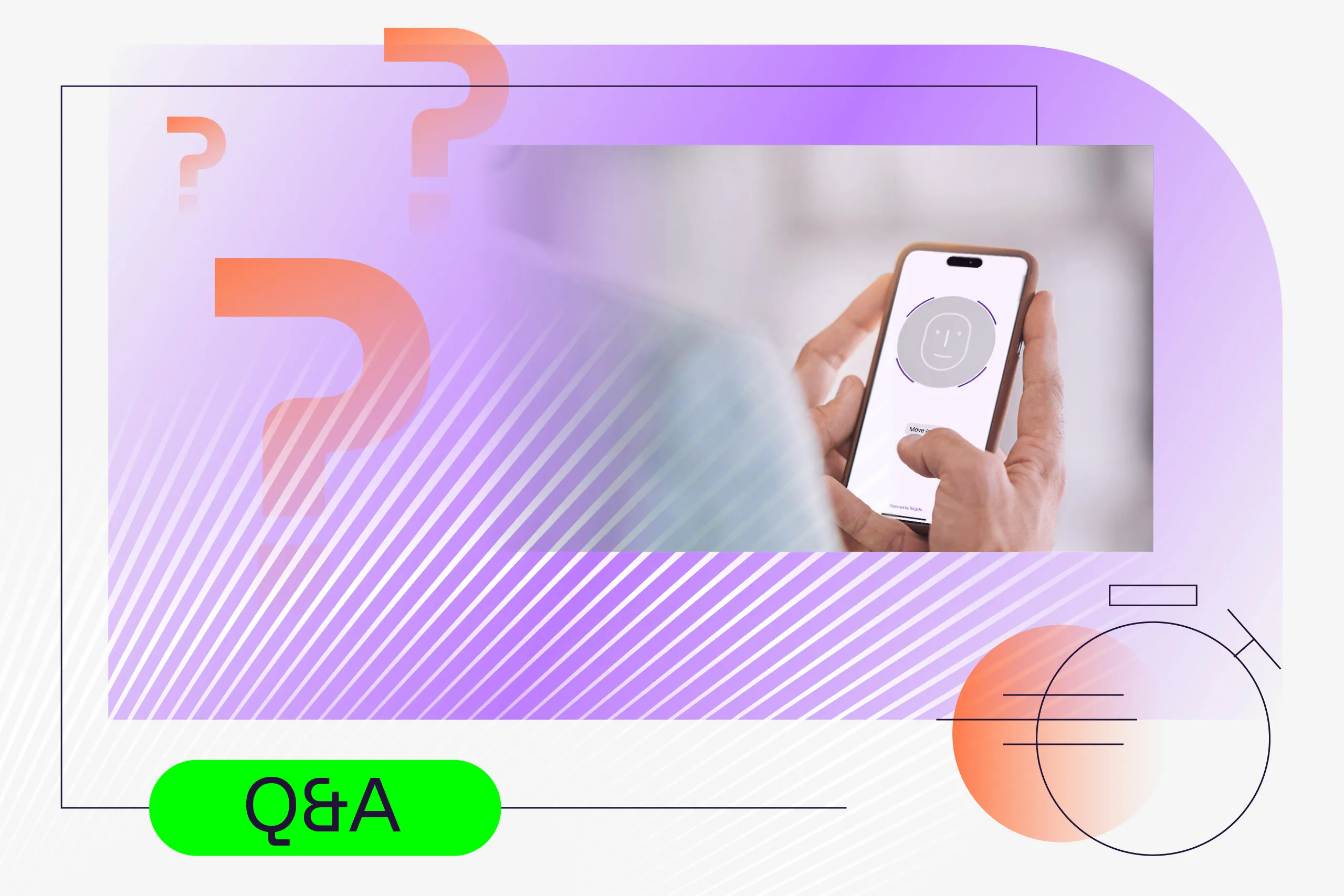
- Probe capture. The user provides a new facial image, often through a selfie or video frame.
- Detection and quality assessment. The system locates both faces and checks whether the images are suitable for comparison.
- Template comparison. The algorithm converts facial features into biometric templates and calculates their similarity.
- Decision. A policy threshold determines whether the result is treated as a match or non-match. The organization may request another capture or send the case for review.
When is face matching used?
What affects face-matching accuracy?
How can Regula help with face matching?
FAQ
What is the difference between face matching and face verification?
Face matching produces a similarity score for two facial samples. Face verification uses a 1:1 comparison and a decision policy to test a claimed identity. The terms are sometimes used interchangeably, so product specifications should state whether the system supplies a score, a decision, or both.
Is face matching the same as face recognition?
Face recognition is a broader term that can include 1:1 verification and 1:N identification. Face matching usually refers to a 1:1 comparison with a specified reference.
Does a successful face match prove someone’s identity?
Not on its own. A successful match supports an identity claim when the reference is trustworthy, the probe was captured from a live person, and the capture process is protected. Document authentication, liveness checks, and secure capture supply the additional evidence.
What does a face-matching score mean?
A face-matching score expresses the similarity between two biometric templates under a particular algorithm. It is generally not the probability that the images show the same person, and scores from different products may not be directly comparable.
Can face matching be used for authentication?
Yes. A returning user can be compared with a biometric reference already bound to the account. Enrollment quality, capture security, liveness checks, and recovery policy affect the reliability of that decision. Multi-factor authentication also requires an independent factor.