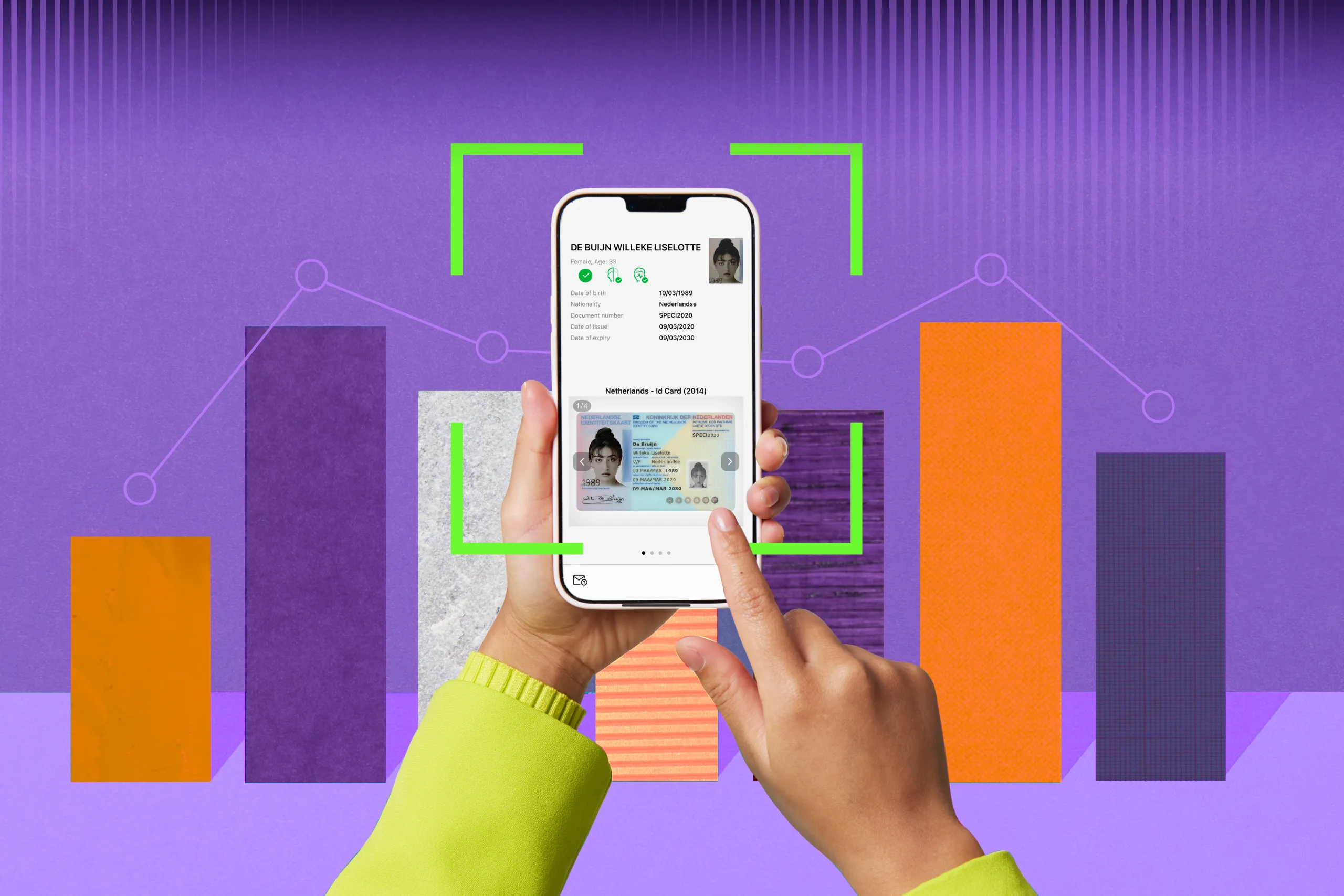
Identity Verification
What is identity verification?
How does remote identity verification work?
- Document capture: Obtain readable images of the required document pages or sides
- Reading and examination: Extract identity data and examine the document's authenticity and validity
- Additional validation: Check relevant attributes or electronic signatures using suitable sources and supported chip functions
- Applicant verification: Compare the person with a trusted portrait and assess liveness when using remote facial biometrics
- Decision and recording: Apply the acceptance policy, request further evidence where needed, and record the result
What should a business consider when choosing identity verification?
- Which authenticity and applicant checks run for each evidence type
- Performance on relevant fraud attempts and legitimate applicants
- Alternatives for unsupported documents or unsuccessful captures
- Processing locations, retention controls, and staff access
- Integration requirements, review workload, and cost per completed verification
How can Regula help with identity verification?
FAQ
Is identity verification the same as KYC?
Identity verification establishes who the customer is. Know Your Customer (KYC) commonly includes broader work, such as understanding the relationship, assessing risk, and maintaining customer information. Its exact scope depends on the institution and applicable rules.
Does identity verification always require a document and selfie?
No. Accepted methods may include official digital credentials, checks against reliable sources, or assisted verification. The chosen method must provide the evidence required for that service. Checking control of an email address alone generally does not establish a person's legal identity.
Is extracting data with OCR enough to verify identity?
No. Optical character recognition converts visible text into data. It can read text from a forged document as well as a genuine one. Authenticity checks and confirmation that the evidence belongs to the applicant answer additional questions.
Can identity verification run without vendor-hosted processing?
Yes. Depending on the product, processing may run on customer-managed servers or partly on a device. Confirm where each required function runs, including liveness, source checks, and logging. A mobile interface does not mean that all processing occurs locally.
How should businesses interpret failed identity verification?
Examine the reason. Poor image quality, unsupported evidence, an expired document, a biometric non-match, and suspected fraud require different responses. A failed session is not automatically a false positive, false negative, or confirmed fraud attempt.
Can previous identity verification be reused for another service?
Sometimes. The receiving service must establish that the record belongs to the same person, is sufficiently current, and meets its evidence requirements. Data reuse must also be permitted. A previous approval for a low-risk service may provide insufficient assurance for a higher-risk transaction.