
.webp)
In brief: An enterprise-grade identity verification platform combines risk-appropriate checks with configurable workflows, traceable decisions, secure data handling, and reliable operation across markets and systems. Evaluating these capabilities against your requirements helps establish whether the identity verification platform fits your business.
In Regula’s 2026 research, only half of the organizations surveyed said they could fully reconstruct how an identity verification decision had been reached. Without that record, explaining why a customer was approved or rejected can become difficult or even completely impossible.
Decision traceability is one of eight criteria we explore in this article to explain what makes an identity verification platform enterprise-grade. We also cover questions to ask vendors and the next steps in evaluating potential providers.
What “enterprise-grade” means in identity verification
“Enterprise-grade” has no single, universally accepted definition in identity verification. One vendor may emphasize processing capacity, while another focuses on security controls or deployment options. The label becomes useful when it is connected to specific capabilities and evidence of how they perform.
For customers, enterprise readiness means being able to apply verification measures appropriate to the risk of each journey while meeting broader requirements for security, integration, scalability, operational control, and auditability. A routine login may rely on existing authentication methods, while account recovery may require fresh identity evidence before access is restored.
An enterprise-grade platform needs the flexibility to tailor verification workflows to your business processes, risk policies, and existing systems. Those workflows also need to remain secure, reliable, and auditable as transaction volumes, use cases, and requirements change.
The eight criteria below can help you compare identity verification solutions, with common customer questions and examples of how Regula addresses them.
Get posts like this in your inbox with the bi-weekly Regula Blog Digest!
1. Risk-based approach: the level of verification matches the risk
A risk-based approach considers what a person is trying to do and whether the circumstances raise concern. A returning customer checking their balance may use their usual authentication method. Changing the bank account used for payouts may require an additional identity check because an impostor could redirect the customer’s money.
An unfamiliar device or several failed login attempts can increase concern. Neither proves fraud on its own, but either may justify additional verification before a sensitive action proceeds. The aim is to obtain enough evidence for the situation without making every customer repeat document verification for every interaction.
Customer’s question: Can we request stronger verification for sensitive actions without making every customer repeat the same checks?
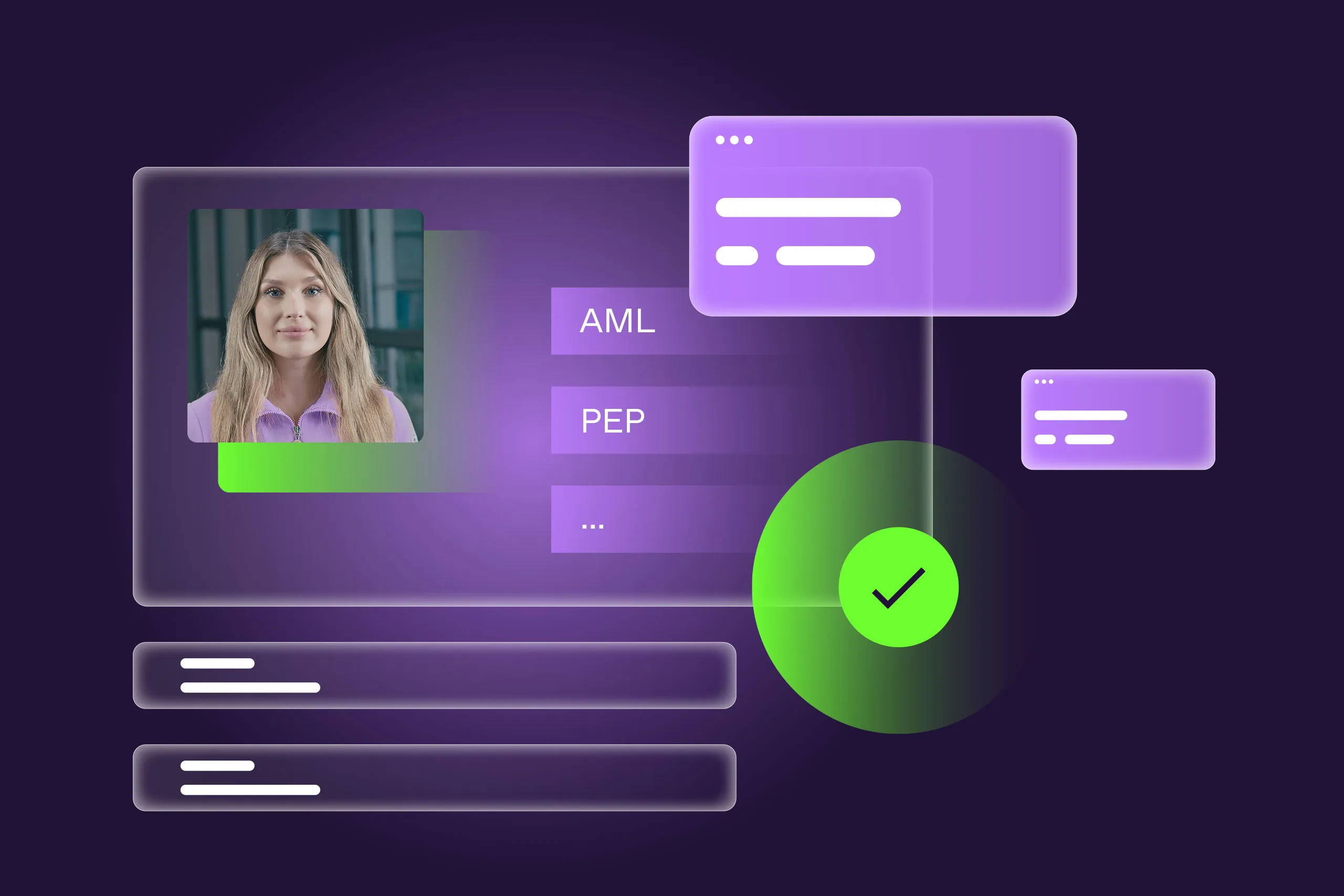
Vendor's answer: Regula IDV Platform enables businesses to build risk-based verification flows that combine document verification, face comparison, liveness detection, and other identity and risk signals according to their policies. These can include anti-money laundering (AML) screening, sanctions and politically exposed person (PEP) screening, as well as proof-of-address verification and background screening. Configurable rules determine when additional checks are triggered. For a previously verified customer, this could mean comparing a new selfie with the verified portrait and performing a liveness check, while requesting document verification only when the action, risk signals, or available identity evidence require it.
2. Customer journey orchestration: configurable workflows coordinate checks
Once the business has decided how onboarding and verification flow will look like and what checks are required, workflow orchestration and identity lifecycle management determines their order and what happens after each result.
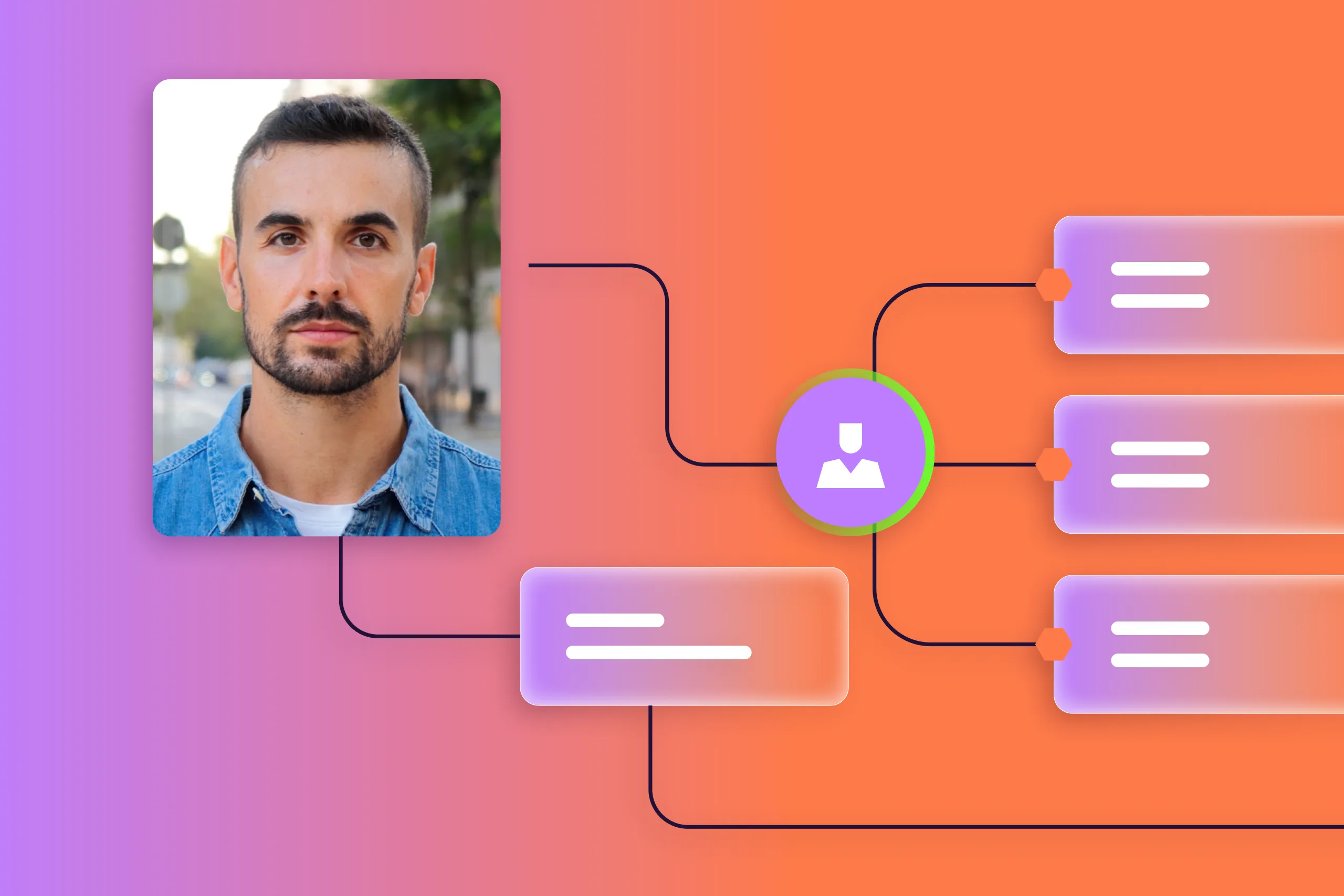
Orchestration helps coordinate identity checks throughout the account lifecycle, from registration and login to password resets, account recovery, and sensitive transactions. It connects each action to the required verification steps and defines what happens next, whether the customer can proceed, needs to retry, or requires human review.
Customer’s question: Can we configure what happens when a check fails or a customer needs to retry?
Vendor's answer: Regula’s platform approach supports configurable sequences, branches, and retries. Businesses can connect customer actions to the appropriate checks and define how the process continues after each outcome. This allows different verification processes to be configured for onboarding, account recovery, and other interactions.
3. Auditability and traceability: records explain decisions
A verification decision should remain understandable after the session ends. If a customer disputes a rejection or an investigator questions an approval, authorized staff need to reconstruct what happened: which evidence was available, which checks ran, and which rules applied at the time. Records should also identify any manual intervention and its effect on the outcome.
For banks and other regulated businesses, these records also help demonstrate compliance with regulatory requirements. For example, the UK’s Money Laundering Regulations require covered businesses to retain documents and information obtained during customer due diligence. These records allow investigators and regulators to establish which checks were completed and assess whether the organization met its obligations. Inadequate record keeping can contribute to compliance failures and regulatory penalties.
Customer’s question: Can we reconstruct a disputed decision using the evidence and rules applied at the time, and export the relevant records for an audit?
Vendor’s answer: Regula provides session review, interaction logs, and audit exports that connect verification results with supporting evidence and operator activity. Case Management allows authorized teams to bring related verification sessions and evidence into a case for investigation, manual review, and documented findings. When configured, the identity verification platform can also record the authentication step used before access was granted, such as a face comparison against the customer’s enrollment portrait. This helps authorized teams establish which checks supported the access decision and retrieve the relevant records for an investigation or audit.
4. Data governance: sensitive data stays under control
Identity data needs protection throughout collection, processing, storage, and deletion. Effective governance establishes where data is processed and stored, who can access it, and how long it is retained. It also assigns responsibility for security updates, backups, and deletion.
Organizations approach this control differently. Some prefer to operate the platform within the infrastructure they manage. Others use a provider-managed service, with contractual safeguards and audit rights helping them oversee how their data is handled. Regional requirements, internal policies, and available technical resources influence the choice.
Customer’s question: What options do we have for hosting identity data, and how are responsibilities for access and maintenance divided?
Vendor’s answer: Regula offers dedicated private-cloud and customer-managed on-premises deployment options. Private-cloud deployment uses an environment dedicated to your organization, while on-premises deployment places the system within infrastructure you manage. The chosen arrangement determines who administers the environment, maintains it, and may access it for support. Agreeing on these responsibilities during implementation helps align the deployment with your organization’s security and privacy policies.
5. Scalability and reliability: performance keeps pace with demand
Scalability means handling more verification requests and stored data while maintaining agreed performance. Workflow complexity matters too: a process combining document checks, biometrics, and external screening places different demands on the platform than a single check.
Reliability includes predictable handling of interruptions. If a component becomes unavailable, customers need a clear next step, and operational teams need visibility into unfinished checks. Where supported, preserving progress allows verification to resume without repeating completed steps. An incomplete check must remain distinguishable from a successful one.
Customer’s question: Can the platform handle growing and peak verification volumes without performance degradation or loss of reliability?
Vendor’s answer: Regula IDV Platform supports growing verification volumes and stored identity data, with high-availability deployment options and built-in autoscaling when configured for the deployment environment. During pre-sales, the Regula team can assess expected workloads and infrastructure requirements, with configuration and performance testing carried out through professional services. Session statuses also help operational teams distinguish completed, failed, abandoned, and interrupted interactions.
For example, our customer REACT reports that its onboarding process combines document authentication, biometric verification, and backend cross-checks, with users completing it in under 30 seconds on average.
6. Global coverage and usability: verification works across markets
Supporting a customer’s document is only part of successful verification. Customers also need clear guidance on how to capture it, complete a liveness check, or read a biometric document’s chip. Real-time feedback and visual instructions can help them position the document, correct glare, or hold their phone in place during an NFC read. These interactions influence how often customers complete each step on the first attempt, reducing retries and abandonment.
For international businesses, this experience needs to work across the document versions, languages, and verification methods used in their target markets. First-attempt success rates help reveal where customers struggle, even when their documents are technically supported.
Customer’s question: Does the platform support our customers’ documents and languages, and how does it guide them through verification successfully on the first attempt?
Vendor’s answer: Regula supports 16,500 identity document templates from 254 countries and territories, covering documents in 138 languages, including Latin and non-Latin scripts. Its document template database helps identify coverage for specific document versions. Interface localization and capture guidance are also relevant to the proposed implementation. During a demo or pilot, businesses can assess the available feedback and visual instructions for document capture, liveness checks, and NFC reading, then measure first-attempt success for their customer mix.
7. Integration: verification works within the existing technology environment
Verification needs to work with the systems a business already uses. An account system may need a verification result before restoring access, while a fraud team needs supporting evidence in its review tools. Integration connects these processes and allows existing third-party services to contribute checks where needed. Clear ownership of each connection helps keep these exchanges working as systems change.
Customer’s question: Can we keep our existing account, fraud, and review systems? What will our team need to build and maintain?
Vendor's answer: Regula’s vendor-agnostic architecture supports integration through customizable connectors. During pre-sales, the Regula team can explore your existing systems and third-party services to assess integration options and identify any development work needed.
8. Identity lifecycle support: profiles connect verification records over time
Verification at onboarding establishes a starting point. A document may later expire, customer details may change, or account recovery may require fresh identity evidence. A customer profile connects these checks, recording when each took place, what evidence was used, and the outcome.
Customer’s question: Can we link new checks to an existing customer’s history and set rules for when reverification is needed?
Vendor’s answer: Regula IDV Platform delivers persistent customer profiles to connect verification history and identity evidence over time. Businesses can configure reverification and re-screening for events such as document expiration, account recovery, periodic reviews, or other lifecycle triggers, with new results linked to the same profile. Routine reverification, data cleanup, archival, and other maintenance tasks can also be scheduled to run regularly.
How can you turn the eight criteria into a practical vendor evaluation?
Once you have identified the capabilities that matter to your organization, an RFI or RFP can help structure the conversation with vendors. A request for information (RFI) helps explore available capabilities, while a request for proposal (RFP) asks vendors to explain how they would meet your defined needs.
Describing your use cases, markets, expected volumes, existing systems, and mandatory requirements gives vendors a common basis for responding. Asking them to explain limitations, provide supporting evidence, and specify implementation and pricing assumptions makes their proposals easier to compare.

After reviewing proposals and narrowing the shortlist, a pilot can show how the proposed solution performs in practice across your customer journeys, fraud risks, and operating conditions. The eight criteria remain useful checkpoints, now supported by hands-on testing.
Testing with the documents and devices your customers use, in a setup that reflects your system architecture, makes the results relevant to your business. Agreeing on acceptable outcomes beforehand gives fraud, product, engineering, and operations teams a common basis for evaluation. During the pilot, measure how often known fraudulent attempts pass, how often genuine customers are incorrectly rejected, how many customers complete verification, and how long the process takes.
Final thoughts
An enterprise-grade platform needs to fit the way your business verifies customers today and allow that process to change as new requirements emerge. The strongest basis for choosing one is evidence that its capabilities work together in your environment, with clear responsibilities for operating and maintaining them.
To see how Regula IDV Platform can support your customer journeys and operational requirements, don’t hesitate to contact our team to arrange a demo.