
Regula and Veriff offer identity verification platforms built on their own document and biometric technology, with tools for managing identity checks beyond onboarding.
For enterprises, the more important differences lie in verification depth, deployment flexibility, integration with existing systems, and control over identity data and workflows.
Can the solution detect the fraud you encounter without creating unnecessary friction for legitimate customers? Will it fit your existing systems and meet your requirements for handling identity data?
This comparison examines how each vendor supports those needs, from integration and deployment to verification workflows and technical support. It also looks at how licensing and operating costs affect the choice as verification volumes grow.
In brief: Regula suits enterprises that need reliable fraud checks across apps, branches, and existing systems. It combines document and biometric verification with flexible deployment, so teams can decide where checks run, how identity data is handled, and when customers need additional verification.
Veriff suits organizations seeking a managed cloud service with network-based fraud signals and the option of specialist review when automated checks need further assessment.
How do Regula and Veriff compare?
Regula develops identity verification solutions for businesses across banking, aviation, and other industries, with customers including UBS, AirAsia, Wizz Air, and Uber. Drawing on its expertise in forensic document examination and border control, it combines document authentication and biometrics with proprietary software for managing identity verification throughout the customer lifecycle.
Veriff provides a cloud-based identity verification service built on its own document and biometric technology. Its offering includes fraud detection, biometric authentication, and AML screening.
The table below compares how each vendor addresses key enterprise requirements.
| Enterprise requirement | Regula | Veriff |
|---|---|---|
| Verify customers and detect fraud | Combines document authentication technology trusted by border authorities with biometric, device, location, and behavioral checks to detect identity fraud. | Combines document and biometric checks with device signals and links between attempts across its customer network to identify suspicious patterns, including repeated or coordinated fraud attempts |
| Fit existing systems and channels | An end-to-end platform or individual components (SDKs, API) that work cross-platform, alongside existing providers; supports digital channels and dedicated document readers | A cloud platform with web and mobile SDKs and APIs for connecting verification to existing applications |
| Control processing and identity data | Customer-managed deployment on-premises or in a private cloud, with control over where identity data is stored and how long it is retained. Selected checks can also run on-device | Vendor-managed cloud infrastructure, with retention and deletion options under agreed data-processing terms |
| Manage verification beyond onboarding | Persistent identity profiles and configurable workflows for step-up checks and automatic reverification, including risk-based triggers and case management | Scheduled and risk-triggered reverification |
| Get help with complex requirements | A specialist owns each issue through resolution and can involve engineers in product adaptations; G2 quality-of-support score: 99% | Dedicated Enterprise implementation and account support; G2 quality-of-support score: 92% |
Quality-of-support scores: G2 Grid® Report for Identity Verification, Summer 2026.
How do Regula and Veriff detect identity fraud?
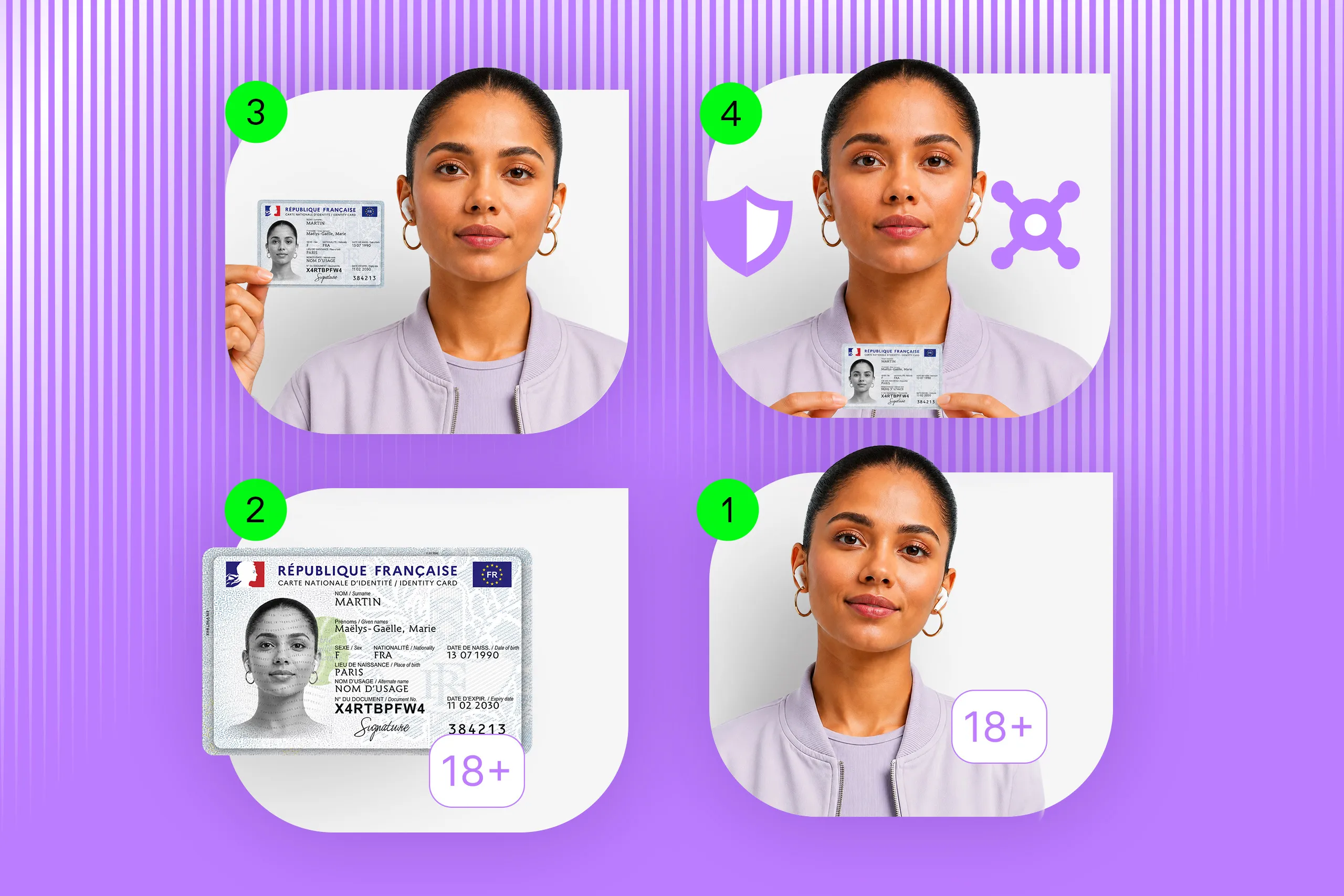
Regula cross-checks document data, biometrics, and session signals to detect signs of identity fraud. Its experience in border control informs checks of document security features and data consistency. These checks can expose alterations that a convincing document image may conceal. Face matching and liveness checks help establish that the person presenting the ID is its holder and is physically present. Device, location, and behavioral signals provide additional evidence of suspicious activity.
For remote verification, Regula also checks for attempts to manipulate the evidence submitted. Server-side biometric checks look for signs of injected or altered input, while electronic-document checks re-verify the chip and its data independently of results returned by the user’s device.
For enterprises, sourcing electronic IDs to test verification workflows can be a challenge. Regula NFC TestKit Service, available to enterprise customers, provides customized test documents with real NFC chips, fictional identities, and test certificates. Teams can test successful and failed verification scenarios for their target markets without collecting real customers’ IDs.
Veriff checks documents for signs of alteration, matches the selfie to the ID, and checks liveness and biometric input for manipulation. It also analyzes device and network signals. Its CrossLinks feature identifies connections between verification sessions, while Industry CrossLinks uses signals across Veriff’s customer network to flag potential repeat offenders and coordinated fraud.
Where can verification run, and who controls identity data?
Regula lets enterprises verify identities within their own infrastructure, on-premises or in a private cloud. Document images and biometric data stay within the customer’s environment, without passing to Regula. Teams can choose where processing takes place, who can access the data, and how long it is retained — helping them meet requirements for local processing and restricted access.
Selected checks can also run on-device, including document processing and native iOS/Android 1:1 face matching, supporting workflows with limited connectivity.
Organizations with separate regional environments or restrictions on external data processing — including banks and government agencies — can run identity verification within their approved infrastructure.
Your team remains responsible for securing and maintaining the hosting environment.
Veriff operates verification as a managed cloud service on AWS, with Ireland as its stated default data storage location. Veriff manages the infrastructure and controls access by its personnel and subprocessors under its data processing terms. Customers can adjust retention periods and request deletion, subject to exceptions for backups and permitted retention. This reduces the infrastructure the enterprise must maintain, while requiring it to assess Veriff’s processing arrangements against its own data policies.
Veriff’s managed service is for organizations prepared to use an external processing environment under agreed-upon data-handling terms.
How do Regula and Veriff integrate with existing systems and channels?
Both vendors allow enterprises to add identity verification to existing applications via SDKs and APIs.
Regula lets enterprises adopt a complete verification solution or add individual components where needed. A team can add document authentication to an existing onboarding flow, for example, while keeping its current biometric provider. Regula IDV Platform supports vendor-agnostic orchestration, allowing Regula and third-party services to work within the same verification process. This flexibility lets enterprises add verification capabilities to existing systems, including legacy infrastructure, while keeping the tools and providers they already rely on.
Regula also supports businesses that verify customers both remotely and at physical locations. For example, banks with branch and app-based onboarding. Alongside mobile and web implementations, Regula provides document readers as physical devices and software compatible with third-party readers.
Veriff’s platform brings together its own verification products and selected partner-powered checks, including AML screening and database verification.
Both vendors support integration with existing applications through SDKs, APIs, and webhooks.
How much control do teams have over verification workflows with Regula and with Veriff?
Regula IDV Platform lets teams adapt verification to the customer’s situation and manage it throughout the identity lifecycle. Teams can configure step-up checks that run when a result or business rule calls for stronger assurance. A suspicious result can also trigger an investigation case routed to an analyst, along with all the gathered verification evidence.
Persistent identity profiles link verification results to the same customer over time, giving teams context for subsequent interactions. Teams can use these profiles to run follow-up workflows on demand or schedule checks for selected customer groups — for example, automatically initiating reverification when a customer’s identity document expires. Once configured, these rules determine when additional verification is needed, without requiring staff to track expiration dates or launch each review manually.
Veriff supports configurable verification flows, including scheduled and risk-triggered reverification. Some settings require its Solutions Engineers; for example, changing AML screening thresholds or configuring document types and validation rules in Unstructured Docs. Enterprises can also use APIs and webhooks to implement additional workflow logic in their own systems.
Both Regula and Veriff also support white-label identity verification, allowing teams to adapt branding to their applications. This helps keep verification consistent with the product customers already use.
How do Regula and Veriff handle peak demand and service continuity?
Regula lets enterprises scale verification capacity and design availability around their operational needs. Teams can add processing instances and distribute requests between them as verification volumes grow.
Regula IDV Platform also supports active-active deployments, where multiple sites process requests simultaneously. If one site becomes unavailable, traffic can be routed to the remaining sites, helping keep onboarding and other verification workflows running. The setup requires sufficient capacity, data replication, and failover configuration within the customer’s infrastructure.
Veriff manages scaling and availability within its cloud infrastructure. Customers agree capacity requirements with the provider. Its published service agreement ties response-time commitments to both monthly and per-minute session volumes, so a monthly allowance alone does not establish coverage for traffic peaks. For a bank expecting a surge after a product launch, for example, the relevant figure is how many verifications may arrive in a single minute.
What support do Regula and Veriff provide during and after implementation?
Regula combines hands-on technical support with product engineering to address requirements that standard configurations may not cover. Its swarming support model assigns each issue an owner who remains responsible through to resolution and brings in the relevant specialists, including engineers. Customers retain a contact who understands the issue and coordinates the work needed to resolve it.
That collaboration can extend to product development. A bank’s concerns about tampering with mobile chip-verification results led Regula to develop server-side chip verification. For a major sports event, Regula adapted photo validation to help its customers issue millions of entry permits. Both capabilities subsequently became available to other customers. These examples show how Regula can work with enterprises whose requirements call for changes to the product itself.
Veriff provides dedicated implementation support through its Enterprise plan. A specialist team helps configure the solution around the customer’s requirements and provides additional assistance during the initial rollout. The plan includes support, maintenance, and account management at no extra charge.
Beyond implementation, Veriff’s Fraud Intelligence offering gives customers access to fraud experts who can help refine rules and develop fraud mitigation strategies.
Customer ratings favor Regula in G2’s Summer 2026 Grid® Report for Identity Verification: its quality-of-support score was 99%, compared with Veriff’s 92%. Regula also recorded a Net Promoter Score of 97, compared with Veriff’s 65, reflecting customers’ willingness to recommend each provider.
How do pricing and operating costs compare?
Regula’s pricing reflects how an enterprise plans to use its verification platform: which checks it needs, how the solution will be deployed, and the expected volume of initial and repeat verifications. Regula offers transaction-based, flat-rate, and user-based licensing options, depending on the products selected.
Regula’s on-premises deployment can also offer better long-term economics for enterprises with sustained high verification volumes. Organizations with existing infrastructure and technical teams can spread deployment and operating costs across multiple workflows, from customer onboarding to employee verification. Depending on the license terms, this can lower the effective cost per check as usage grows.
Veriff publishes per-verification prices for its self-serve plans and offers custom Enterprise pricing with volume discounts. Published self-serve rates range from $0.80 to $1.89 per verification, with monthly minimums.
For an enterprise, the useful comparison is the annual cost of running the same verification process at the expected volume, including repeat checks. That calculation should cover vendor fees and internal operating costs. Our guide to identity verification pricing models explains how to compare those costs.
When should an enterprise choose Regula or Veriff?
Regula is a strong fit for enterprises that need identity verification to work across a complex operating environment. It combines document and biometric fraud checks with document authentication expertise used in border controls globally.
Enterprises can apply these capabilities across remote and in-person verification, adopting a complete solution or adding components to existing systems. Configurable workflows support checks throughout the customer lifecycle, with engineering support for requirements that need a tailored solution.
Veriff is a fit for organizations seeking a managed cloud service that combines document and biometric verification with network-based fraud signals. Its configurable flows and reverification capabilities support checks beyond onboarding, while dedicated implementation teams help connect the service to existing applications.
If Regula looks like a fit for your requirements, our team can help you work through the practical details: how it would fit your architecture, which checks your workflows need, and what the implementation would involve. Get in touch to discuss a setup that works for your organization.

.webp)