Language

Age Gating

What Is Age Gating?

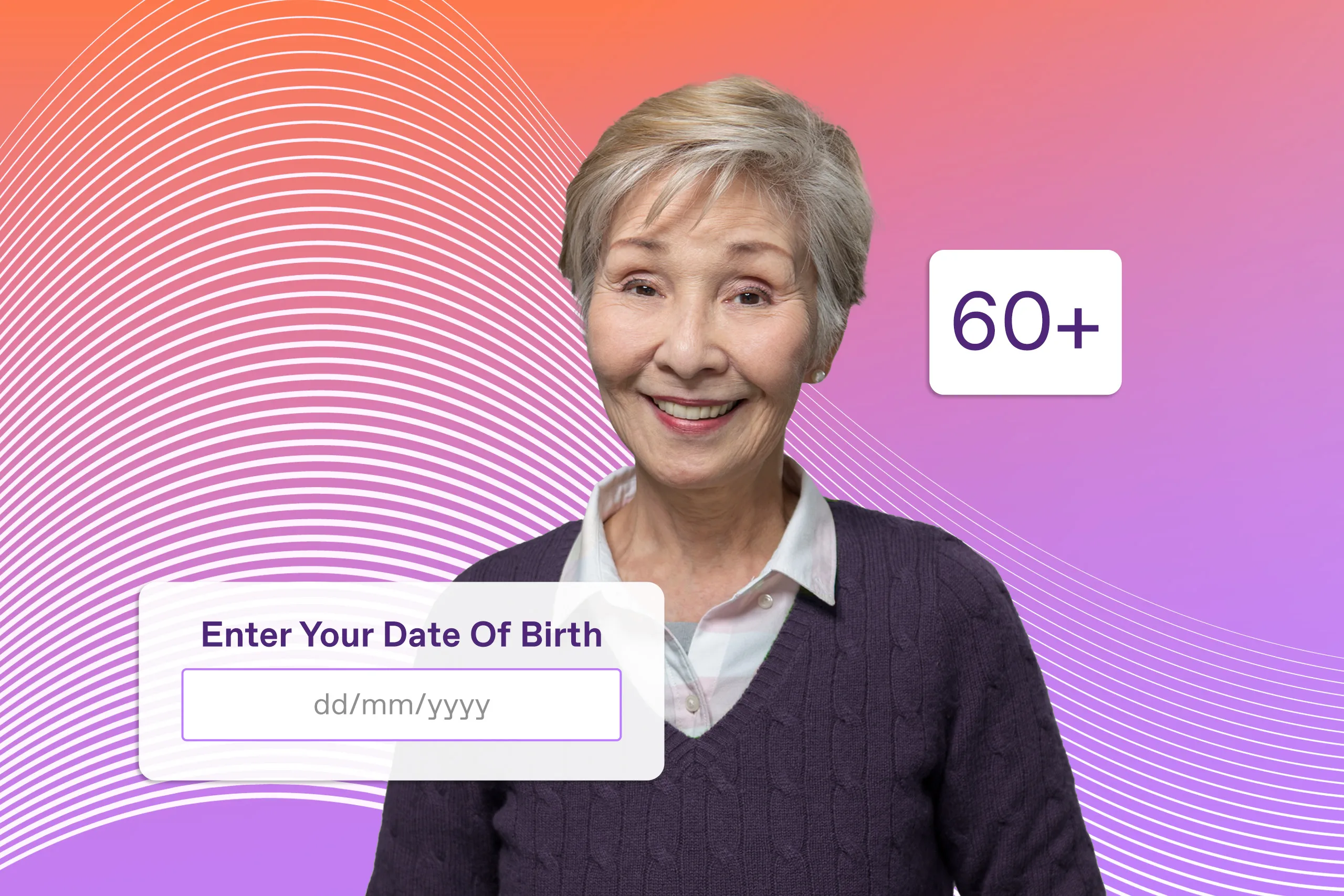
Age gating is a control that restricts access to age-restricted products, services, or content until the user confirms they are old enough, usually through a self-confirmation pop-up or a date-of-birth form.
Unlike age verification, which checks the claim against evidence such as an identity document or biometric data, age gating accepts the user's answer without proof.

How Does Age Gating Work?

Age gating appears at the point where age-restricted interaction begins and blocks it until the user responds. Common forms include:
  • Yes/no confirmation pop-ups, such as "Are you 18 or older?"
  • Date-of-birth entry forms
  • Checkboxes confirming that the user meets the age requirement
Age gating may protect an entire website or only specific areas: registration, checkout, individual product pages, or content categories. Some services show the gate once per visit, while others store the answer in a cookie or account profile so returning users are not asked again.
Because the gate relies on self-declared information, it cannot stop a minor from entering a false date of birth. For this reason, services subject to strict age-related laws combine the gate with age verification for high-risk actions such as purchase or account creation.

Why Age Gating Alone Is Insufficient for Effective Age Assurance?

Age gating can inform users about age restrictions and deter some casual attempts to access age-restricted content. However, self-declared age can be easily falsified and does not provide reliable evidence of a user’s age. Effective age assurance therefore requires stronger, risk-appropriate measures, which may include age estimation or verification using a government-issued identity document combined with face matching and liveness detection.
Regula Document Reader SDK extracts the date of birth from a passport, driver's license, or national ID card using OCR, machine-readable zone (MRZ) reading, and NFC/RFID chip reading where available. The SDK covers more than 16.500 document templates from 254 countries and territories, so services with an international audience can work with many document formats.
Regula Face SDK adds 1:1 face matching and active or passive liveness detection. It helps confirm that the document belongs to the person completing the check and that this person is physically present.

FAQ

What is the difference between age gating and age verification?

Age gating restricts access based on the user's own confirmation, such as a pop-up or a date-of-birth form. Age verification checks the user's age against evidence, such as an identity document. Age gating can be implemented in the interface alone, while age verification requires additional tools for document or biometric checks.

Is a date-of-birth form enough to comply with age laws?

It depends on the jurisdiction and the type of product or content. Self-declared information is accepted in some low-risk scenarios, such as viewing age-restricted marketing pages. Regulated areas such as gambling or alcohol sales may require age verification.

Can minors bypass age gating?

Yes. A user can enter a false date of birth or confirm an age requirement they do not meet. Age gating records the answer but has no way to check whether it is true. On shared devices, a stored answer can also let a minor reuse an adult's earlier confirmation.

When should age gating be combined with age verification?

Verification is usually added when the law defines a strict age threshold, when the consequences of underage access are serious, or when regulators require proof of age. Typical examples include online gambling, alcohol delivery, and financial products with age limits. In these cases, the gate only asks the question, while age verification checks the answer.
On our website, we use cookies to collect technical information. In particular, we process the IP address of your location to personalize the content of the site

Cookie Policy rules