Language

Age Verification

What Is Age Verification?

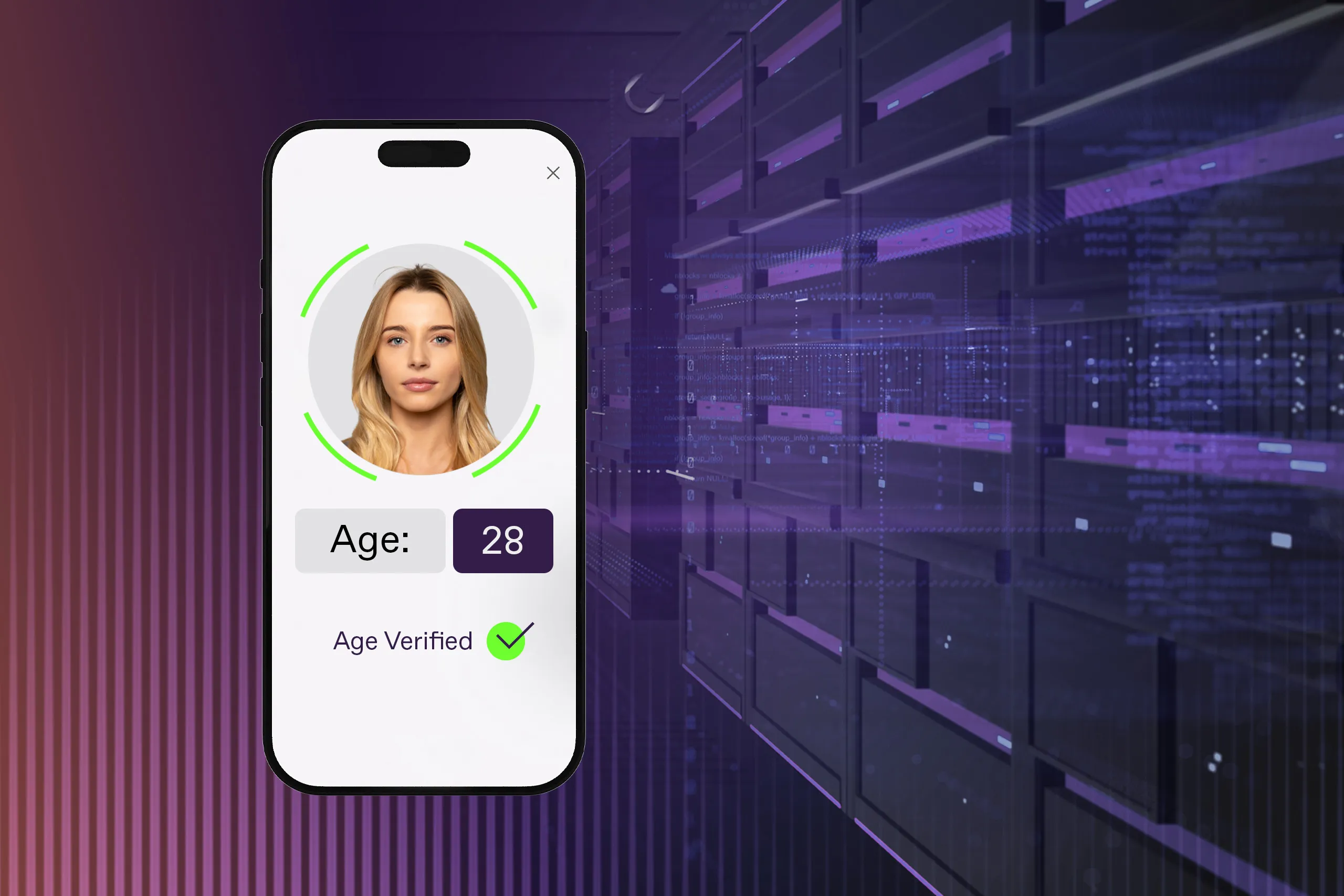
Age verification is a set of technical and organizational measures used to confirm whether a person meets a legal or policy-defined age threshold for accessing restricted goods, services, or content. A person’s age can be confirmed using an identity document, biometric analysis, or records from an authoritative source.

What Is the Difference Between Age Verification and Age Gating?

Age gating relies on the age stated by the user. For example, a user may be asked to enter a date of birth or confirm that they are over a certain age. Since no supporting evidence is checked, age gating cannot prove that the information is accurate.
Age verification provides a higher level of assurance by checking the user’s claim against reliable evidence. It is therefore better suited to regulated or higher-risk services where self-declaration is not sufficient.

How Does Age Verification Work?

The method depends on the level of risk, regulatory requirements, and the consequences of underage access.
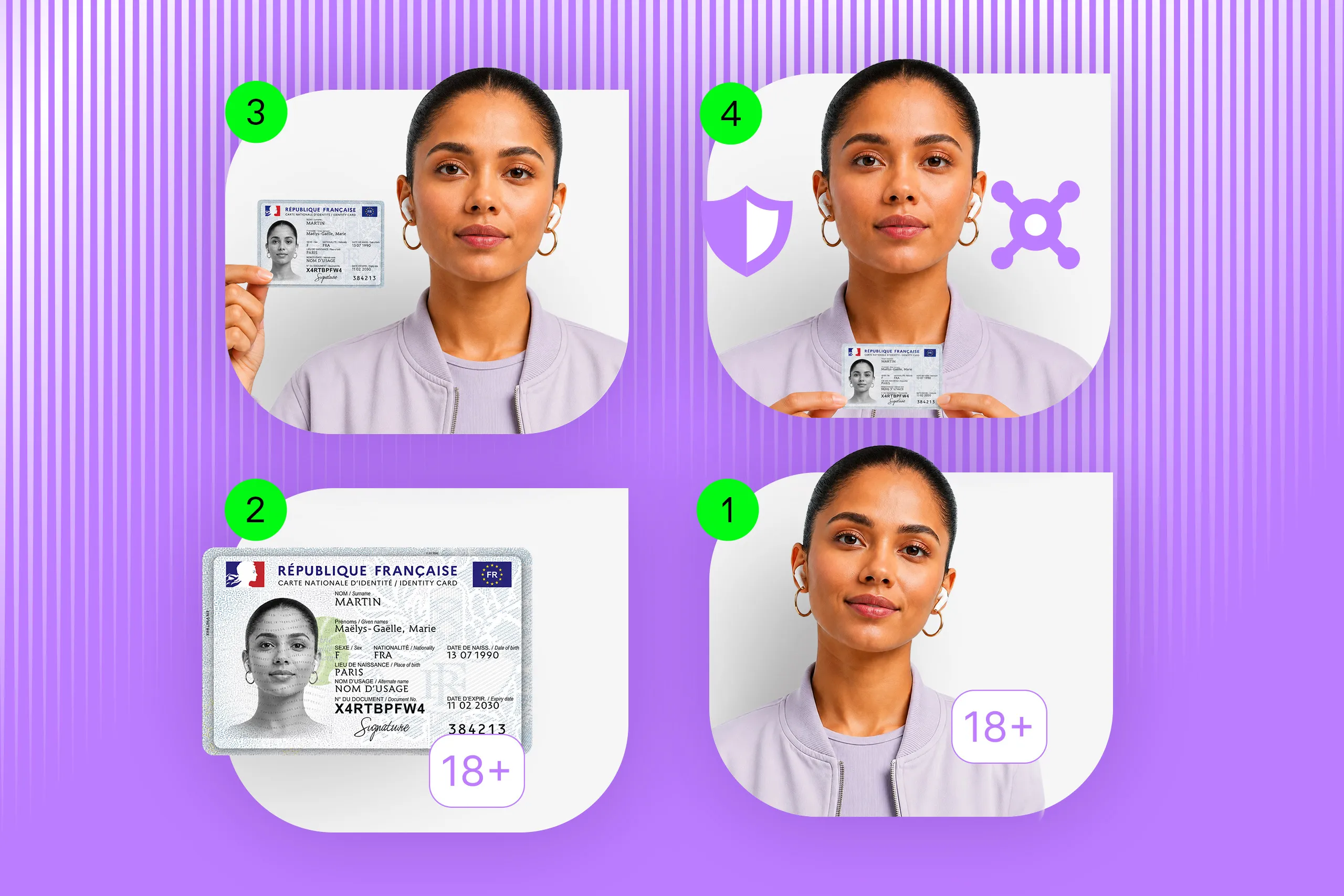
Document-based age verification uses a passport, driver’s license, or national ID card to confirm the user’s date of birth. The data may be extracted from the visual zone using OCR, from the machine-readable zone (MRZ), or from an NFC/RFID chip. Comparing data from several document zones can also help identify inconsistencies or tampering.
Biometric verification can confirm that the document belongs to the person completing the check. Face matching compares a selfie of the user with the portrait on the identity document.
Liveness detection helps identify attempts involving printed photos, replayed or injected videos, masks, and other presentation attacks.
Without face matching and liveness detection, a user may be able to pass an age check using someone else’s document.

Why Is Age Verification Important?

Age verification helps businesses:
  • Comply with age-related laws and industry requirements
  • Prevent minors from accessing restricted products or content
  • Reduce fraud and the misuse of borrowed or stolen documents
  • Build safer and more trustworthy online services
Common use cases include alcohol and tobacco sales, gambling, financial services, online gaming, social media, online dating apps, and access to age-restricted content.

How Can Regula Help with Age Verification?

Regula Document Reader SDK verifies identity documents and extracts the date of birth using OCR, MRZ, and NFC/RFID chip reading where available. It supports more than 16,500 document templates from 254 countries and territories, helping international services process different document formats.
Regula Face SDK adds biometric verification through 1:1 face matching and active or passive liveness detection. It helps confirm that the person completing the process matches the portrait in the document and is physically present.
Together, these technologies support a document-plus-biometric flow for higher-risk age checks.

FAQ

What is the difference between age verification and age gating?

Age gating relies on users to state their age or confirm that they meet an age requirement. It does not check whether their answer is accurate. Age verification uses supporting evidence, such as an identity document, to confirm the person’s age. It therefore provides greater assurance for regulated or higher-risk services.

How is a user’s age verified from an identity document?

The date of birth can be extracted from the document’s visual zone using OCR, from its machine-readable zone (MRZ), or from an RFID chip. Data from different document zones can be compared to identify inconsistencies or possible tampering. The system then calculates the user’s age and compares it with the required threshold. 

How do face matching and liveness detection strengthen age verification?

Face matching checks whether the person completing the process matches the portrait on the identity document. Liveness detection confirms that a real person is present and helps detect attempts involving photos, masks, replayed videos, or injected media. Together, these checks make age verification more reliable and secure. 

Where is age verification commonly used?

Age verification is commonly used for alcohol and tobacco sales, gambling, financial services, and age-restricted content. Social media, online gaming, and dating platforms may also use it to protect minors and meet legal or policy requirements. The required level of assurance depends on the industry, jurisdiction, and potential harm of underage access.

On our website, we use cookies to collect technical information. In particular, we process the IP address of your location to personalize the content of the site

Cookie Policy rules