Knowledge-Based Authentication (KBA)
What is Knowledge-Based Authentication (KBA)?
What are the types of KBA?
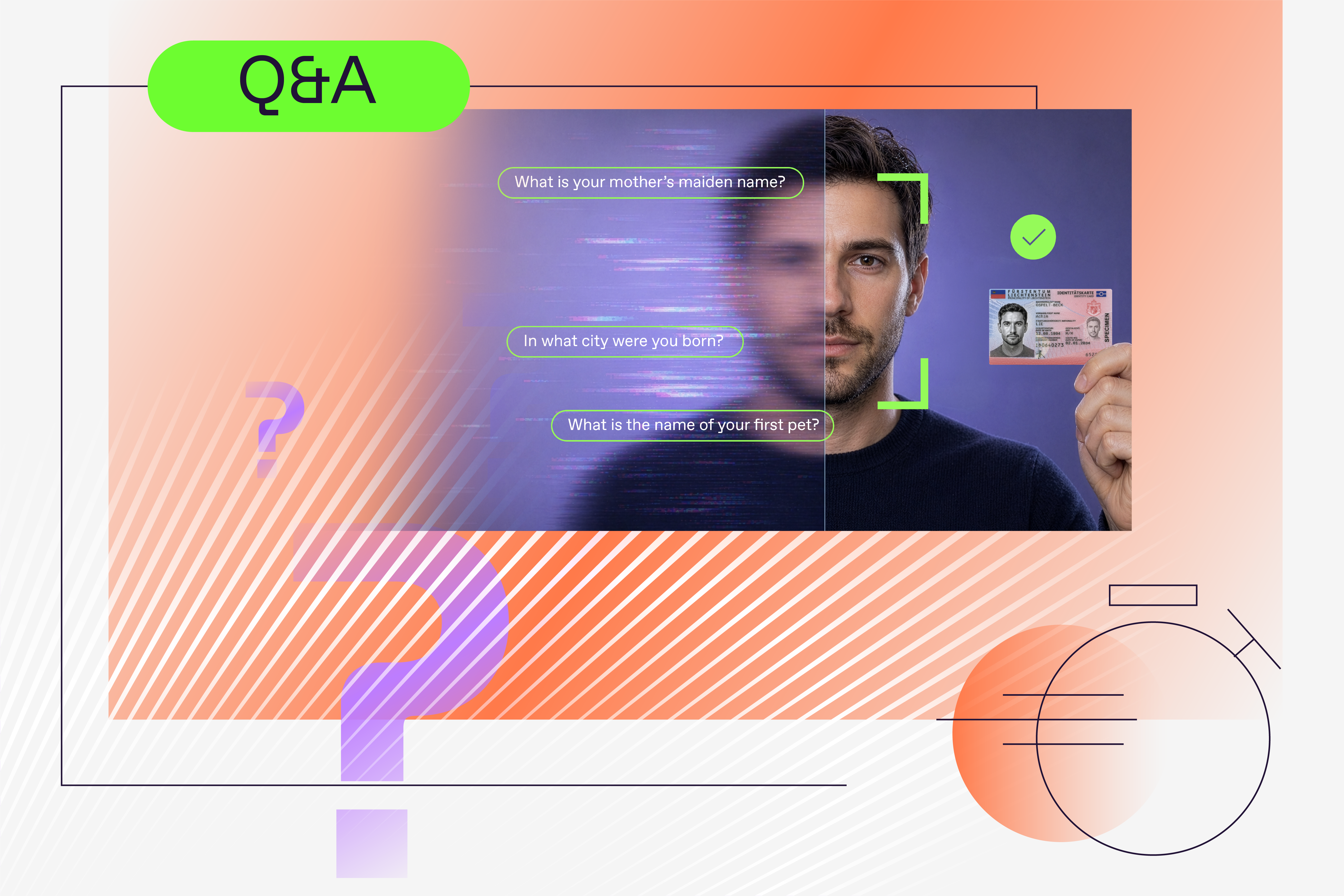
- Static KBA: uses questions and answers set in advance. A user may choose a security question when creating an account and answer it later to recover access. The same question can be asked repeatedly unless the organization changes it.
- Dynamic KBA or KVB: generates questions from external records at the time of the check. A person might be asked to identify a previous address or recognize a past transaction from several options. These questions do not depend on answers previously registered with the service.
Why has KBA become less reliable?
What can organizations use instead of KBA?
How can Regula help when KBA is insufficient?
FAQ
Is KBA the same as a password?
No. Both rely on something a person knows, but a password is intended to be a secret created or assigned specifically for authentication. KBA questions often rely on personal facts that may be discoverable through public sources, data breaches, or social engineering. Knowing someone’s previous address generally provides less assurance than controlling a properly protected authenticator.
What is the difference between static and dynamic KBA?
Static KBA uses questions and answers established in advance, such as a security question selected during account setup. Dynamic KBA creates questions from external records during the verification session. Dynamic questions can be less predictable, but their answers may still be available to an attacker or difficult for the legitimate user to recall.
Can KBA verify someone’s identity during onboarding?
Answers to personal questions can be compared with records, but they do not show that an identity document is genuine or that the person answering is its holder. An organization that needs stronger identity proof may require document verification and biometric checks. The required method depends on the service, risk, and applicable rules.
Why is KBA risky for account recovery?
Account recovery can give a person control of an existing account and its stored data. If an attacker can obtain or guess the answers, the recovery process may bypass stronger login protection. Organizations should assess account recovery as a sensitive action and use checks suited to its risk.