NFC
What is NFC?
How is NFC used to read an identity document?
Why is an NFC chip read useful in identity verification?
How can Regula help with NFC verification?
FAQ
What is the difference between NFC and RFID?
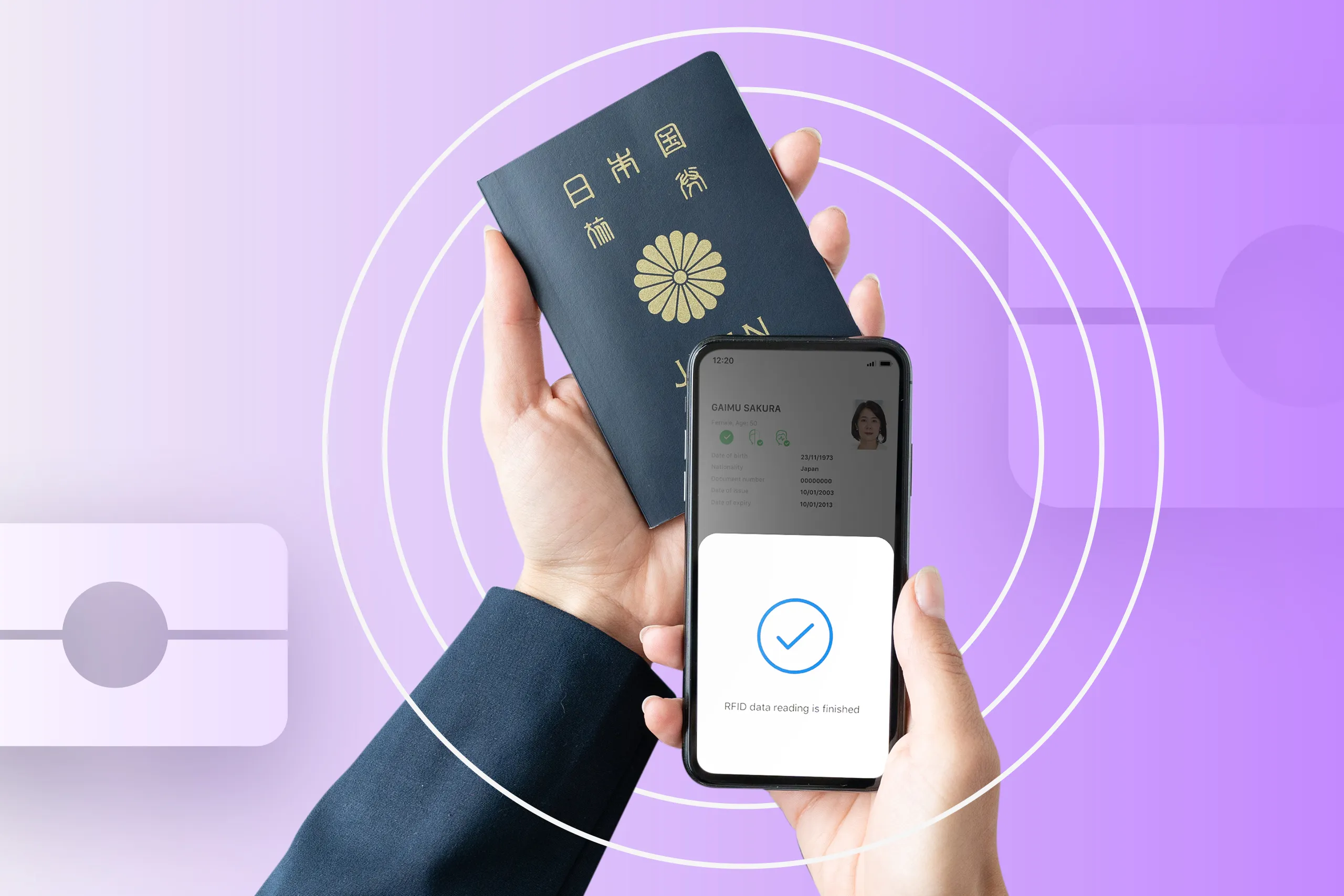
RFID is a broader category of technologies that use radio waves to identify or communicate with tags and chips. NFC is a short-range technology that operates at 13.56 MHz and can be used by compatible smartphones to communicate with certain RFID chips, including those in e-passports. In identity verification, “NFC reading” commonly refers to using a phone’s NFC module to access the document’s contactless RFID chip.
Does an NFC read prove that a passport is genuine?
No. A successful read establishes only that the device communicated with a chip and retrieved data from it. The verification system must validate the signed chip data and perform the applicable security checks before drawing conclusions about authenticity. It should also compare the chip data with the physical document and, where relevant, verify the person presenting it.
Can any smartphone read an e-passport?
No. The smartphone must have compatible NFC hardware, and the application must support the document’s chip and access method. Reading may also fail because of positioning, a protective case, an unreadable chip, or an error in the MRZ data needed to begin the session. Compatibility should be tested across the documents and devices the service expects to encounter.
Does NFC verification require internet access?
The short-range exchange between the device and the document chip does not itself require an internet connection. Some applications can read and process chip data locally if the required software and trust material are available on the device. Other implementations require connectivity for server-side security checks, certificate updates, storage, or additional stages of the identity verification workflow.