What is OCR?
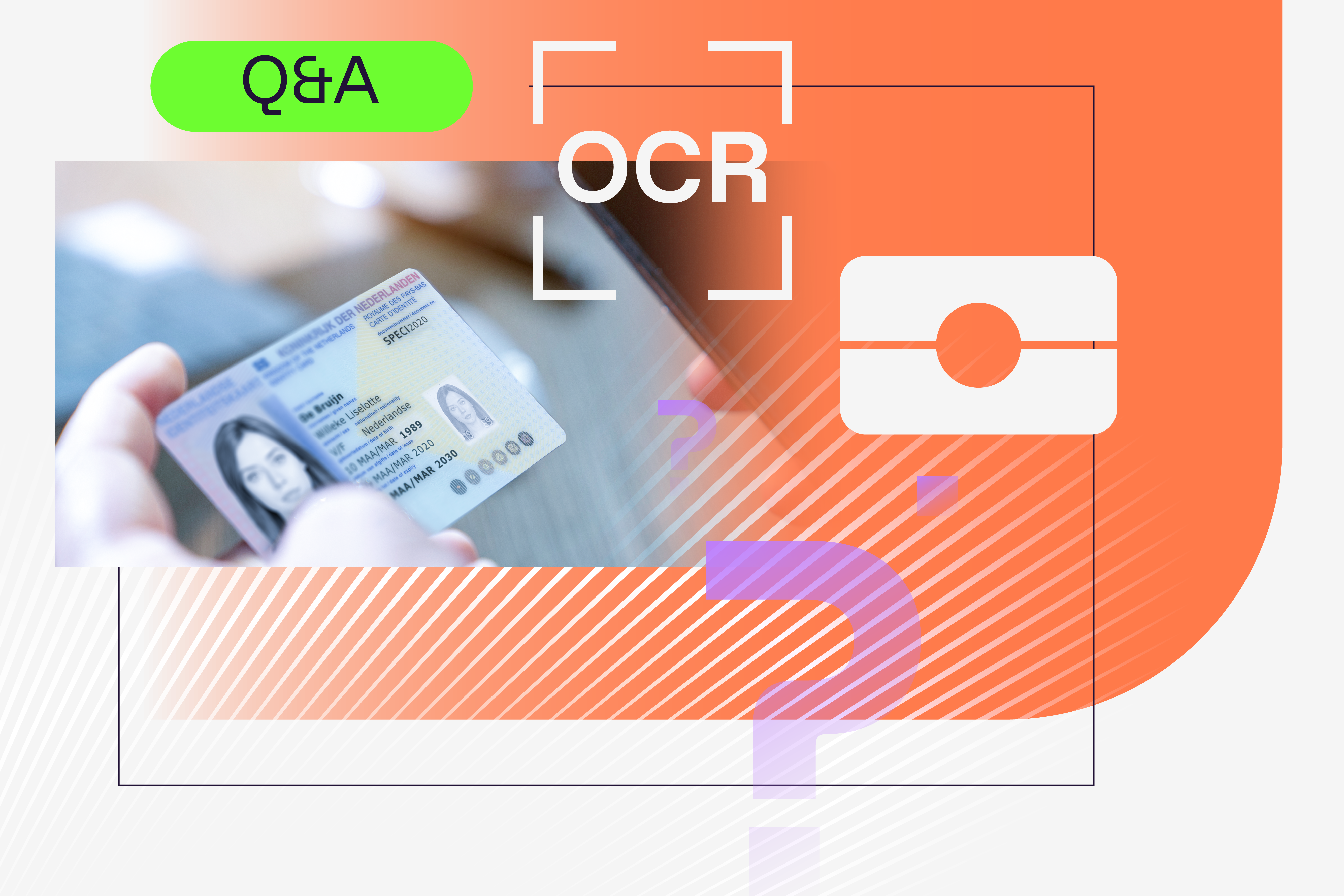
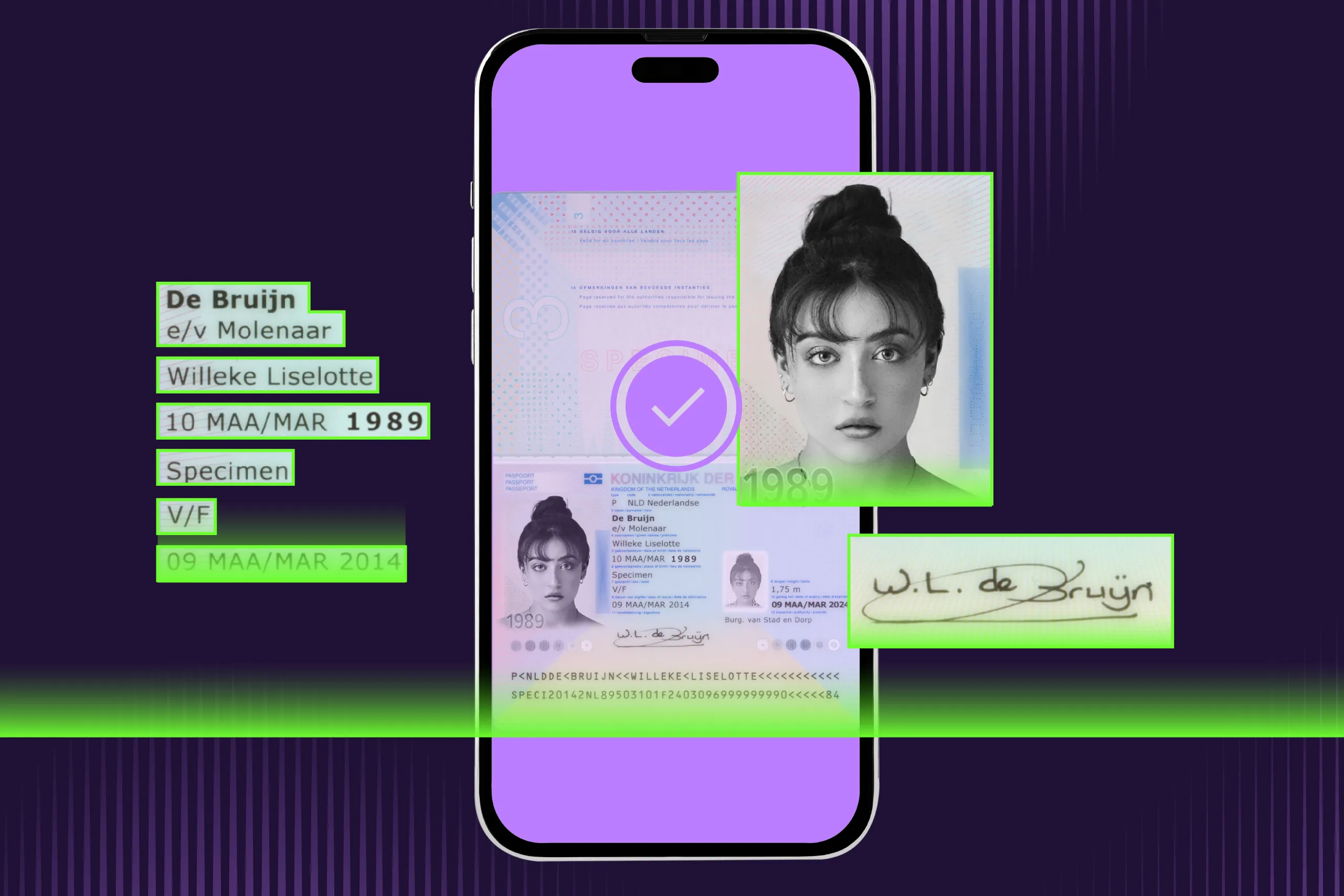
OCR, or optical character recognition, is technology that converts text visible in an image into digital characters a computer can process. In identity verification, OCR can extract printed details from a photograph or scan of a passport, identity card, driver’s license, or another document.
For example, instead of asking an applicant to enter their name, date of birth, and document number manually, an application can extract these fields from the submitted document image. The data can then populate an application form and support subsequent verification checks.
OCR recognizes characters, but character recognition alone does not explain what each value means. To determine whether a field contains a surname, expiration date, or document number, the verification system also needs information about the document’s structure and expected field positions.
How does OCR work with identity documents?
The document verification system first captures an image and assesses whether its quality is sufficient for processing. It then identifies the document type and version, locates the relevant text fields, recognizes the characters, and assigns the extracted values to structured fields.
Identity documents are more complex than ordinary printed pages. Names may appear in different languages and scripts, dates may follow local formats, and issuing authorities use many document designs. The same country may also have several valid versions of a document in circulation.
Many identity and travel documents contain a machine-readable zone (MRZ). OCR can recognize its printed characters, while separate parsing logic interprets its fields and validates their structure and check digits.
Why does OCR accuracy matter?
An error in a single character can affect a document number, expiration date, name comparison, or database search. This may lead to a failed check, duplicate customer record, incorrect screening result, or unnecessary manual review.
Blur, glare, cropping, low resolution, physical wear, and poor lighting can all reduce recognition accuracy. The system should therefore assess image quality and use the expected document layout when interpreting the extracted text.
Accurate extraction also improves the customer experience. Applicants can submit a document instead of repeatedly entering their details by hand, while the organization receives structured data for its onboarding or verification workflow.
How can Regula help with OCR?
Regula Document Reader SDK performs OCR on the visual zone and MRZ of supported identity documents. Its document-template database helps identify the document type and version, locate expected fields, assign recognized values to the correct data categories, and assess whether text appears in the expected format and position.
Depending on the selected components and licence, the SDK can compare extracted text with information from the MRZ, barcode, and RFID chip. It also supports image-quality assessment and document authenticity checks beyond text recognition.
Organizations can combine these results with
Regula Face SDK to compare the applicant’s facial image with a portrait extracted from the document or its RFID chip. This adds a person-to-document check to the wider identity verification process.