

Digital ID doesn’t mean one single thing. In one country, it is an electronic wallet that legally replaces a physical ID card. In another, it’s a login for government services. In a third, it’s a digital credential that still depends on a physical document underneath.
That makes global comparisons difficult.
In this guide, we focus on a selection of national digital ID systems already in use. We also look at other identity models and countries preparing broader credential rollouts.
In brief: As of September 2026, at least 25 countries now operate mature national digital ID systems: Austria, Bhutan, Bosnia and Herzegovina, Brazil, China, Costa Rica, Czech Republic, Denmark, Estonia, France, Greece, India, Japan, Kuwait, Maldives, Philippines, Poland, Portugal, Saudi Arabia, Singapore, South Korea, Spain, Thailand, the UAE, and Vietnam.
What qualifies as a digital ID?
For this overview, a digital ID is a government-backed digital credential that:
-
Exists in digital form.
-
Contains personal identity data and can be used as proof of identity.
-
Supports authentication or access to services through a trusted identifier.
In other words, a digital ID functions as more than a simple sign-in tool or a limited electronic record. We make that distinction because many countries are still in transition: some already operate mature digital identity systems, while others offer only partial or intermediate models that are not yet usable as national digital credentials in the same sense.
A good example is ICAO’s Digital Travel Credential (DTC). It represents a person’s identity in digital form and includes an identification dataset. To generate a DTC, the holder verifies their physical passport using an NFC-enabled device, which confirms the chip’s authenticity and data integrity. This allows a traveler to be identified at boarding through facial recognition matched against DTC data, without presenting a physical passport.
This overview uses a narrower definition than many international eID comparisons. Some studies, including PwC’s, also count federated, private, or service-access eID ecosystems. However, we do not exclude systems simply because they sit inside broader apps, as long as digital identity remains a core function rather than a secondary feature.
How we classify digital ID systems: This overview covers selected government-backed systems for digital identification, including electronic authentication systems, mobile identity documents, and credential wallets. The table distinguishes their functions, acceptance, and activation requirements. It is not an exhaustive list or a ranking of maturity.
Get posts like this in your inbox with the bi-weekly Regula Blog Digest!
Which countries have already launched their digital ID systems?
The countries below have operational national digital identity systems. These range from mobile versions of physical ID cards to electronic identification platforms and document wallets, with their types and uses outlined in the table.
Here are the main live digital ID systems worldwide as of September 2026:
| Country | Digital ID | Type | Main use | Physical ID link & activation |
|---|---|---|---|---|
| Austria | ID Austria, with eAusweise | National eID connected to a separate mobile credential wallet | Online authentication and electronic signatures through ID Austria. The separate eAusweise app presents digital driver's licenses, vehicle registrations, identity and age proofs, and student IDs | New ID Austria registration normally involves an authority and official photo ID; eligible existing users can upgrade online |
| Bhutan | NDI | App-based national digital identity wallet anchored to Ethereum blockchain | Authentication and credential sharing for government, healthcare, banking, and other participating services | Onboarding uses identity details and facial/liveness verification matched against government records |
| Bosnia and Herzegovina | e-IDDEEA | Mobile app for digital versions of ID documents and qualified e-signatures | Signing documents electronically; viewing personal and document-related data, checking fines and vehicle information, and tracking document issuance | Qualified electronic signature activation requires an in-person visit to an IDDEEA registration office |
| Brazil | gov.br | Government digital identity and services platform | Access to federal, state, and municipal digital services; displaying and sharing supported official documents; electronic signing |
Uses Bronze, Silver, and Gold identity verification levels. A physical identity card is not a universal prerequisite for creating an account |
| China | The National Online Identity Authentication Public Service | Government-run online identity verification service issuing a network identity number and certificate | Verification for participating online services while reducing repeated disclosure of underlying identity-document data | Voluntary application is based on a valid statutory identity document. The network identity number and certificate are linked to the verified legal identity |
| Costa Rica | IDC-Ciudadano | Mobile version of the national ID card | Identity verification in public- and private-sector transactions, with the same legal value as the physical card | A physical identity card must be issued before its digital counterpart |
| Czech Republic | eDoklady | Mobile app containing a digital version of the national identity card | In-person identification and controlled sharing of identity data | Requires a valid Czech ID card and authentication through Identita občana. The digital document draws on official records |
| Denmark | mitID | National electronic identification and authentication system | Logging in to public services, online banking, private services, and approving transactions. Digital driver's licenses and health-insurance cards are provided through separate apps | Identity can be verified by scanning a passport or ID card in the app, or in person at Citizen Service |
| Estonia | e-ID | National electronic identity infrastructure with card-based and mobile options | Online authentication and digital signatures | Mobile-ID requires an ID card |
| France | France Identité | Digital companion app for the national ID card | Reusable identity proofs, FranceConnect login, and a digital driver's license | Requires the newer credit-card-format national ID card and a compatible NFC smartphone. The app reads the physical card; obtaining certified status additionally involves an in-person identity check |
| Greece | Gov.gr Wallet | Official wallet for digital ID cards and driver’s licenses | Digital copies are legally equivalent to paper documents within Greece, except for international travel | ID and license credentials are generated from government records for existing documents |
| India | Aadhaar | National identity system increasingly used as a smartphone-based credential | The app supports consent-based selective credential sharing, QR verification, face authentication, downloading e-Aadhaar, and biometric lock/unlock | The app uses an already assigned Aadhaar number. Registration includes choosing a SIM, completing face authentication, and setting a PIN. Initial Aadhaar enrollment is a separate identity-enrollment process |
| Japan | My Number Card | National card-based eID with mobile credentials | Government services, tax filing, certificate requests, and health insurance verification at supported providers | Requires a physical My Number Card, its PIN and signing password, and a compatible smartphone for setup |
| Kuwait | Kuwait Mobile ID (Hawyti) | Mobile civil ID with wallet functions | Identity verification, access to online services, QR-based credential verification and sharing, and digital signatures. The wallet supports driver's licenses, vehicle registrations, birth certificates, children's Civil IDs, and AFYA health-insurance cards | Derived from Civil ID records. Self-enrollment supports identity verification and medium-level authentication; stronger authentication and signing require Qualified enrollment, including supported kiosks |
| Maldives | eFaas | National digital identity platform and app | Supports one-tap login, QR-based access, and biometric verification. Connected to 137 digital service portals | Identity details are checked against government registers. The system supports facial verification and a manual verification route using an ID card or passport |
| Philippines | Digital National ID (via eGovPH) | Digital national identity document | Identity verification for government services, banking, e-wallets, and remittances; QR-based authenticity checks | Based on PhilSys registration; complements the physical National ID card and paper ePhilID |
| Poland | mObywatel /mDowód | Government document wallet containing mDowód, a legally recognized electronic identity document | Domestic identity verification, including user-approved sharing through a QR code or six-digit verification code. mDowód has the same legal effect as a physical identity card for most domestic uses | mDowód is issued from official identity records and has its own document number and validity period, separate from the physical card. App setup uses an accepted authentication method, such as a trusted profile or participating bank |
| Portugal | gov.pt | Government app with a digital identity wallet | Displaying supported documents, including the Citizen Card, driver's license, and professional credentials; QR-based verification and digitally signed PDF certificates | Uses Chave Móvel Digital (CMD) to access documents associated with the user's official records. Eligible digital documents have equivalent legal value in Portugal |
| Saudi Arabia | Absher | Digital identity and document functions within the Ministry of Interior's services platform | Supports digital document display and identity use across many entities | Connected to the user's national identity or resident identity (Iqama) records and an activated Absher digital identity |
| Singapore | Singpass | National digital identity for public and private services | Online login and transactions, electronic signing, Digital IC presentation, and consent-based QR sharing of identity data | Digital IC reflects government-held identity details associated with NRIC/FIN records |
| South Korea | Mobile ID App | Government wallet containing mobile resident registration cards, driver's licenses, and other supported identity credentials | Presenting government-issued mobile identity credentials with the same legal effect as the corresponding traditional IDs | Issued through NFC linking or in-person registration. Both routes require at least one in-person identity check. Tied to a specific smartphone for stronger device-bound security |
| Spain | MiDNI | Mobile digital version of the national ID card | In-person identification in Spain using short-lived QR codes with a selected level of data disclosure | Requires a valid physical DNI and prior registration linking the identity to a mobile number |
| Thailand | ThaID | Government digital identity app with a digital national ID card | Presenting digital identity documents and authenticating to connected services, including online tax filing and civil-registration services | Registration uses the physical national ID card, with facial verification in the app or identity checks at a registration office |
| UAE | UAE Pass | National digital identity for citizens, residents, and eligible visitors | Single sign-on to public and private services, digital signing, and requesting or sharing supported digital documents | Citizens and residents register using Emirates ID details. Supported visitor registration uses a passport or GCC identity card; account verification and available functions depend on the registration route |
| Vietnam | VNeID | Official digital identity app with document wallet functions | Identity verification, public-service access, and presentation of linked records such as driver's licenses, health-insurance information, and vehicle registration | Identity is established through an in-person police identity check linked to the citizen's identity record, including biometric verification |
Countries to monitor
Some countries have not yet reached the level of maturity reflected in the main list, but they are clearly moving in that direction.
Chile has established a framework for a mobile national identity credential alongside its existing ClaveÚnica authentication service. Rules published in May 2026 define a digital identity card for adults holding a valid physical card in the format introduced in December 2024. The rules cover online identification and permitted in-person uses, but exclude use as a travel document. Public issuance and adoption remain the developments to track before describing the system as broadly operational.
Read also: How to Process Chilean IDs →
Mexico is worth monitoring because identity modernization around CURP and Llave MX is clearly progressing. However, as of September 2026, the available evidence points more clearly to expanding biometric enrollment and digital service access than to a broadly operational national digital ID credential.
The UK already supports identity verification and reusable authentication for connected government services through GOV.UK One Login. The development to watch is GOV.UK Wallet, which is intended to extend this ecosystem to digital documents that users can store and present. Its rollout remains limited: the official app currently supports the digital Veteran Card, while driver's licenses and other credentials remain planned additions.
mDL as a form of digital identification
Our list of digital ID programs also doesn’t include mobile driver’s licenses (mDLs), which are already issued by local departments of motor vehicles in countries like Argentina and Mexico.
The reason is that mDLs usually serve limited purposes — such as identity verification during traffic stops — and often complement rather than replace physical documents.
This makes mDLs a specific use case, distinct from the nationwide digital ID systems discussed in this article. Nevertheless, ISO/IEC 18013-5 defines how mDLs can support secure storage, offline validation, and user-controlled data sharing, making mDLs a potential component of broader public-sector digital identity ecosystems.
What do businesses think about digital IDs?
In early 2024, we conducted a study on digital IDs to understand how businesses in aviation, finance, government, technology, and telecommunications perceive the concept of digital ID. The results showed that digital ID had already moved into the mainstream business conversation. 81% of respondents said they were familiar with the technology, while 42% said their companies were already integrating it into operational systems.
However, several challenges remain. 74% pointed to the lack of global standards as a barrier, while 50% cited cybersecurity risks and 44% raised data privacy concerns. Against that backdrop, 35% still saw physical documents as irreplaceable for identity verification.
At the same time, most respondents associated digital IDs with clear benefits, including better user experience, better identity verification processes, and stronger security and fraud prevention.
In other words, the market is interested, but not naive. Organizations see the upside of digital IDs, yet many still expect physical and digital identity to coexist for years.
Austria: ID Austria

The dedicated eAusweise app is part of the ID Austria digital ecosystem. It can serve as digital proof of identity and store a digital driver’s license and vehicle registration certificate for use within Austria.
Austria evolved toward digital identity through earlier systems such as Handy-Signatur and Bürgerkarte before launching ID Austria in its current form. The system allows people to identify themselves online, access digital services, and use official digital credentials through Austria’s app ecosystem.
A key part of that ecosystem is eAusweise, an app that lets users present digital credentials on a smartphone. These credentials are currently valid for official use only within Austria.
The system offers two levels of functionality:
-
Basic: Retains all features of the former mobile signature.
-
Full: Enables digital ID use on a smartphone and supports EU-wide recognition.
To access the full version, individuals must schedule an appointment at a government registration office. They must present an official photo ID, such as a passport, identity card, driver’s license, or another document proving residency in Austria, along with any required supporting documents for identity verification.
With full functionality, ID Austria allows users to prove their identity anywhere in the country, verify themselves online, access digital services, and conduct secure online transactions.
Bhutan: NDI
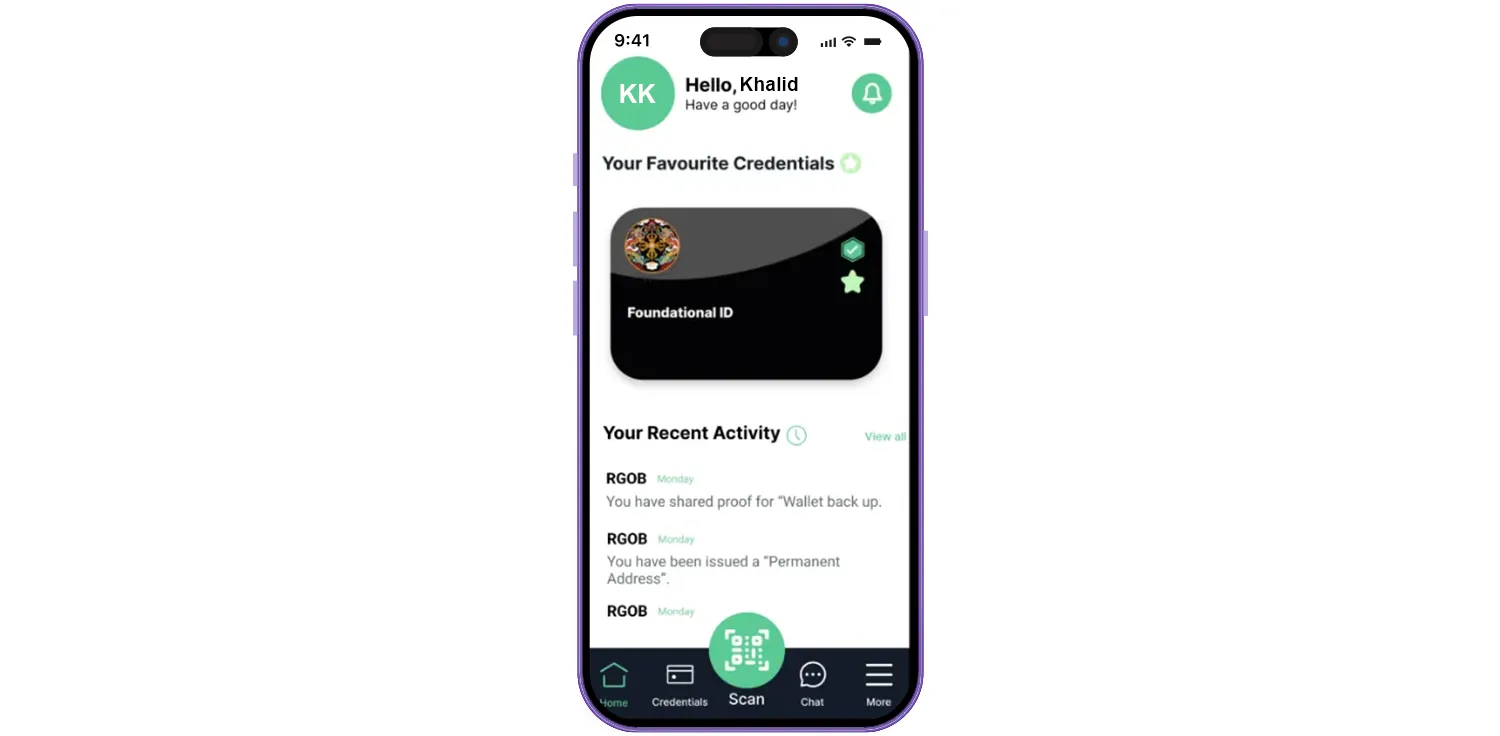
According to official statements, NDI credentials are already connected to more than 40 services across sectors such as banking, health care, education, telecoms, and transport, with additional issuers being added.
Bhutan’s National Digital Identity (NDI) was formally introduced to the public early in 2025. Throughout the year, the government continued onboarding and awareness efforts. In Samtse, for example, local officials have been helping residents install the app, complete registration, and learn how to present credentials, with a particular focus on people who are less confident with smartphones.
In October 2025, the NDI team and Bhutanese authorities announced that key parts of the system had been anchored to the public Ethereum blockchain. According to project materials, this made NDI the first national-scale digital ID system to use Ethereum in this way. The migration of existing credentials was expected to continue into early 2026, with total coverage projected to reach nearly 800,000 residents once complete.
Bosnia and Herzegovina: e-IDDEEA
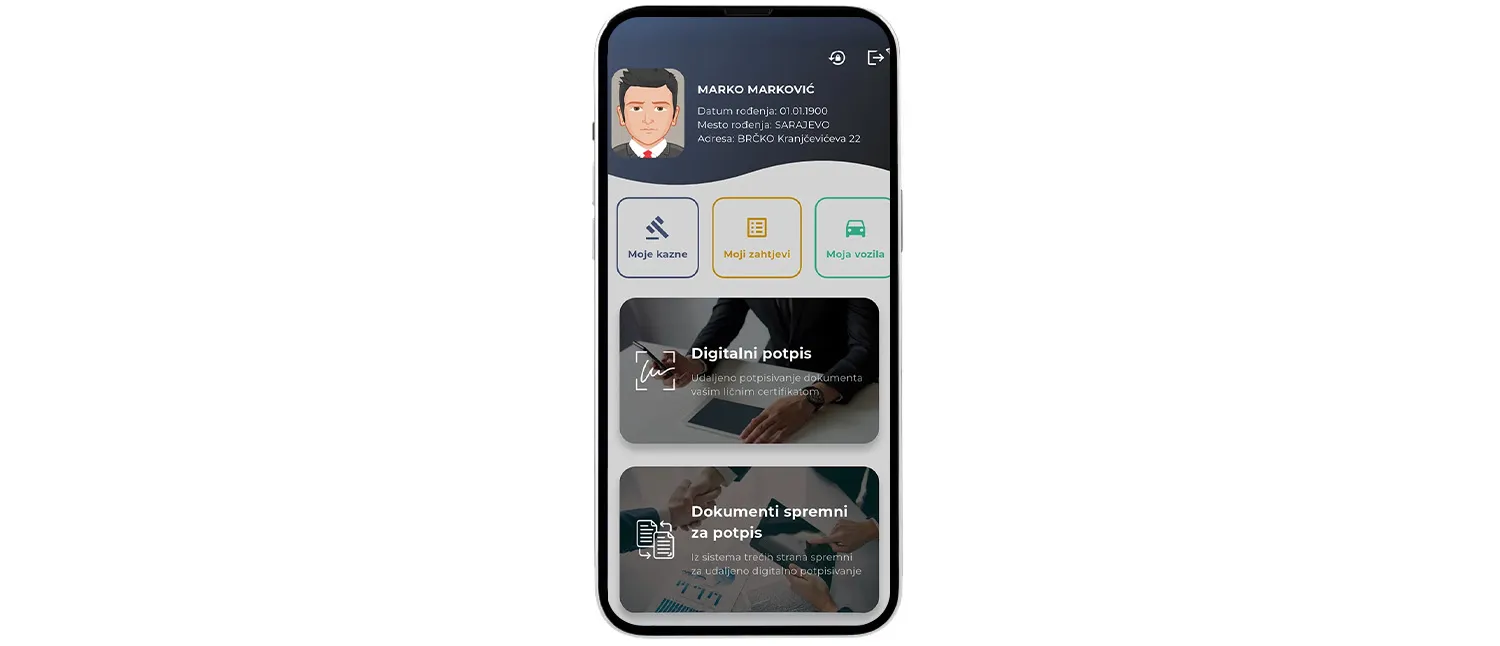
Bosnian citizens can also digitally sign documents using the IDDEEA app.
Bosnia and Herzegovina has launched a mobile app called e-IDDEEA, which lets citizens access digital versions of their passports, driver’s licenses, or ID cards. The country is aligning its digital identity framework with EU standards, and IDDEEA is presented as supporting eIDAS-aligned identification and trust services.
In addition to digital identity functions, e-IDDEEA also supports qualified electronic signatures that can be used remotely across connected services. These include both government services — tax payments, health insurance, or childbirth benefits — and private-sector organizations such as banks and telecom operators.
To register, users must first activate their qualified electronic signature in person at an authorized IDDEEA registration office. They then receive the credentials needed to log in to the app and use its digital identity function.
Brazil: gov.br
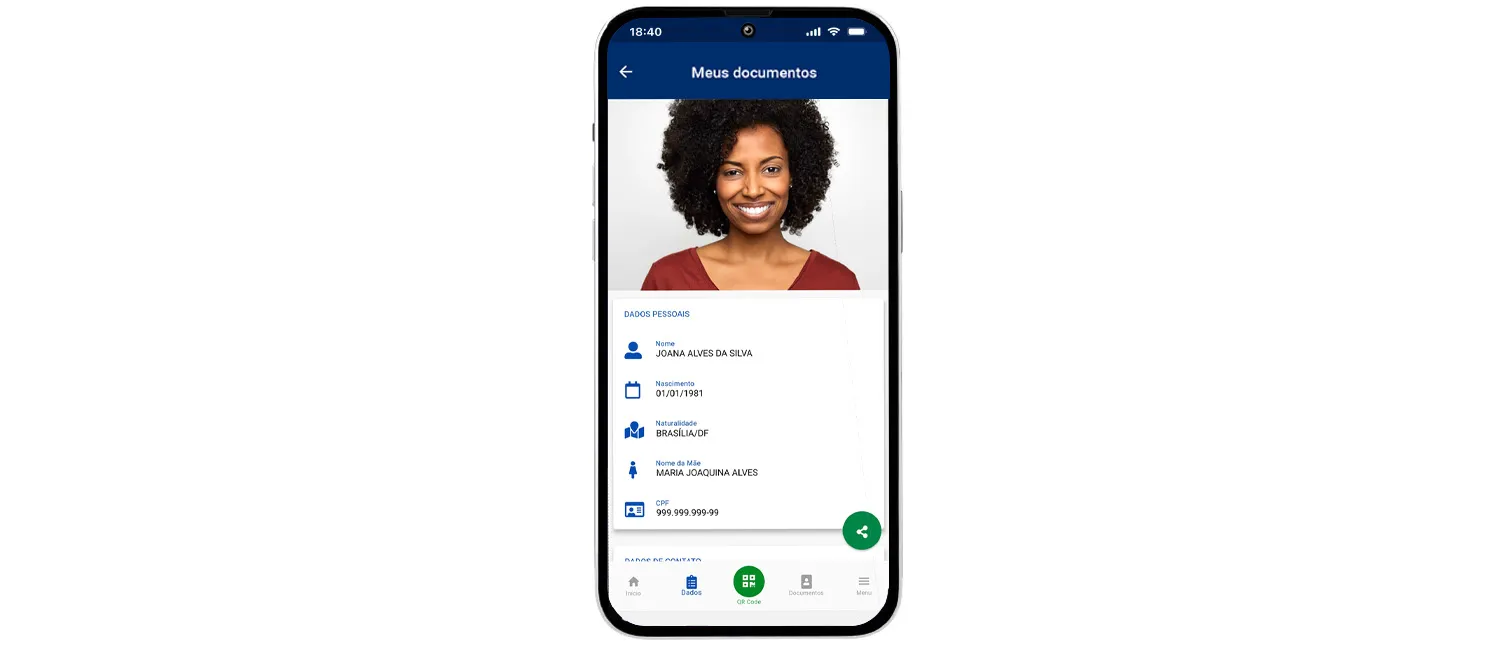
Brazil’s gov.br app serves 130M+ users with digital identity, official documents, and public services.
Brazil’s digital identity ecosystem is built around gov.br, a government platform that combines identity verification, digital documents, and access to public services. Through the app, users can authenticate themselves using biometrics or bank-linked verification methods, access more than 12,000 federal and state services, and store official credentials such as the national ID (CIN), digital driver’s license (CNH Digital), work card, and vaccination certificate.
A key part of the system is its graded trust model. Gov.br accounts are classified as Bronze, Silver, or Gold depending on how the user’s identity has been validated:
-
Bronze is based on matching personal data already held by government databases such as the Federal Revenue Service, Social Security, or the national traffic authority.
-
Silver adds stronger checks, including facial biometrics against the driver’s license database, validation through partner banks, and institutional login for public servants.
-
Gold is the highest-assurance level, relying on methods such as facial biometrics checked against the Electoral Justice database, reading the National ID QR code in gov.br, or validation through ICP-Brasil.
This allows Brazil to reserve higher-trust transactions for more strongly verified users without making basic digital access too hard to obtain.
China: The National Online Identity Authentication Public Service

The ID check involves NFC technology because Chinese identity cards are biometric. However, their non-standard chips can only be read by authorized inspectors.
China’s digital ID system is currently designed for online use and doesn't support offline identity checks, but it still stands out for both its privacy model and its technical implementation.
China officially launched the National Online Identity Authentication Public Service in July 2025. Citizens can register voluntarily to receive a unique online identity token, sometimes described as a “network number.” Then the token can be used to verify identity and sign up for digital services across the web without repeatedly disclosing full personal details to private platforms.
To register, users complete identity verification tied to Chinese official identity documents, facial recognition, and a linked mobile phone number. Public descriptions of the system emphasize that it is meant to support trusted digital identification while strengthening personal data protection within a state-managed framework.
According to the official statement (available in Chinese), the system is designed to support trusted digital identification and protect personal data. It complies with several key regulations, including the Cybersecurity Law, the Data Security Law, the Personal Information Protection Law, and the Law on Countering Telecommunications Fraud.
Costa Rica: IDC-Ciudadano
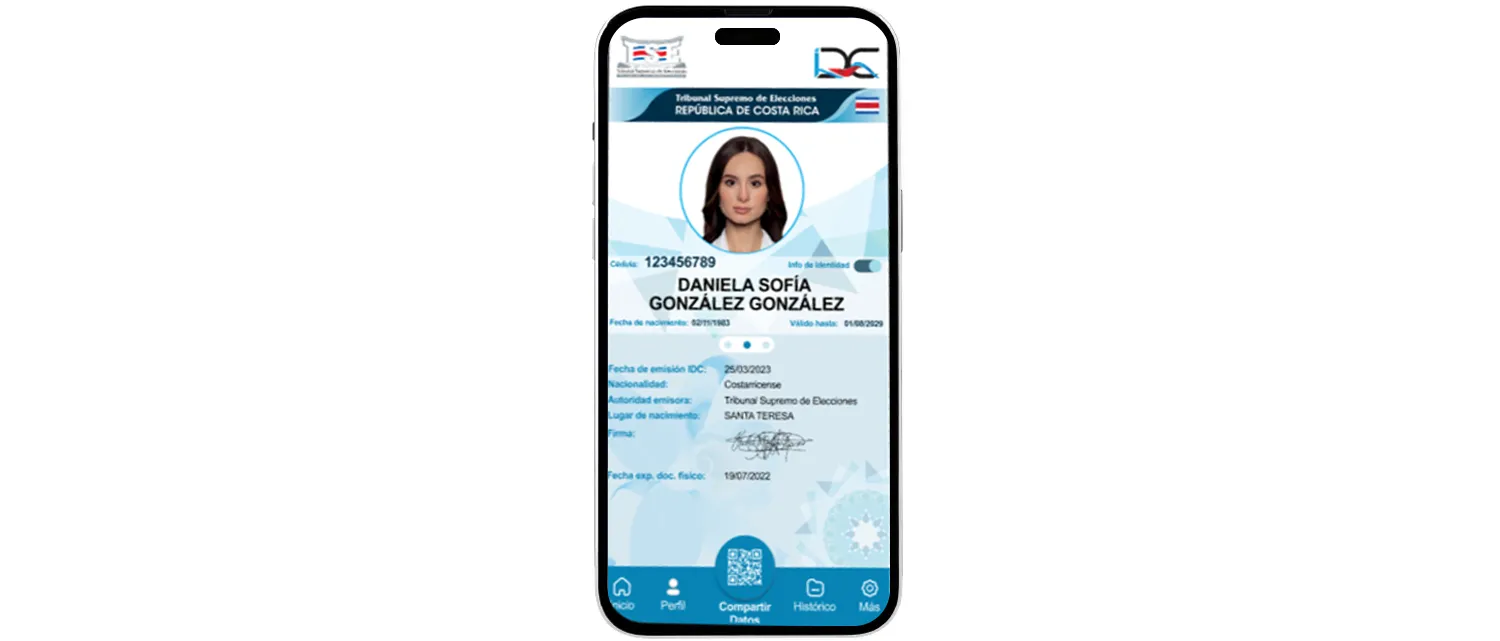
Launched in early fall 2025, Costa Rica’s digital ID card can be used in many everyday situations.
Costa Rica introduced its digital ID card — a full alternative to the physical one — in September 2025. The credential is available through the IDC-Ciudadano app and serves as a digital alternative to the physical ID card across many everyday interactions, including public services and private-sector use: banks, telecom providers, and more.
One important exception applied during the 2026 election cycle, where only physical ID cards were accepted.
To obtain a digital ID, Costa Rican citizens must register online through a dedicated website using their email and identification number. After registering, users can download the IDC-Ciudadano app and activate their digital ID card using facial verification.
Czech Republic: eDoklady
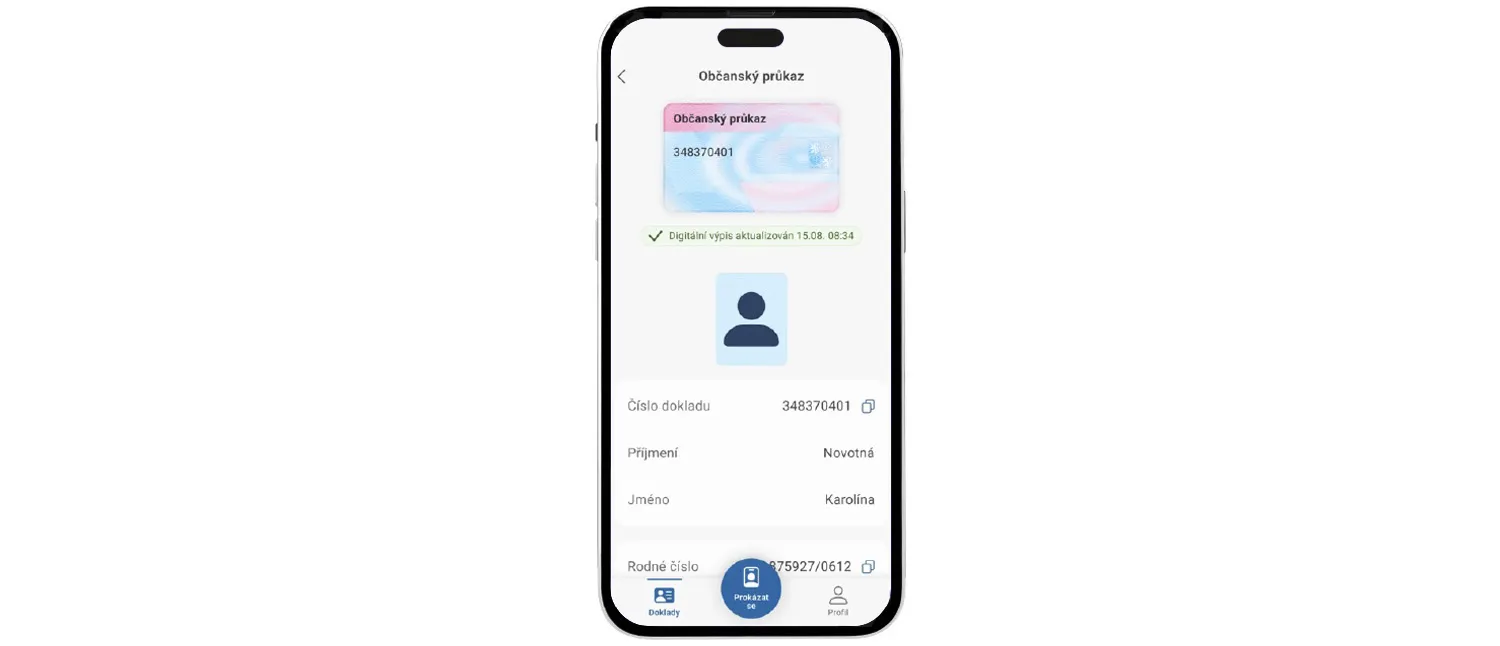
The Czech digital ID is legally valid at police stations, banks, post offices, and electoral commissions, and is also used by private businesses for age verification.
Czechia’s digital identity model combines the traditional national ID card with eDoklady, a mobile app that lets citizens keep a digital copy of their ID card on a smartphone. The app is designed for digital identity proofing and is positioned as the first step in a broader document wallet, with additional credentials planned.
Since mid-2024, eDoklady has been accepted by a growing range of authorities and institutions. To activate it, users sign in through Identita občana and must already hold a valid physical ID card. The app can currently be used on up to two devices.
Denmark: MitID
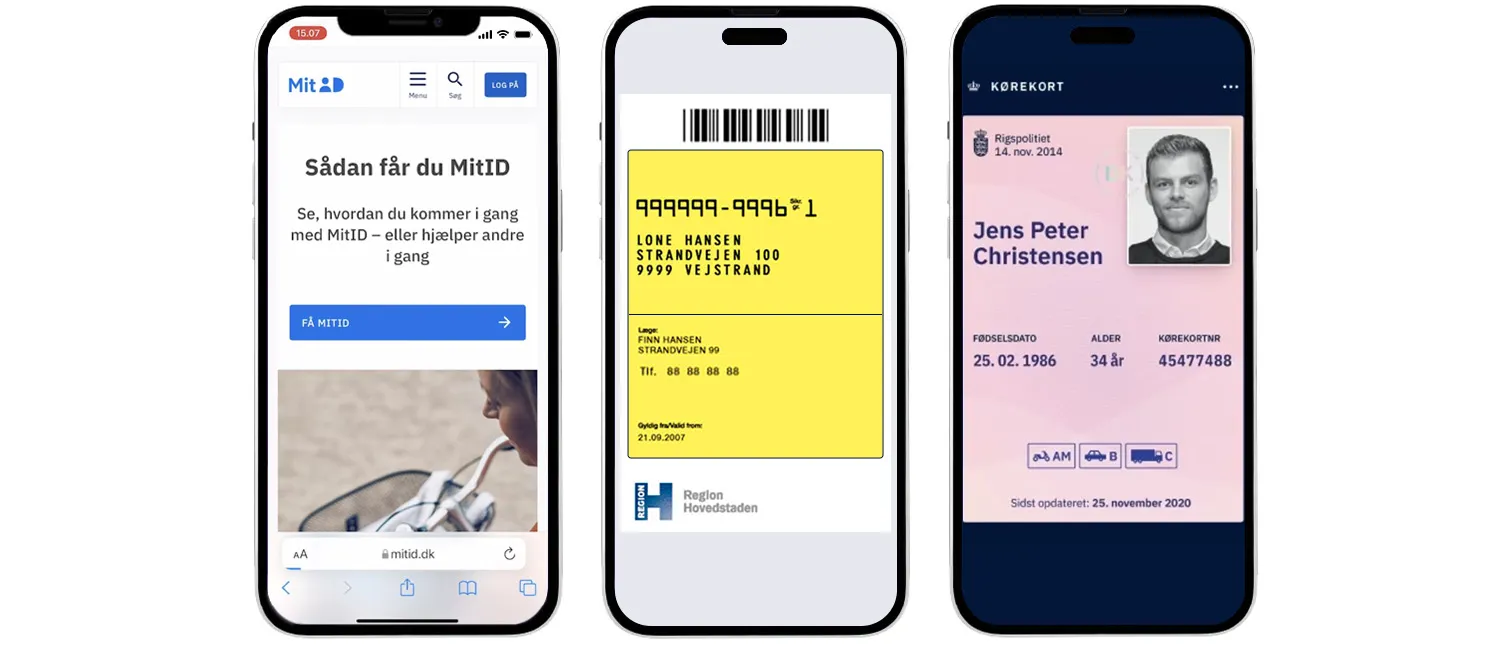
In addition to the main digital ID, Denmark also offers separate digital credentials for everyday use: digital driver’s licenses and health insurance.
Denmark’s primary digital identity system is MitID, the national eID used to access public services and online banking. Users can obtain it either by verifying their identity with a passport in the MitID app or by completing the process in person at a Citizen Service Center.
In addition, the digital driving license app is valid in Denmark and can also be used as proof of identity in situations where the physical driving license would normally be accepted. The digital health insurance card app, Sundhedskortet, works like a plastic card and provides the same benefits.
Denmark is also preparing for the EU Digital Identity Wallet framework. Under the updated EUDI model, national wallets are meant to build on existing member-state systems such as MitID and support mutual recognition across the EU.
Estonia: e-ID

In Estonia, digital ID cards (right) were issued alongside standard ID cards (left).
Estonia is one of the pioneers of digital identity, with its national e-ID ecosystem in place for more than two decades. One of its distinctive features was the digital ID card: a physical smart card designed for online identification and digital signing rather than travel or in-person identification. It allowed users to access e-services, sign documents, manage banking and business tasks, and participate in e-elections using card readers and supporting software.
As of May 1, 2025, Estonia stopped issuing new digital ID cards, although previously issued cards remain valid until expiration.
At the same time, the country continues to support Mobile-ID, a SIM-based digital identity that can be used to log in to e-services, confirm payments, and sign documents. Mobile-ID is issued by local operators Telia, Elisa, and Tele2, and its certificates are valid for five years.
Like other EU member states, Estonia is also moving toward the EU Digital Identity Wallet framework. Under that framework, each member state must provide at least one wallet to citizens, residents, and businesses, building on national digital identity systems already in place.
France: France Identité
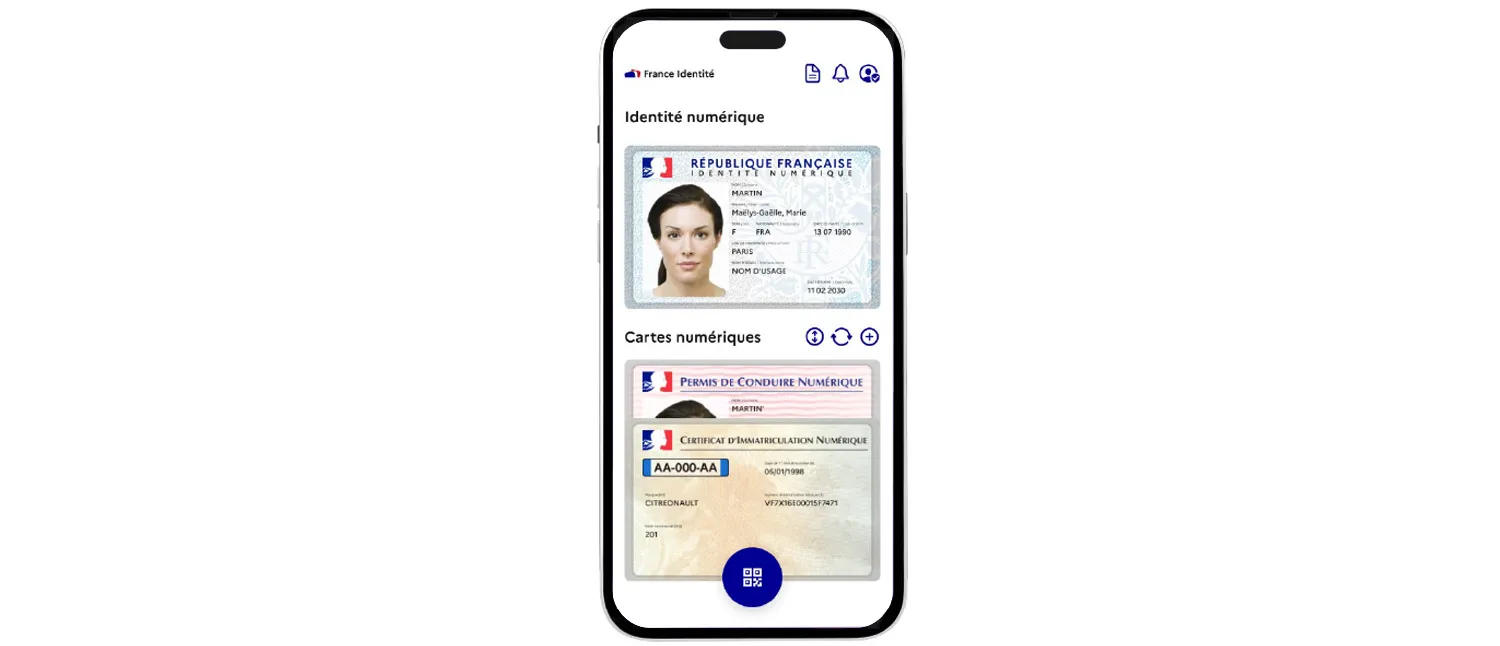
By the end of 2026, the country plans to open the app to all French residents.
France’s France Identité app is designed as the digital companion to the new-format national ID card. It lets users keep identity documents on a smartphone, generate one-time digital proof of identity instead of sharing photocopies, and sign in to more than 1,800 services without a username or password.
The app is available to adults who hold the new bank-card-format French identity card and have a compatible smartphone with NFC.
Since February 2024, users have also been able to add a digital driving license to their France Identité account. For more sensitive online procedures, France also offers a certified digital identity flow: after creating an identity in the app, the user completes an NFC read of the card, generates a QR code, and finishes certification at a town hall or consulate.
Greece: Gov.gr Wallet
.webp)
In March 2025, Greek outlet InfoCom reported that 5,336,728 citizens had downloaded the Gov.gr Wallet, citing the most recent figures available at that time.
Greece launched the Gov.gr Wallet in August 2022 as the official app for storing digital versions of national ID cards and driver’s licenses. Within Greece, these digital documents have the same legal validity as their paper equivalents, except for international travel.
Users can sign in with Taxisnet, Greece’s main government e-service login, together with a verified mobile number, or through internet banking credentials. Greece also provides a dedicated service that lets users withdraw their digital ID or driver’s license or disable the app on a device even without access to that device.
By late 2025, the wallet had expanded well beyond ID cards and driver’s licenses. Government materials listed ten document types in the app, including disability cards, unemployment cards, vehicle data, academic IDs, insurance capability, speedboat operator licenses, and pet information. The wallet can also be used for fan identification at football and basketball games.
The redesigned version also added a gov.gr search function, a visible Citizen Inbox for documents and notifications, and a protected Personal Number view that blocks screen capture.
India: Aadhaar
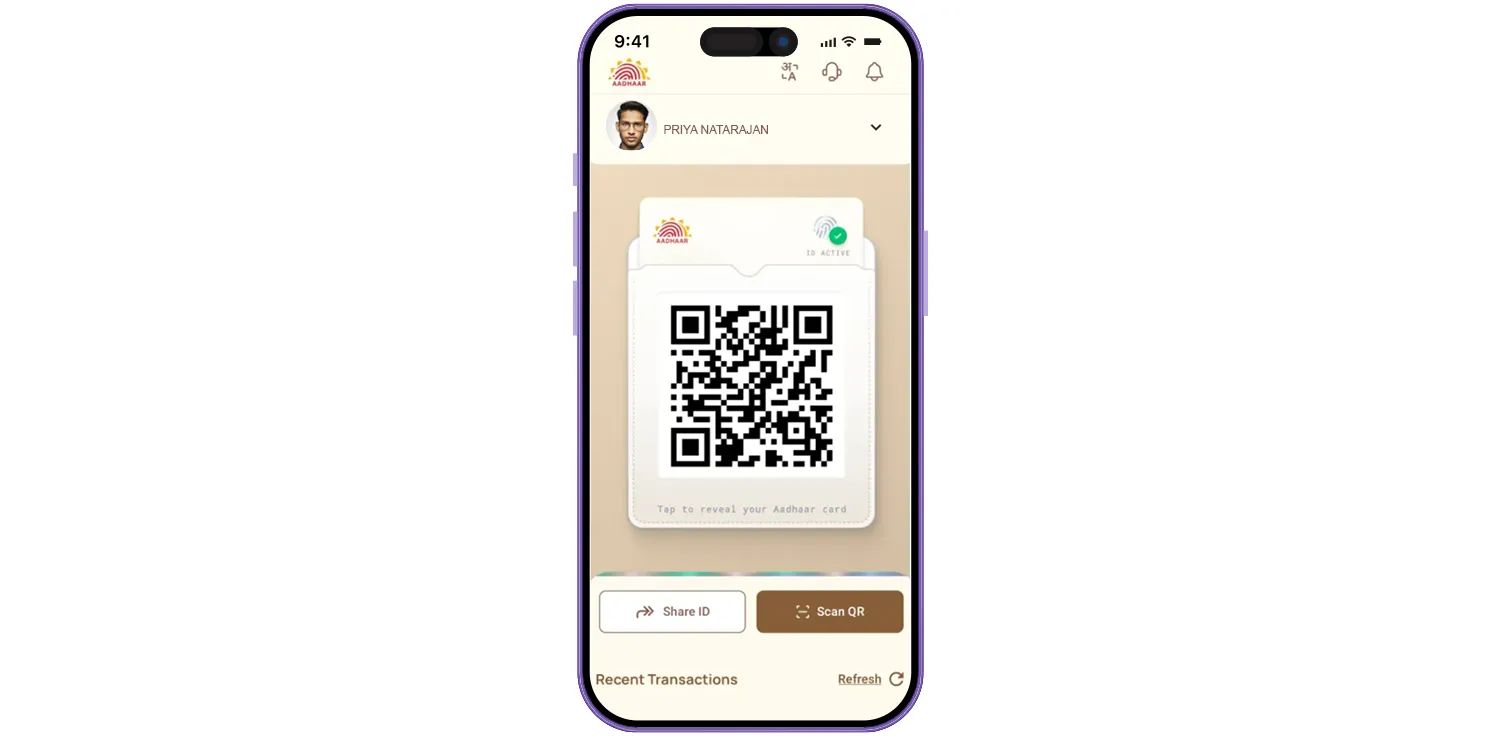
Throughout the second half of 2025, the Unique Identification Authority of India (UIDAI) has focused on making the new Aadhaar sufficient for many verification scenarios.
India’s Aadhaar system has existed since 2009, but in 2025, the government began pushing its use more directly as a smartphone-based digital credential. In April 2025, authorities unveiled a new Aadhaar app designed to let residents verify identity digitally using QR codes and face authentication instead of repeatedly sharing photocopies of their Aadhaar card.
To get started, residents download the app, enter their Aadhaar number, select a SIM card, complete face authentication, and set a six-digit PIN.
At the same time, Aadhaar still requires in-person enrollment, physical letters and cards remain in circulation, and commentary on the new app stresses that many institutions will need to update processes and train staff before offline verification becomes standard practice.
Japan: My Number Card
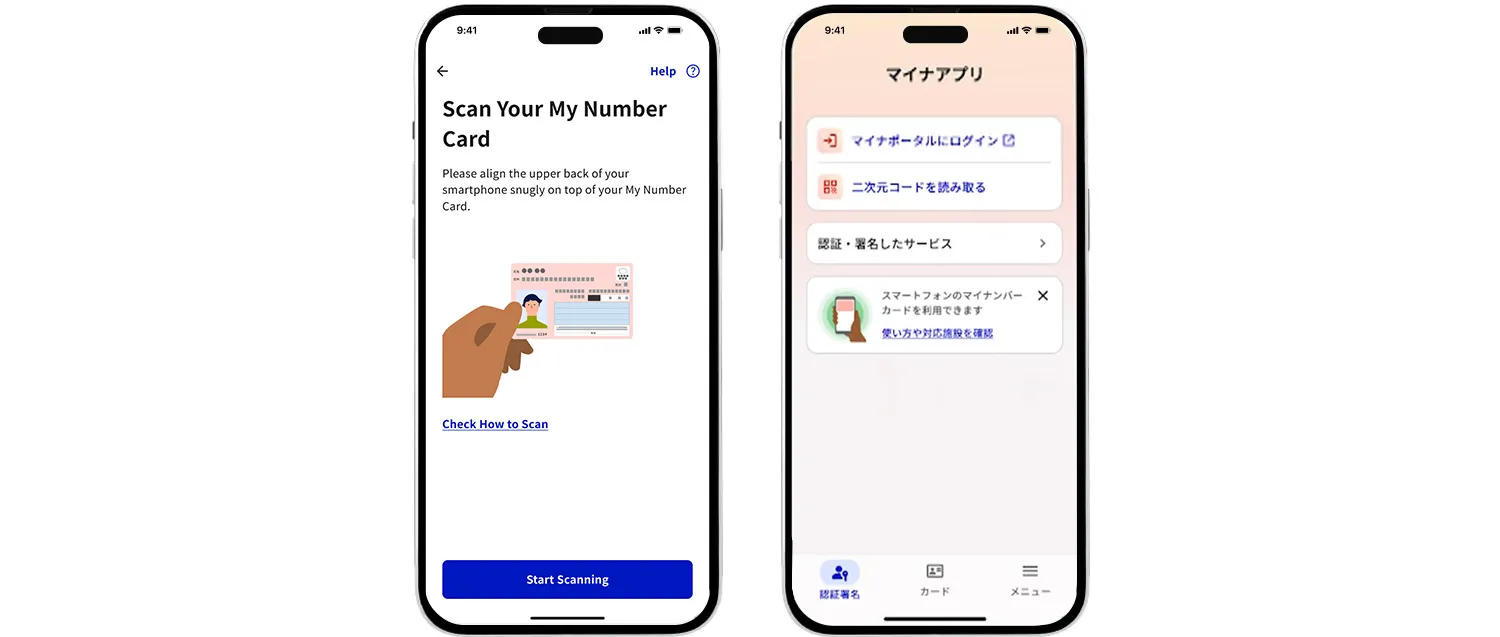
Japan’s My Number Card extends to smartphones, with supported functions differing between iPhone and Android.
Japan’s My Number Card combines a physical identity document with electronic authentication. Its smartphone services extend these functions to mobile devices: electronic certificates became available on supported Android phones in May 2023, followed by My Number Card on iPhone in June 2025.
Users can access Mynaportal government services, file tax returns through e-Tax, obtain official certificates at convenience stores, and verify health insurance eligibility at participating medical institutions and pharmacies.
Setup requires the physical My Number Card and its credentials. Acceptance varies by service and operating system, so users still need the physical card where smartphone credentials are not supported. The mobile versions also cannot currently serve as a driver’s license.
Kuwait: Kuwait Mobile ID (Hawyti)
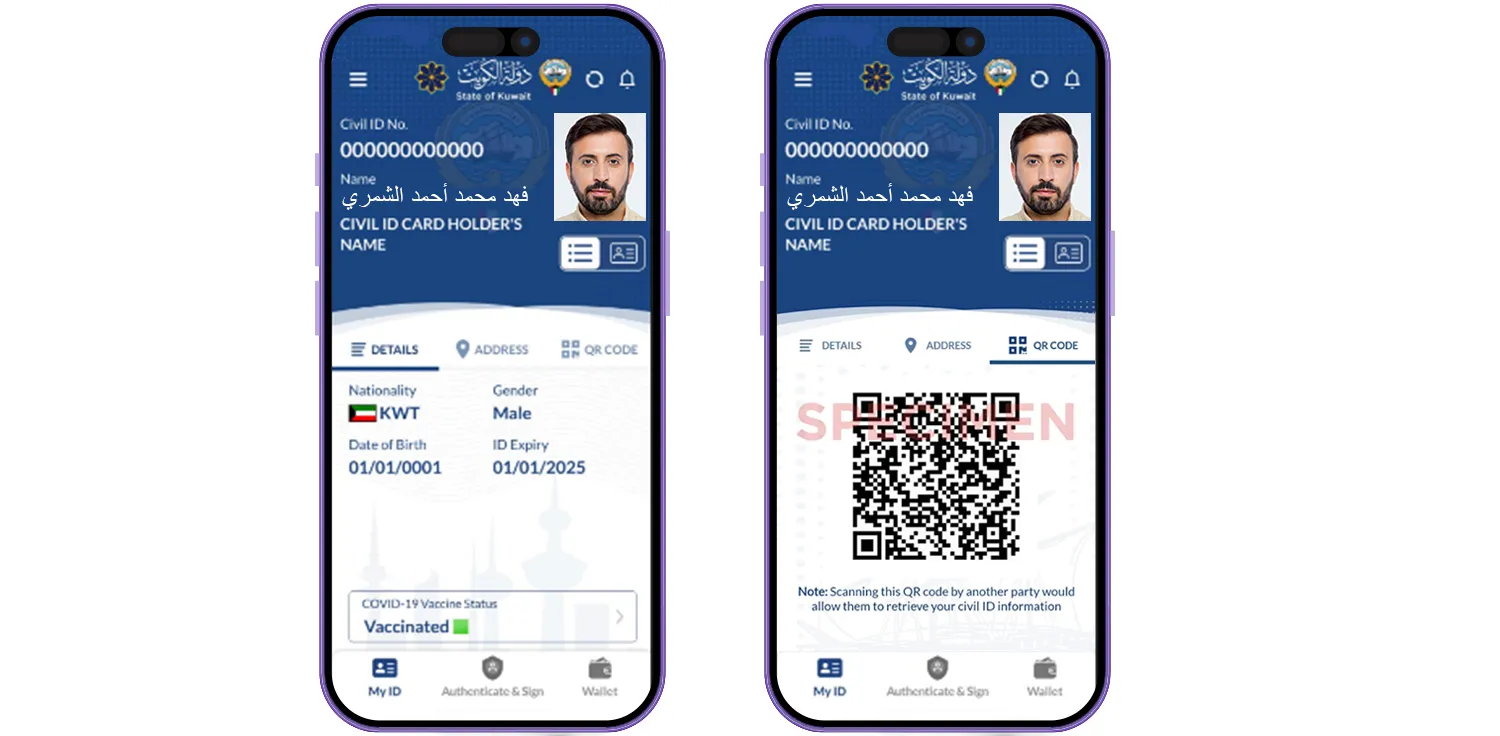
The credential types supported by the wallet include driver's licenses, birth certificates, vehicle registrations, children’s civil IDs, and the AFYA health insurance card, plus options for QR code verification and sharing.
Kuwait’s Public Authority for Civil Information (PACI) launched its mobile digital ID app in 2020. Today, Kuwait Mobile ID (Hawyti) gives citizens and residents a mobile-based civil ID that can be used for identity verification, authentication for government and private-sector e-services, and trusted digital signatures.
The app can display the civil ID digitally, share identity data through QR codes, and continue working offline after activation. PACI also presents it as a credential wallet for additional government-issued documents.
The app has two enrollment levels. Self-enrollment in the app provides a high level of verification, while stronger functions such as trusted digital signatures require a qualified level linked to PACI service centers or self-service kiosks.
Maldives: eFaas
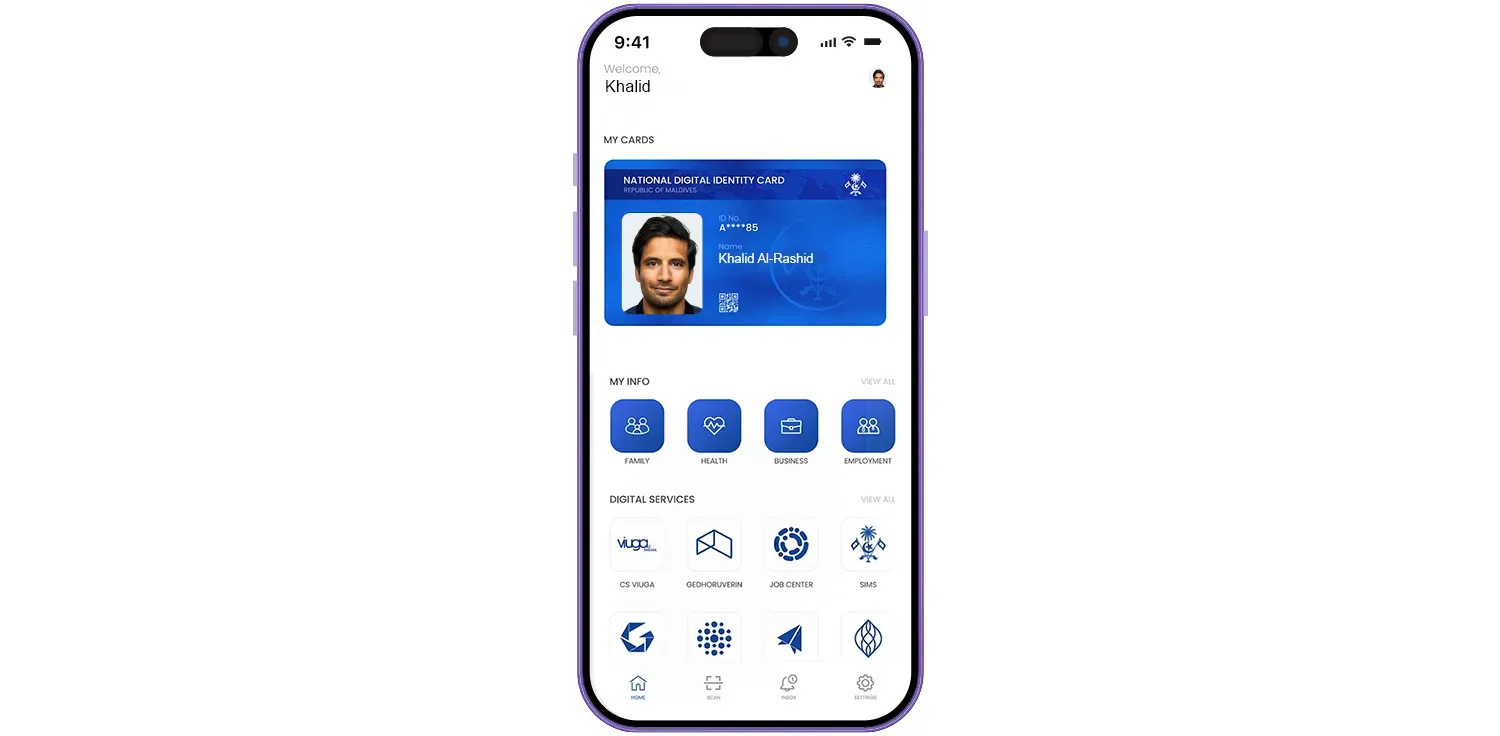
The system is open to every resident, including work permit holders, who are eligible to create a National Digital ID using their respective credentials.
The Maldives’ national digital identity platform, eFaas, dates back to 2012, when it functioned mainly as a login for government services. Its evolution into a broader mobile identity credential came later, in 2023, with the public release of the eFaas app and the rollout of app-based identity features such as facial verification.
Now, the Maldives’ National Digital Identity can be used in person and online, with a one-tap login to affiliated services, passwordless login via QR scanning, an inbox for notifications, and biometric verification in the app.
In December 2025, it was also reported that there were plans to launch smart ID cards in 2026 with an integrated digital identity. As of February 2026, eFaas supports 137 digital service portals, 282.6k active users, and 222.9k mobile app users.
Philippines: Digital National ID
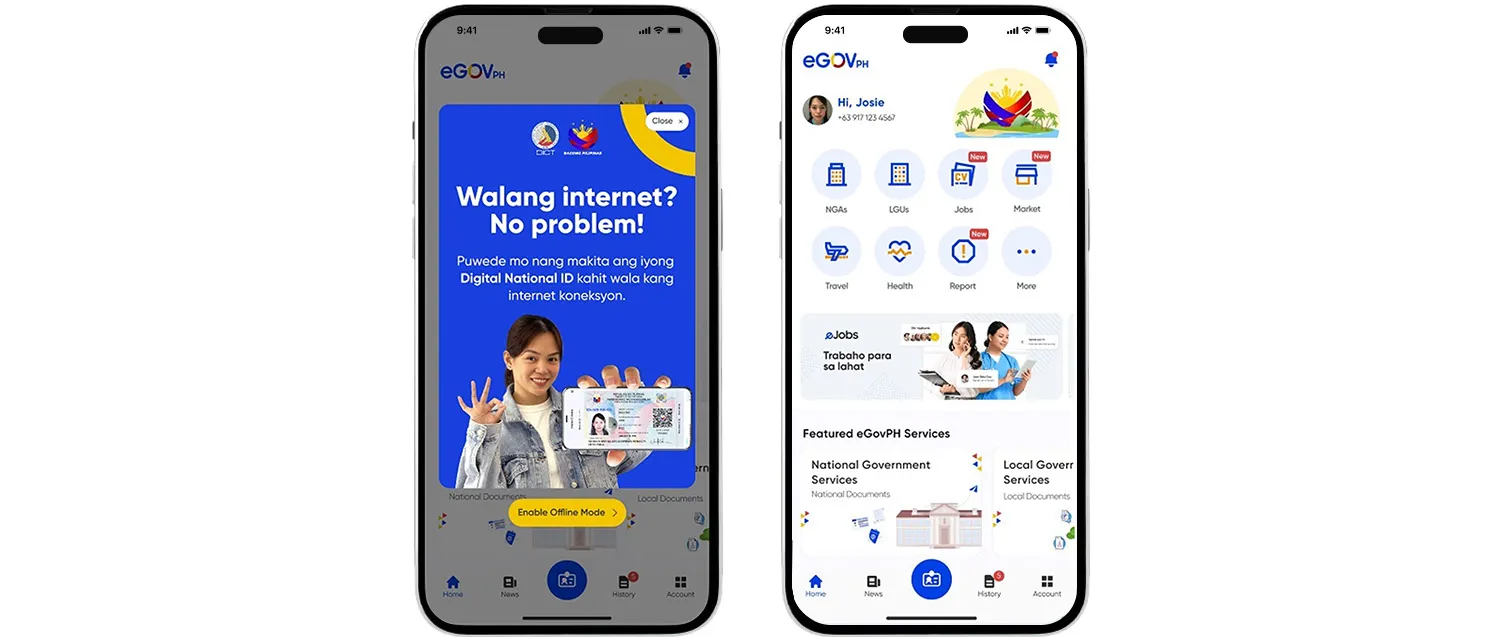
By June 2025, more than 87 million Digital National IDs were available through the eGovPH app.
The Philippines’ Digital National ID is available through the eGovPH app to people registered in the Philippine Identification System (PhilSys). It sits alongside the physical National ID card and paper ePhilID.
The Philippine Statistics Authority (PSA) recognizes it as valid proof of identity for government and private-sector transactions, with documented uses including obtaining civil registry documents, receiving remittances, and verifying e-wallet accounts.
For example, GoTyme Bank accepts the Digital National ID’s QR code during account opening and checks the information against PhilSys in real time. This gives the digital credential an established role in customer onboarding.
Poland: mObywatel
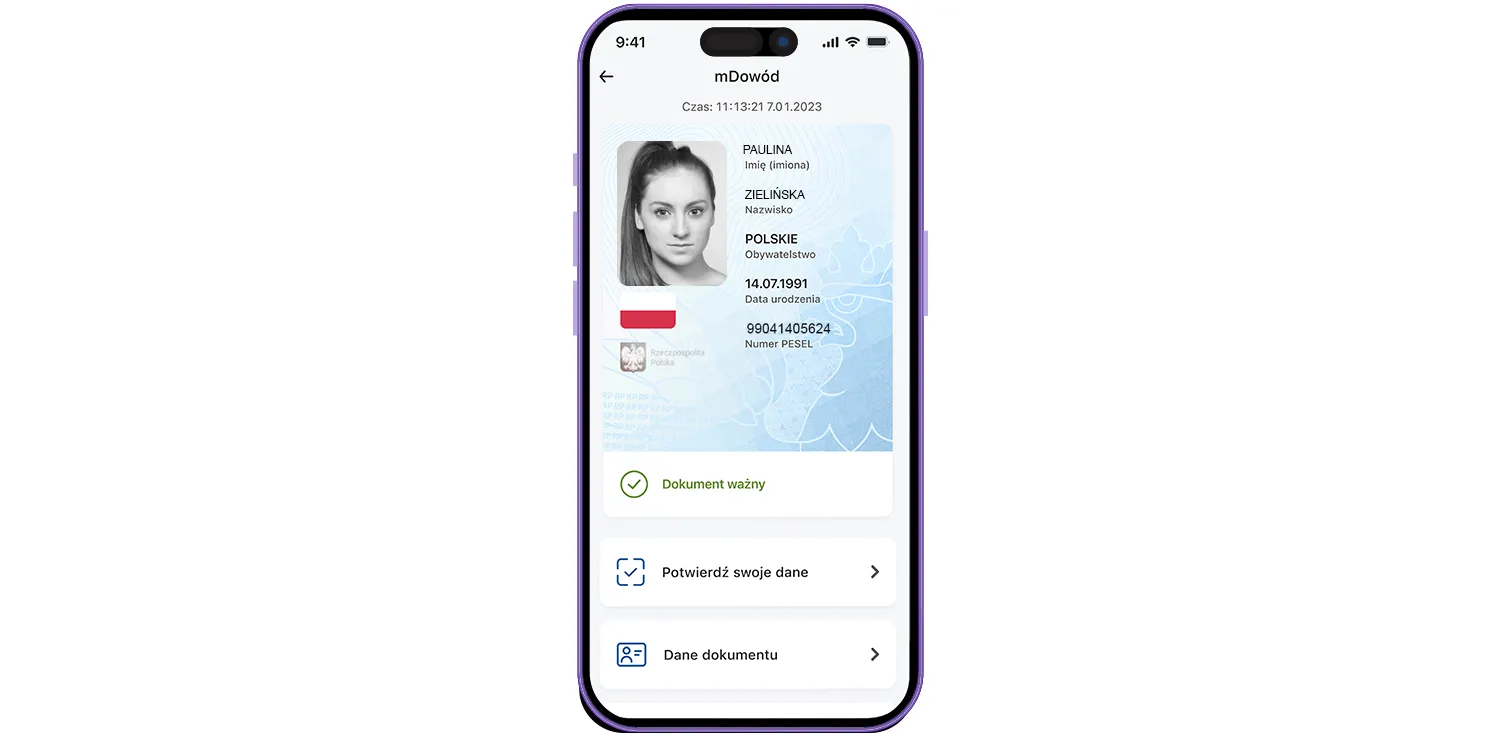
Polish public offices must accept digital ID when a person shows it on their phone.
Poland’s national digital identity app, mObywatel 2.0, launched in mid-2023 together with mDowód, a full electronic identity document inside the app. Since July 2023, Polish public offices have been required to accept mDowód shown on a smartphone, and official materials describe it as having the same legal validity in Poland as the physical ID card.
mDowód is not a scan of a plastic ID card but a separate electronic document with its own identifiers and validity dates. Verification works through a QR code, with a six-digit code as a fallback. The holder can see what data will be shared and must approve the transfer.
By January 28, 2026, the Ministry of Digital Affairs reported that more than 11 million mDowód documents had been issued and that the overall mObywatel user base had also reached 11 million. The same update said that 16 new documents were added in 2025 and that the app had gained a qualified signature feature.
Officials also said work was continuing on additional documents and on Poland’s path toward the European Digital Identity Wallet.
Portugal: ID.gov.pt
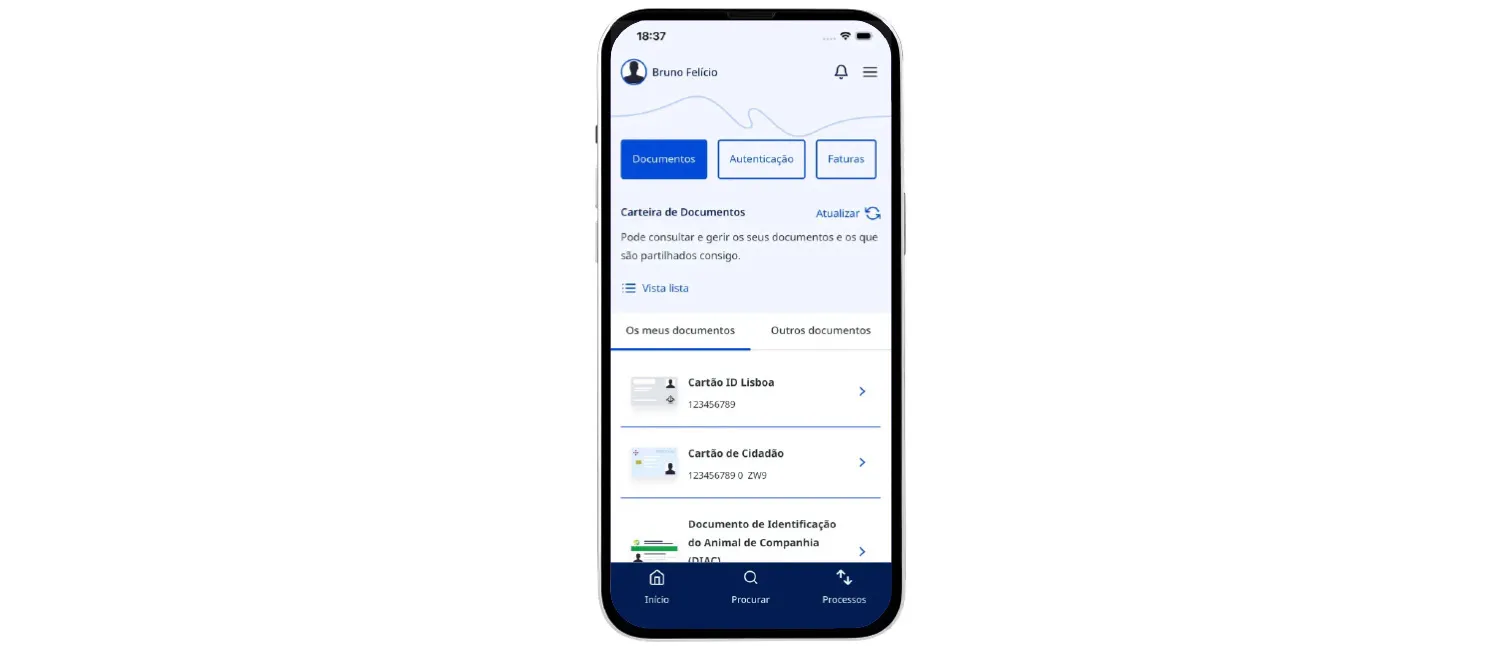
Portugal's digital ID ecosystem centers on the Citizen Card, launched in 2007 as one of the world's first multi-purpose smartcards.
Portugal’s digital identity ecosystem combines the physical Citizen Card with Chave Móvel Digital (CMD), a mobile authentication system, and the gov.pt app, which works as a digital wallet for official credentials. Through the app, users can store and present documents such as driving licenses, health cards, and professional certificates.
A major strength of the Portuguese model is that it connects identity, authentication, and digital document storage in one system. The Citizen Card brings together core identifiers, while CMD enables secure mobile login without requiring a card reader. The wider framework is also aligned with eIDAS, which supports legal recognition and interoperability across the EU.
Saudi Arabia: Absher
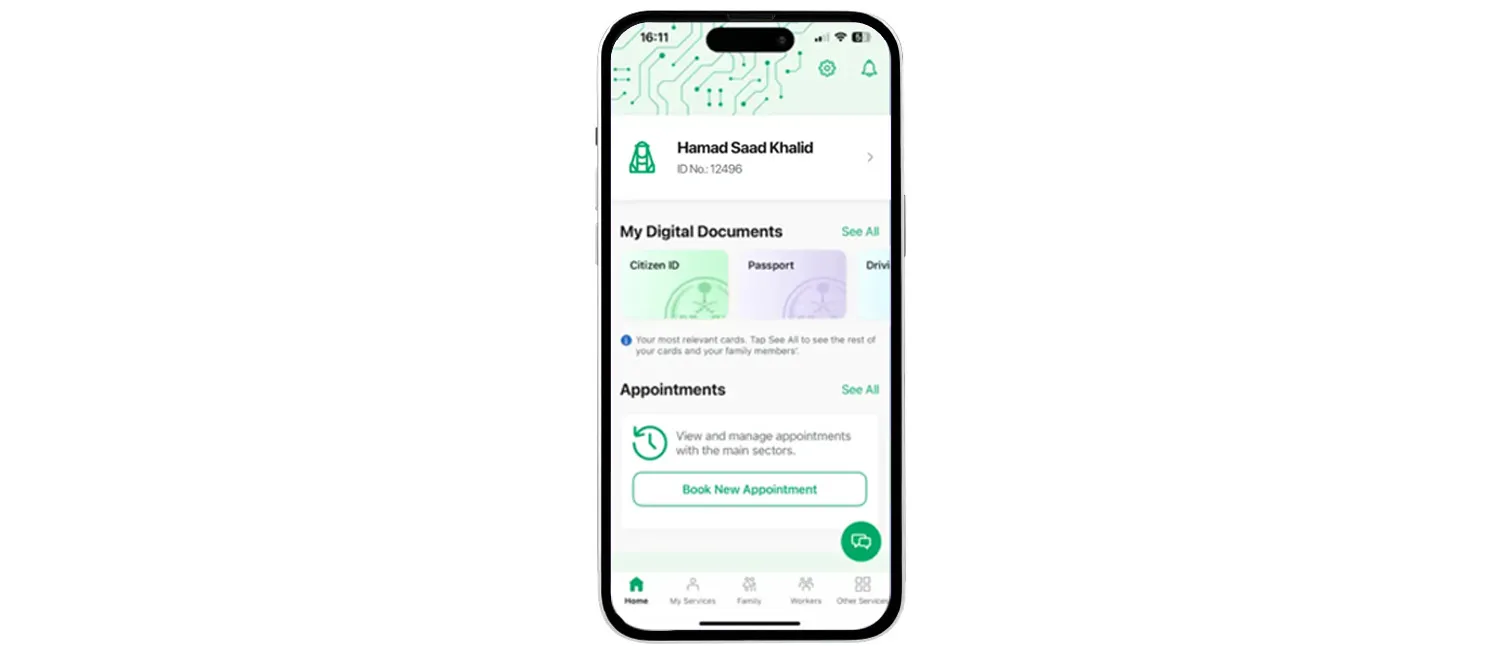
By 2025, Saudi Arabia has issued 28M Digital IDs, making it one of the world's largest digital ID ecosystems.
Saudi Arabia’s Absher platform combines digital identity with a broad set of government services. A core part of that system is the digital ID, which Absher describes as official proof for citizens and residents. Official service pages also state that digital documents displayed through Absher can be recognized and used at many entities, giving the platform a stronger identity function than a simple login layer.
Users can create and activate a digital identity through the Absher ecosystem, including verification steps tied to the Nafath app and biometric checks such as fingerprint validation. That setup allows the identity credential to sit inside a broader national e-government platform while still functioning as a valid digital proof of identity.
Singapore: Singpass
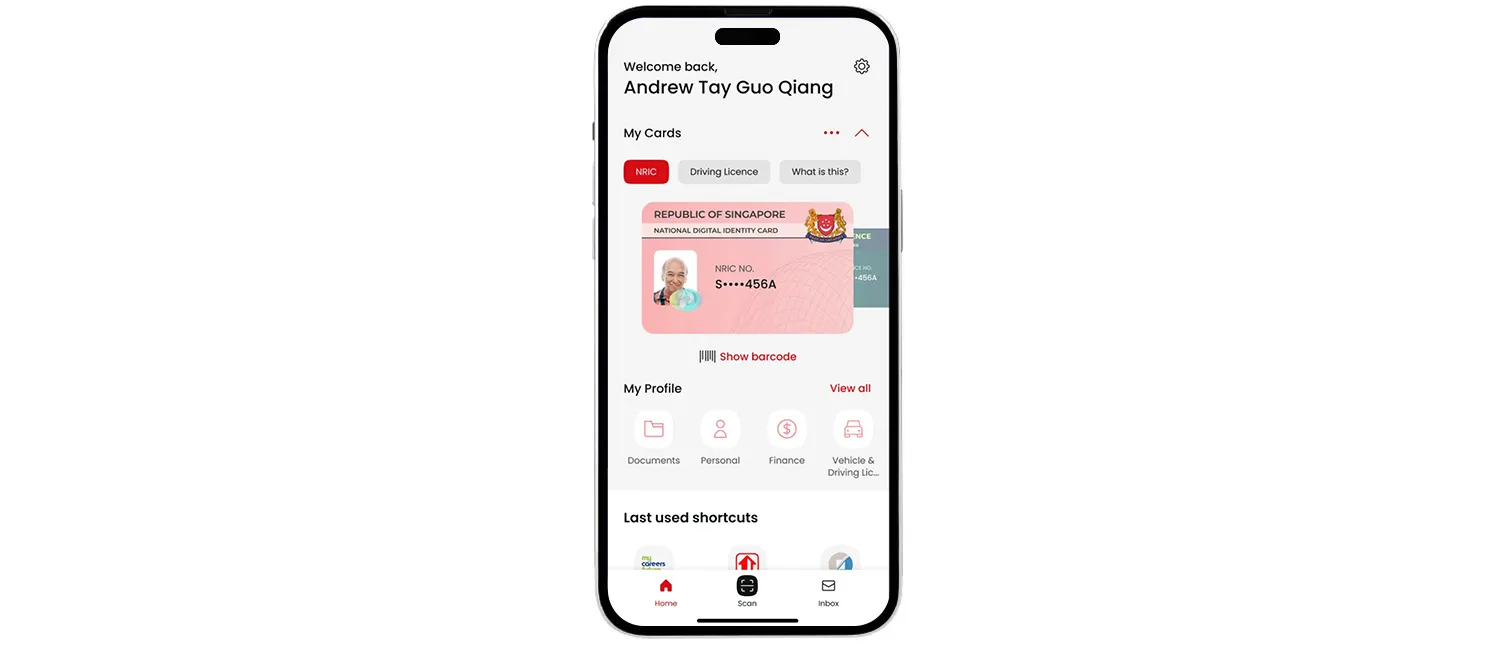
The Singpass app stores a digital ID that grants access to government, public, and commercial digital services.
Singapore’s national digital identity system, Singpass, allows users to access public and private digital services, view a Digital IC, prove their identity in person, share data by scanning QR codes, and authorize transactions or sign documents digitally.
Residents register through the official Singpass platform and can then use the service on the web or in the app. The app supports biometric verification through fingerprint or face recognition, with a six-digit passcode as a fallback.
Read also: How to Process Singapore ID Documents →
South Korea: Mobile IDentification App

South Korea’s digital ID is stored in the Mobile IDentification App.
South Korea launched its mobile resident registration card in 2025, making a digital version of the core national ID available through the Mobile ID app. It is designed for use across public services, finance, and other identity-check scenarios, while keeping the credential securely stored on the user’s device.
Users can obtain this ID by completing NFC verification of their electronic physical card (applicable for IDs issued after January 1, 2025) via a mobile phone or by registering at a local community center. Biometric verification is also required to prevent identity theft.
Each South Korean digital ID is tied to a specific smartphone, which helps limit misuse if the device is lost or replaced. This model differs from Singapore’s approach, where a single digital ID can be used on multiple devices such as smartphones or tablets.
Spain: MiDNI

The MiDNI app allows Spanish citizens to store their DNI (Documento Nacional de Identidad) digitally, complete with essential personal details.
Spain’s mobile digital ID system, MiDNI, lets citizens carry a digital version of their national ID card on a smartphone.
Launched in April 2025, the app supports identity verification for accessing government services. The next phase will expand its use to include online identity verification and electronic signatures. Once fully rolled out, MiDNI promises to enable users to vote, open bank accounts, check into hotels, rent cars, and more completely online.
To register, users can go to a dedicated website, an on-site documentation unit, or a self-service police update station. In all cases, registration involves email verification and confirming identity using a physical national ID card.
Thailand: ThaID
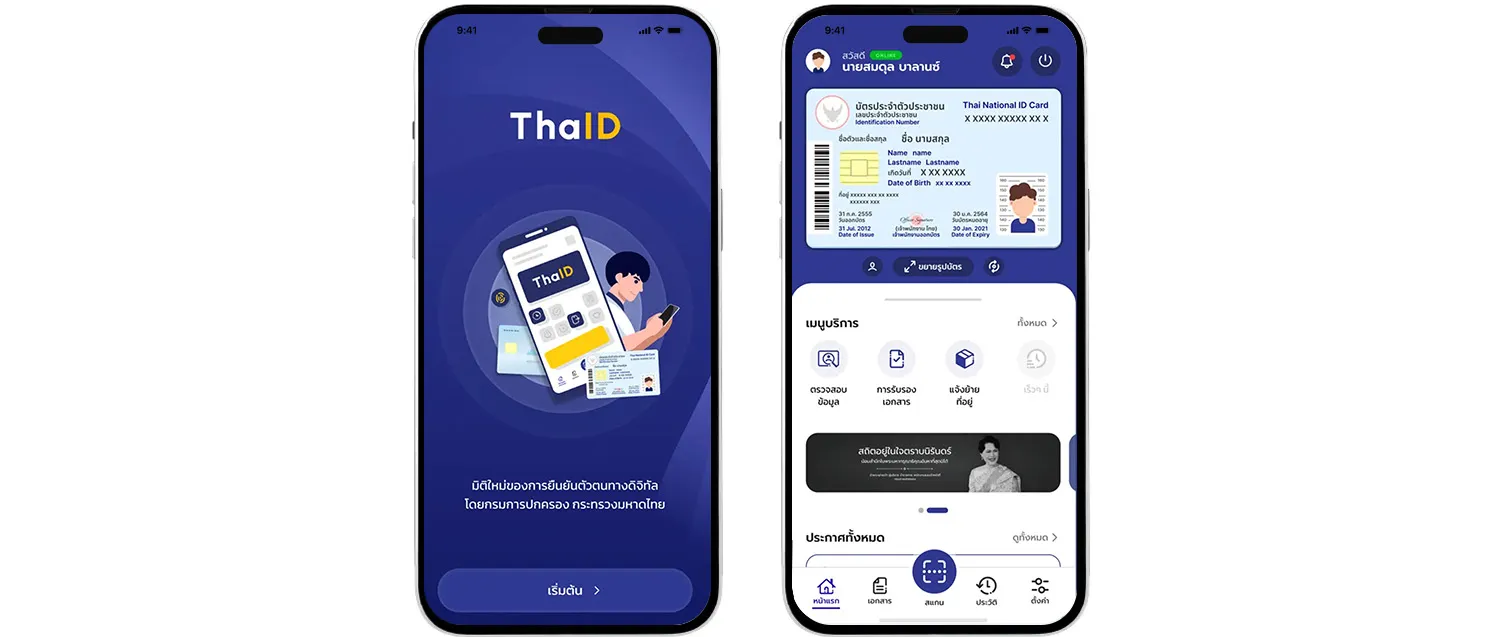
Since January 2026, ThaID users can display their digital ID card even without an internet connection.
Thailand’s ThaID app combines a digital national ID card with authentication for connected services. Users can access civil-registration records, file taxes online, and complete other supported government procedures.
The app also stores digital household registration information and additional civil documents, including birth, marriage, and divorce records. Its January 2026 update added support for displaying the identity card both online and offline. Acceptance still depends on the transaction and the receiving organization.
Users can register remotely by photographing both sides of their physical ID card and completing facial verification. Alternatively, they can register at a registration office, where an official checks their card and verifies their identity before linking the app.
The United Arab Emirates: UAE Pass

The UAE Pass app offers a wide range of features, from digital signatures to seamless identity verification.
UAE Pass is the national digital identity system of the United Arab Emirates and is available to citizens, residents, and eligible visitors. Beyond storing identity data in digital form, it also works as a single sign-on for public and private services and supports legally recognized digital signatures.
To register, users can download the app and activate it using facial recognition and ID verification via Emirates ID, a Gulf Cooperation Council ID, or a passport. Alternatively, they can use a self-service kiosk that captures fingerprints.
Vietnam: VNeID
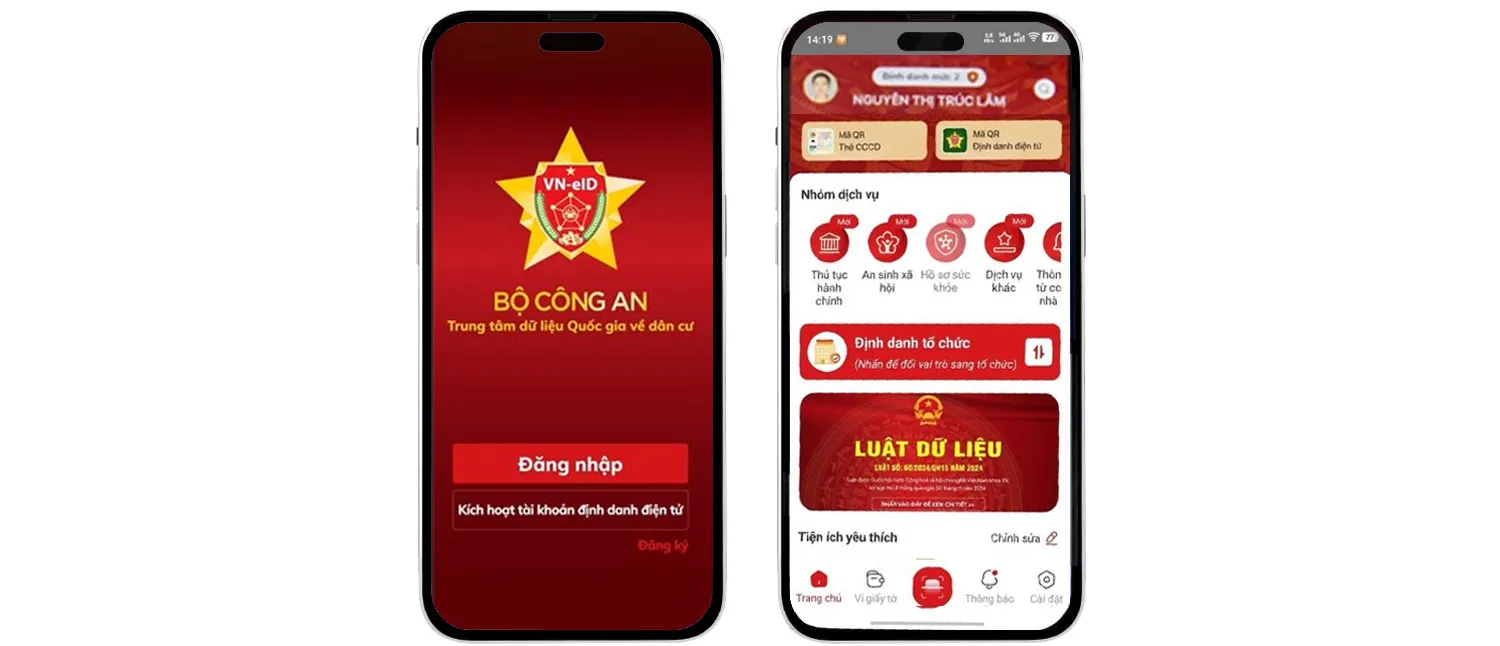
By May 2025, the adoption rate among the Vietnam population was 63%. Source: PWC
Vietnam’s VNeID app is the country’s official digital identity platform. It gives users a government-issued electronic identity account that can be used for identification, authentication, and access to digital services.
VNeID functions as a document wallet and can hold and present a growing set of official documents. Users can integrate citizen ID cards, driver’s licenses, vehicle registration, health insurance cards, passports, birth certificates, and, more recently, even land ownership certificates.
VNeID uses a two-level identity model. Level 1 supports basic digital identification and access to online services. Level 2 is the higher-assurance version, verified biometrically against the National Population Database, and unlocks broader use. With Level 2, users can handle residence registration, notarization workflows, driver’s license renewal, vehicle ownership transfer, banking-related identity checks, bill payments, and access to online public services. They can also register and use an official digital signature inside the app.
What slows down the global use of digital IDs?
For digital IDs to become as widely accepted as ICAO-compliant travel documents, countries need both shared standards and trusted frameworks for issuing and verifying digital credentials.
Today, most digital ID systems remain national or regional. They often work well within their own ecosystems, but interoperability across borders is still limited. That is one reason digital wallets have not yet become a universal identity layer.
Adoption is also slowed by a second challenge: trust. Digital ID systems need to prove that they are secure, interoperable, and supported by the legal and technical infrastructure required for real-world use.
How are digital IDs protected?
Just like passports and ID cards have built-in security features, digital IDs are stored in specialized applications often referred to as digital wallets. These apps use encryption and other protective measures. The identification data itself is typically protected with advanced cryptographic methods, as is the case with DTCs.
This makes digital IDs a safer and more convenient alternative to physical documents, which can be lost, stolen, or tampered with. (Of course, a mobile phone with a digital wallet can also be lost or stolen.)
What does a country need to launch a digital ID system?
Launching digital ID at the national level requires a specific infrastructure for issuing and verifying digital identities. This is typically referred to as a digital ID system. It brings together key stakeholders: governments, service providers, and individuals.
To participate, service providers usually need accreditation that confirms they meet requirements for privacy, security, accessibility, risk management, and fraud prevention. Individuals (citizens or residents) simply sign up, verify their identity, and gain access to the system.
Why physical IDs still matter
Digital IDs do not eliminate the need for physical identity checks. In many systems, issuing a digital credential still begins with verifying a physical ID document and the person presenting it.
That is why document authentication, face matching, and biometric liveness detection remain critical. In remote onboarding, these checks help prevent spoofing and create the trust link between a physical identity document and its digital counterpart.
As a result, the shift toward digital ID does not replace identity verification, but raises the bar for it. If you’re building a digital ID flow or preparing for one, see how Regula helps verify physical documents, match faces, and add liveness checks at the point where trust is created.