

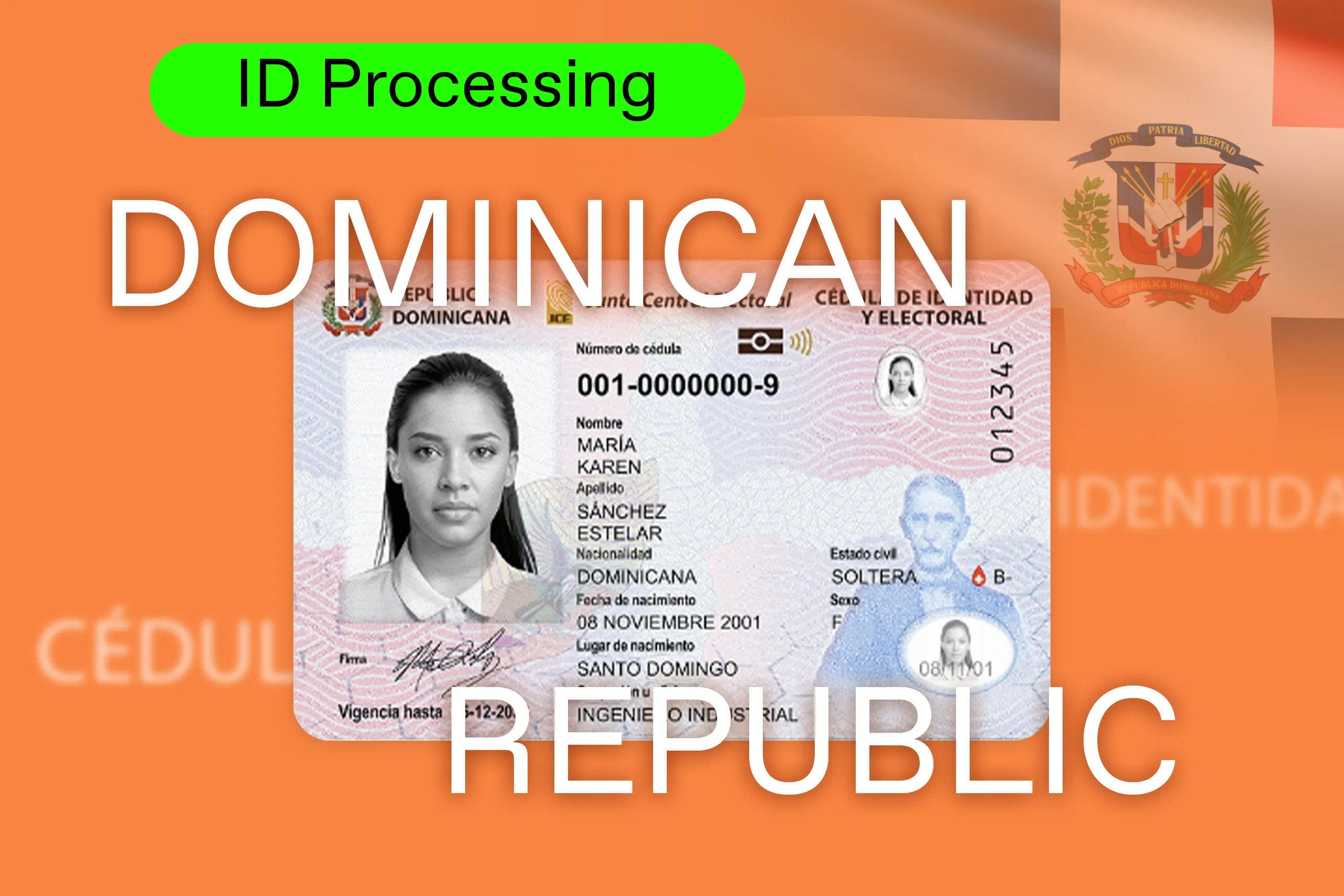
When people think of challenging ID documents, they often imagine unusual scripts, long names, or rare local formats. The Dominican Republic is tricky for a different, more operational reason.
💡 For more insights on other countries' IDs, head over to our past articles below.
The challenges of processing IDs in the Dominican Republic
In 2025 and 2026, the country began rolling out a new generation of identity documents almost all at once: its first electronic passport, a redesigned cédula — the national ID card — and a new driver’s license. For document processing systems, this creates three immediate challenges: more template variation, new security features to inspect, and a transition period when both legacy and newly issued documents must be handled correctly.
The Dominican passport finally becomes an e-passport
Starting in February 2026, citizens of the Dominican Republic gained access to the country’s first electronic passport. For adults, the new passport is valid for 10 years, compared with 6 years under the previous model.
The new Dominican Republic electronic passport includes a chip that stores the holder’s demographic data, photo, encrypted digital signature, and biometric data, including fingerprints and facial traits. The Dominican Republic has also joined ICAO’s Public Key Directory, which supports international validation of e-passports. That brings the country to the international biometric passport model in how the document is issued and validated.
From a document processing perspective, the new Dominican passport is an electronic credential, which means inspection can extend beyond visual checks to chip-based validation workflows.
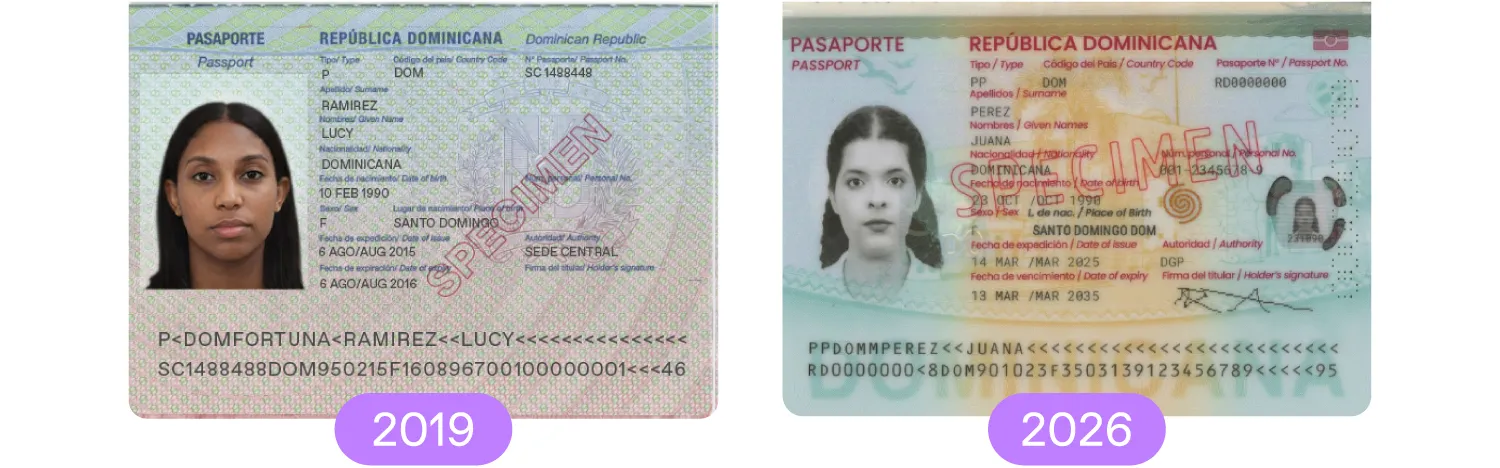
Dominican Republic passport, series 2019 vs. 2026
The physical document has also moved into a higher-security tier. The new Dominican Republic passport uses a polycarbonate data page and includes more than 70 security features, including holograms, watermarks, optically variable ink, and elements visible under UV and IR light. That improves fraud resistance, but it also changes how the document behaves in capture.
The new Dominican passport also adds dynamic security elements such as a hologram, OVI, and MLI with the holder’s photo and date of birth. These features are useful not only for anti-counterfeit protection, but also for document liveness checks, since genuine dynamic elements change under movement and viewing angle.
The document type in new Dominican passports is also encoded in both the MRZ and the visual inspection zone in line with ICAO’s newer standardization requirements.
The new Dominican ID card (cédula) isn’t just a redesign
The update of Dominican ID cards is notable partly because this is not a document the country refreshes often: the previous generation dates back to 2014. The first new cédula was officially presented to the president and first lady at the launch of the project, and the Junta Central Electoral (JCE) announced that mass issuance would begin on April 12, 2026.
Just like the new passport, the new Dominican ID card adds an electronic layer. It includes an electronic chip with encrypted personal data and uses a nine-layer polycarbonate structure fused with laser technology. The ID card now also features new dynamic security elements, including a hologram, MLI, and a transparent window, among over 100 integrated security features in total.
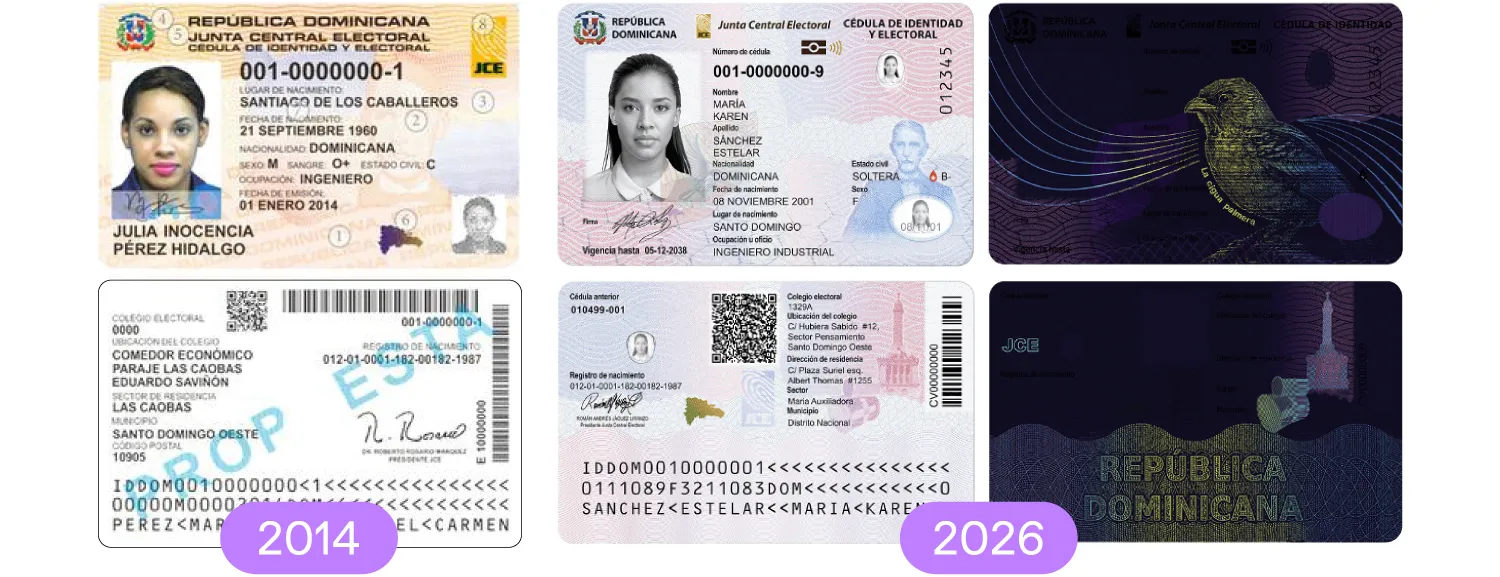
Dominican Republic ID cards display a broader set of personal details, including occupation, marital status, and place of birth, which is not so common for this document type.
The redesign also matters because the Dominican Republic ID card landscape is broader than a single card.
The new rollout includes not only the Cédula de Identidad y Electoral for adult citizens, but also versions for minors, military and police personnel, and legal foreign residents. These variants follow the same general security standard but serve different populations and use cases. For verification systems, that means the challenge is not supporting one Dominican ID card, but a document family.
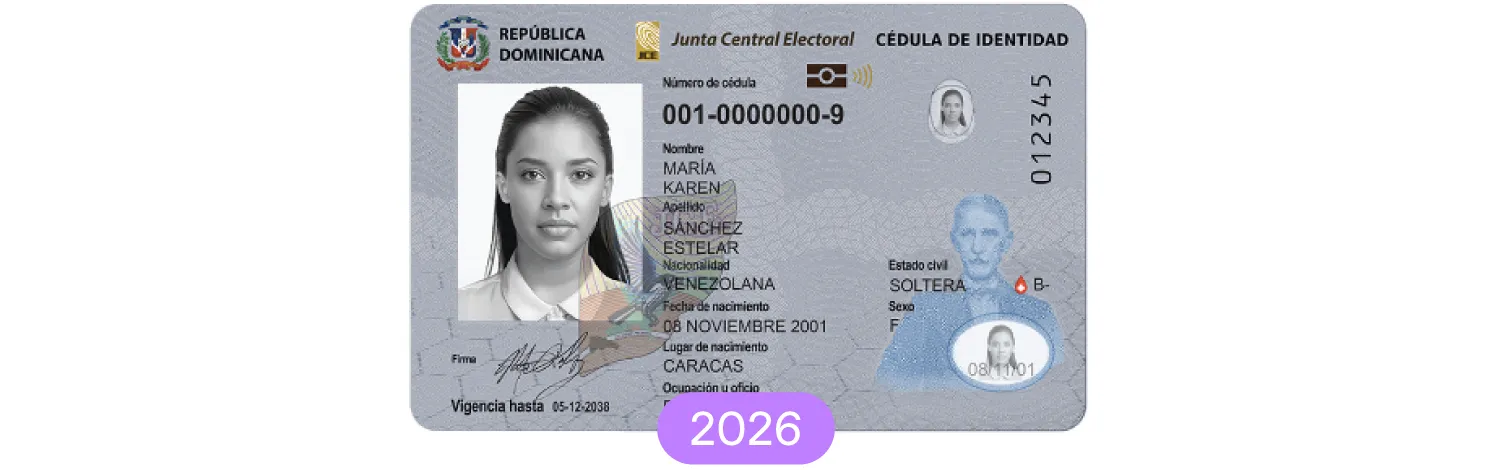
New Dominican ID card for foreign residents
The new Dominican Republic driver’s license has also moved into a higher-security tier
Mass issuance of the new Dominican driver’s license began on March 2, 2026. As with the new ID card, the first document was ceremonially issued to President Luis Abinader on February 26, 2026, marking the public launch of the new system. Official government sources also frame the rollout as a major replacement of the previous license model, which had been released in 2020.
The new Dominican driver’s license has moved into a higher-security tier. It is made of high-security polycarbonate, personalized by laser engraving and protected by microtext, holograms, invisible inks, and UV printing.
Regula’s experts also point to another notable change: the new Dominican driver’s license features a three-line machine-readable zone on the back. This layout is rare for driver’s licenses and, beyond the Dominican Republic, appears only on licenses from Algeria, Aruba, Bolivia, Brazil, and Chad.
The system also uses biometrics through an Automated Biometric Identification System (ABIS) to confirm driver identity and maintain a single, centralized record with auditable history.
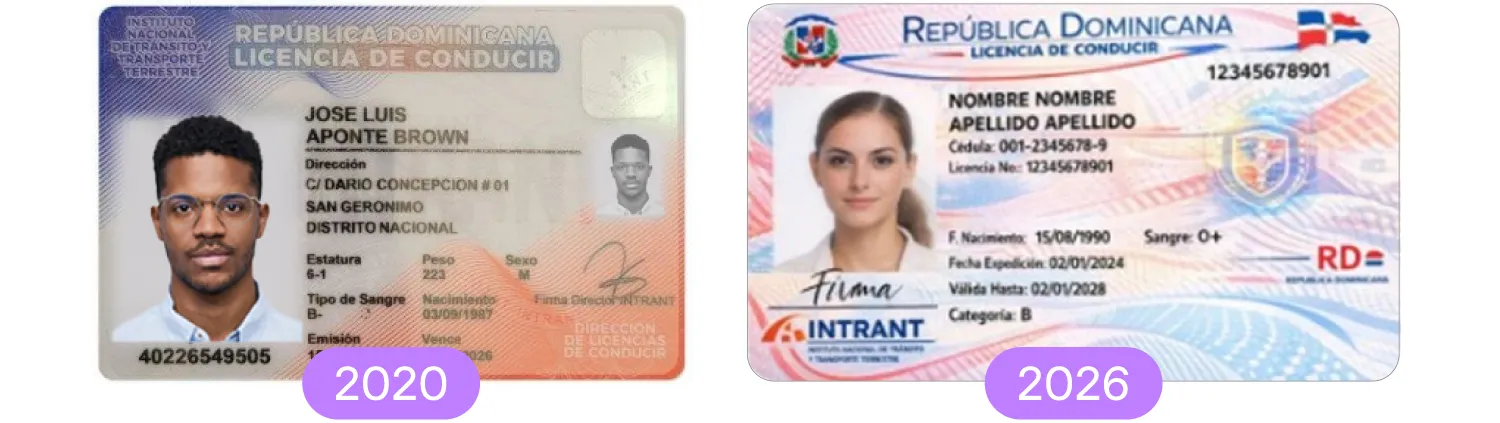
Dominican Republic driver’s license, series 2020 vs. 2026
The reform also targets one of the country’s biggest licensing blind spots: more than 1 million motorcyclists who currently don’t hold a license are expected to enter the system through certification and new issuance. For identity verification and document processing providers, that means an increase in newly issued credentials, category-linked records, and first-time verification flows.
The next expected step is a mobile driver’s license (mDL). According to the official launch announcement, the second phase of the reform will introduce an mDL aligned with ISO/IEC 18013-5. That is another reason verification providers need to stay ready for the change: the ecosystem is evolving not only through more secure physical licenses, but also toward digitally presented credentials and new verification workflows.
How to effectively process Dominican Republic ID documents
To process Dominican ID documents effectively, a reliable solution should support both legacy and newly issued formats. That becomes critical when some core documents go decades without a major refresh, because a long gap usually brings a significant jump in design logic, materials, and security features.
The solution also needs to be future-ready. In markets like the Dominican Republic, the shift from traditional documents to electronic and then mobile credentials can happen faster than verification systems are prepared for.
Regula Document Reader SDK helps businesses keep up with document change. It combines OCR, document verification, and authenticity checks in one workflow, supported by one of the world’s most comprehensive document template databases and continuous updates. From new Dominican passports to global document coverage, Regula helps you stay ready.