
In brief: Over the past two decades, identity documents have evolved from predominantly physical, visually inspected credentials into multi-layered sources of identity evidence. Physical security features remain important, but machine-readable data, cryptographically protected chips (RFID), biometrics and digital credentials now provide additional ways to establish authenticity, integrity and the connection between a document and its holder.
A passport may still look like a familiar booklet, but the technology behind it has changed dramatically. Over the past two decades, identity documents have become more sophisticated, and the methods used to verify them have evolved alongside their security features.
Not all these technologies are new. Some emerged well before the period covered in this article, but the past 20 years have seen their wider adoption, further refinement, and integration into modern identity documents.
So, what exactly has changed in identity documents over the past 20 years, and what has driven these innovations? Let's look at the most significant developments.
Global standards updates
Global standardization of identity documents has played an increasingly important role in making identity documents more consistent, secure, and interoperable across borders.
ICAO's Doc 9303 establishes specifications for machine-readable travel documents, helping countries adopt common requirements for their design and electronic components. Two important deadlines accelerated this transition: April 1, 2010, when ICAO Member States were required to stop issuing non-machine-readable passports, and November 24, 2015, by which such passports were generally expected to expire, subject to certain exceptions. These milestones helped establish machine-readable passports as the international standard. Machine readability improved interoperability and automated data capture, but an MRZ alone does not establish that a document is authentic.

Passport of the Philippines, 2004: handwritten data, no MRZ

Passport of the Philippines, 2016: MRZ as per the ICAO standard
Beyond machine-readable zones (MRZs), ICAO specifications also address electronic passports and the biometric data they contain. Modern ePassports store a digital facial image on an embedded chip and may also include fingerprints or iris data, depending on the issuing country.
Biometric information helps link the document to its holder, and electronic security mechanisms allow verification systems to check the authenticity and integrity of chip data. Together, these technologies strengthen identity verification and help reduce the risk of document fraud and impersonation.
The adoption of MRZs, electronic chips, and biometric technologies has also made automated document processing possible at border crossings and airports, reducing reliance on manual data entry and visual inspection alone.
New security features
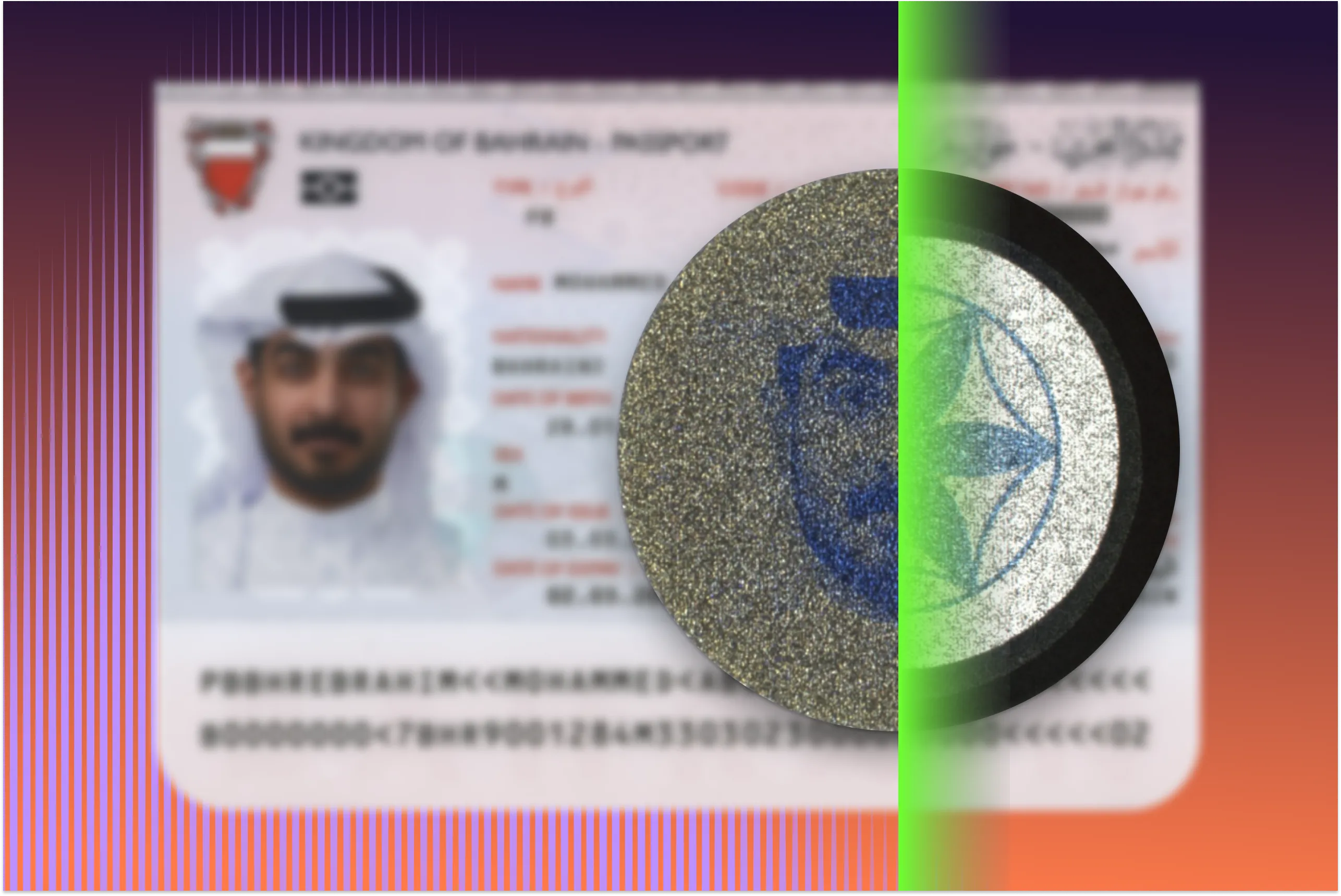
The past two decades have brought significant advances in identity document materials, personalization, and anti-counterfeiting technologies. Combining both cutting-edge materials and sophisticated security technologies, document issuers have made modern IDs more resistant to tampering and forgery.
One major development is the wider use of polycarbonate, a durable, tamper-resistant material used in many modern identity cards and passport data pages. Unlike traditional paper-based solutions, polycarbonate allows personal information and portraits to be laser-engraved into the document's structure, making unauthorized alterations more difficult. Polycarbonate also improves the document's resistance to physical damage.

Passport of Belgium, 2017: paper substrate

Passport of Belgium, 2022: polycarbonate substrate
Optically variable security features, such as holograms and optically variable inks (OVI), create visual effects that change depending on the viewing angle. These effects are difficult to reproduce accurately using conventional printing or copying techniques.
Advanced technologies such as Dynaprint introduce dynamic visual effects through specialized printing techniques, providing additional ways to distinguish genuine documents from counterfeits.
Other security technologies, including LASINK, LetterScreen, Encrypted Invisible Personal Information (E-IPI), and Multiple Laser Images (MLIs), offer additional protection against counterfeiting. Some enhance the security of personalized portraits, while others introduce hidden information or angle-dependent images that can be examined during document authentication.
.gif)
Passport of Poland, 2018, containing OVI, MLI, and OVD elements

Driver’s license of Burkina Faso, 2017: main portrait made with the LASINK technology
RFID chip introduction
The introduction of RFID (Radio-Frequency Identification) chips marked an important milestone in identity document security. Malaysia pioneered this technology in 1998, issuing the world's first electronic passport with a contactless chip. Although it predated ICAO's ePassport standards, it demonstrated the potential of electronic identity documents. Belgium followed in 2004 with the first ICAO-compliant ePassport.
Today, RFID chips are widely used in electronic passports and identity cards. They store personal information, including a digital facial image and, depending on the document, additional biometric data. Compatible readers can access this information through contactless communication.

Biometric ID card (2021) and Passport (2008-2013) of France, containing RFID chips
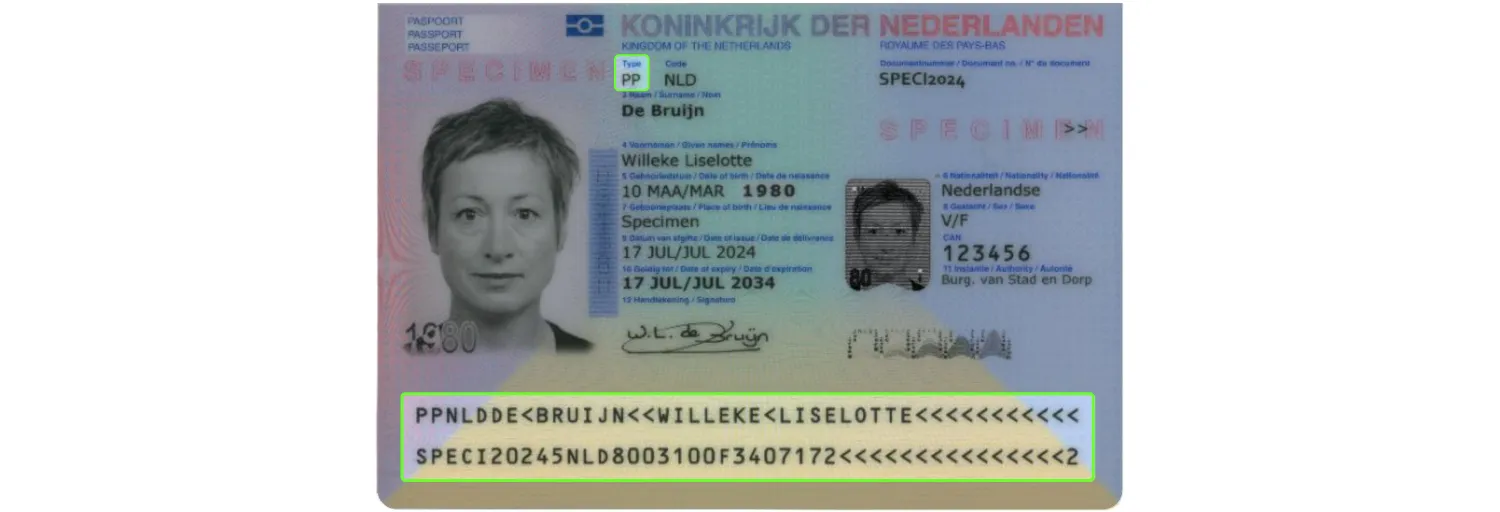
Malaysia's electronic passport, introduced in 1998. Belgium introduced the first ICAO-compliant ePassport in 2004.
Reading data from the chip is only the first step. Verification should establish the authenticity and integrity of the signed chip data and, where the document and protocol support it, use additional cryptographic mechanisms to detect chip cloning.
In remote verification, organisations should avoid treating an untrusted client device as the sole source of truth for chip-authentication results. Critical cryptographic results should be independently validated within a trusted verification environment. Regula therefore recommends server-side verification to independently validate the chip authentication results rather than trusting the mobile device's response alone.
The emergence of digital identity credentials
Digital identity credentials have introduced new ways to prove identity using smartphones and other compatible devices. Mobile driver's licenses (mDLs) are one example, while digital wallets provide a way to store and present supported credentials. Digital Travel Credentials (DTCs) extend this development to international travel.
In the US, Apple Wallet supports driver's licenses and state IDs from participating jurisdictions. In November 2025, Apple also introduced a Digital ID based on information from a US passport, initially for identity checks at participating TSA checkpoints during domestic travel. Apple explicitly says it is not a replacement for a physical passport and cannot be used for international travel or border crossing.
Europe is taking another approach. Under the European Digital Identity framework, EU Member States must provide digital identity wallets by the end of 2026. These wallets are designed to let people prove their identity, share verified information, and access public and private services.
However, availability does not mean universal acceptance. Apple's passport-based Digital ID illustrates an important distinction: digital identity evidence derived from a passport is not necessarily a digital passport or replacement travel document. Digital credentials still depend on compatible verification systems, trusted issuers, and local rules. They therefore represent an additional form of identity evidence rather than a universal replacement for physical documents.
What has driven these changes?
The drive for innovation in ID design and protection comes from a mix of security challenges, technological advancements, and user expectations. Let’s have a closer look.
Sophisticated document fraud
Counterfeiters never cease inventing new techniques to replicate even the most advanced security features in IDs. High-quality forgeries can now contain even RFID chips (which is why it’s crucial to ensure trustworthy verification).
As a response, document issuers must continuously upgrade ID features to stay a step ahead. Modern document security depends less on any single feature than on layers of features that are difficult to reproduce successfully using the same attack method.
For example, in 2024, North Carolina issued their redesigned driver’s license and ID card, which contain over 50 security features. The combination of various security features makes it harder for fraudsters to counterfeit or change the original content of a document.

The rise of AI-generated fraud
More recently, artificial intelligence has introduced additional challenges for identity verification. Generative AI tools can produce realistic images of fake identity documents and support increasingly sophisticated impersonation attempts.
In 2024, an investigation by 404 Media exposed a service offering AI-generated images of fake IDs for approximately $15, demonstrating how accessible this type of fraud had become.
According to Regula's 2026 global research, 87% of surveyed organizations reported signs of AI-assisted or automated activity in their identity verification processes over the previous 12 months. Deepfakes were among the leading identity-related concerns, cited by 35% of respondents, while 26% pointed to AI agents acting as users.
These threats extend beyond forged documents and manipulated images. Fraudsters may also inject AI-generated images or video directly into verification systems, bypassing the device's camera. This means verification must assess not only the authenticity of the evidence but also the integrity of the capture process.
To address these risks, organizations need a layered approach that combines document authenticity checks, biometric verification, liveness detection, and protection against digital injection attacks. This helps them identify suspicious activity even when AI-generated content appears convincing.
Demand for enhanced user experience
Security is not the only factor driving changes in identity documents. People increasingly expect convenient digital access to services, from banking and healthcare to travel and government administration.
This demand has encouraged the adoption of electronic identity documents, automated verification systems, and digital credentials.
For example, the European Digital Identity Wallet initiative is designed to allow users to store and share verified identity information and access public and private services. It also aims to give users greater control over which personal details they disclose.
Together, these developments illustrate how identity document technologies have evolved to address two requirements that must be balanced: stronger security and more convenient identity verification.
From physical security to multi-layered identity verification
Over the past 20 years, identity documents have evolved far beyond their appearance. Advanced security features, electronic chips, and biometrics have made them more resistant to forgery and easier to verify. Meanwhile, digital credentials have introduced new ways to prove identity without relying solely on physical documents.
What is interesting is that no one identity technology has replaced another. It is that trust has become layered. Physical security features help establish document authenticity; chips provide cryptographically verifiable data; biometrics help establish the connection to the holder; and digital credentials introduce new ways to present trusted identity information. Each layer answers a different question, and strong identity verification comes from understanding how those answers work together.
At Regula, we've been studying identity documents and their security features for over 30 years, building a database of more than 17,000 document templates from around the world. This experience gives us a firsthand perspective on how identity documents have evolved and where they may be heading next.
So, what does the future hold? Will identity documents become fully digital, or will physical and digital formats coexist?
Explore our next article, The Future of Identity Documents: Digital, Physical, or Both?, where we share our perspective on the technologies and trends shaping the next generation of IDs.