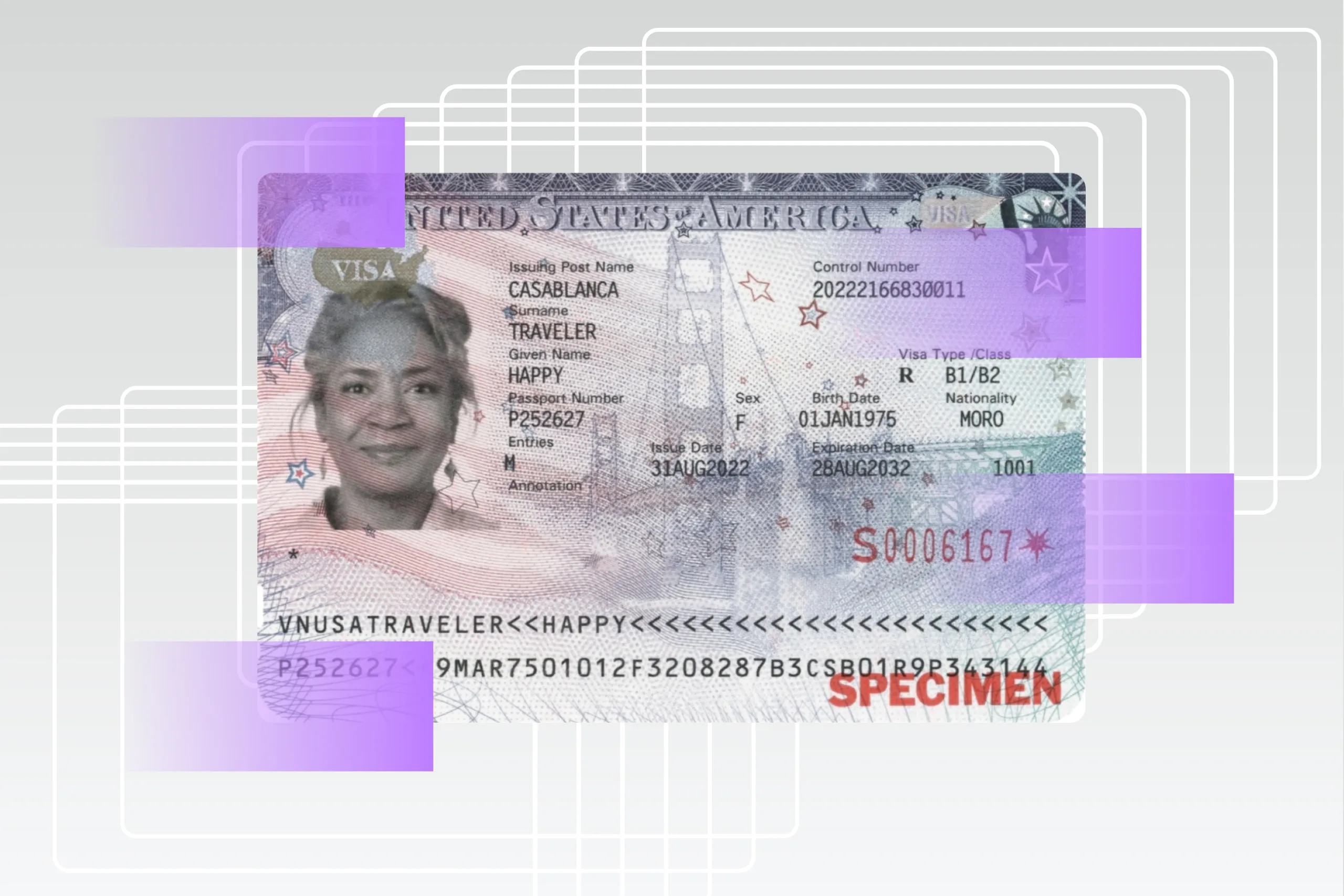

“Guatemalan passport” or “Guatemalan ID card” may sound like a specific enough document category. In real verification flows, it often is not.
Guatemala’s core document set is familiar: passports, ID cards, driver’s licenses, and identity documents for foreign residents. But for automated processing, the more useful question is not only what document type the user submits, but which version of that document they submit.
💡 If you’re new to this series, you may also like our other posts:
The challenges of processing IDs in Guatemala
The main challenge is precision. Several versions of the same Guatemalan document type may remain valid at the same time, and some differ only in small layout, field, or security-feature details.
That distinction affects the whole processing chain. If the system applies the wrong template, data may be missed or misread, and authenticity checks may compare the document against the wrong expected design.
Let’s show, not tell.
Guatemalan ID cards: one document type, several valid layouts
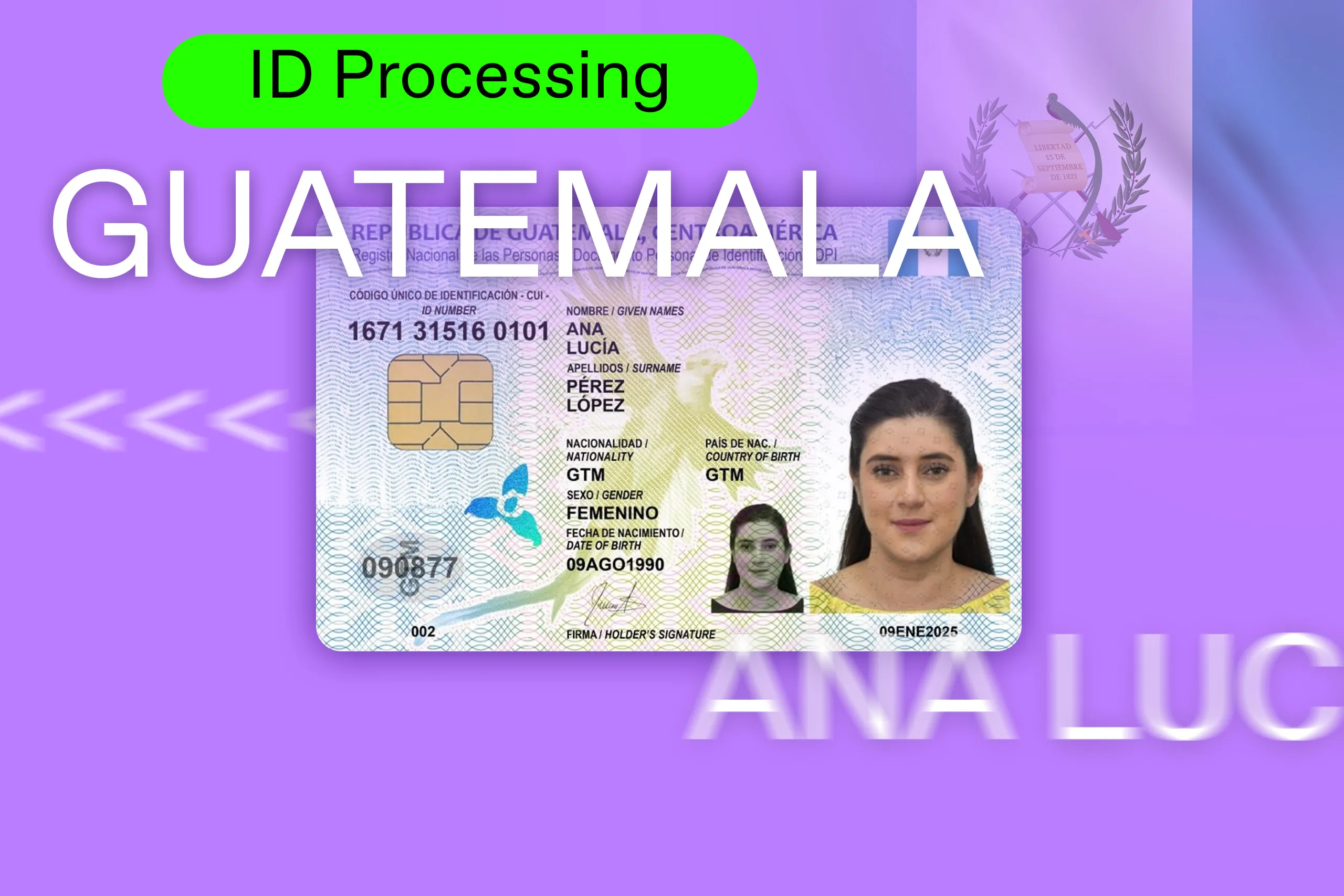
Guatemala’s national ID card, officially the Documento Personal de Identificación (DPI), is a good place to see why version recognition matters.
There are currently several ID card series that may appear in verification flows, including versions from 2009, 2014, and the latest 2025 update. At first glance, the front side may look relatively consistent across versions: the holder’s portrait, core personal data, and general structure remain familiar.
.webp)
.webp)
.webp)
In the newest 2025 Guatemala ID card, the OVI element changed from the triangle used in previous series to a flower-shaped element.
However, the reverse side is where layout knowledge becomes especially important. As in some other Central and South American countries, including Argentina, the back of an ID card may vary even within the same series.
One layout may include place of registration, address, ethnicity, personal number, or other additional data. Another may omit some of these fields or place them differently. This means that one “Guatemalan ID card” document type cannot always be processed with one static template.
These variations affect both OCR and authenticity checks. If the wrong template is applied, the system may miss a field, read data from the wrong zone, or try to validate the document against the wrong expected design.
Get posts like this in your inbox with the bi-weekly Regula Blog Digest!
Guatemala also issues identity documents for foreign nationals, commonly referred to as Documento de Residencia, carné de residencia, or Guatemala residency cards. They resemble national ID cards, but still represent a separate document class. For identity verification systems, that distinction matters: a residency card must be recognized and processed against the correct template, not forced into the national ID card flow.
.webp)
DPI Extranjero Domiciliado: 2009 vs. 2025 series.
Another Guatemala-related ID document is the Guatemalan Consular Identification Card, or Tarjeta de Identificación Consular Guatemalteca (TICG). It should not be confused with DPI Extranjero Domiciliado: the TICG is issued by Guatemalan consulates to citizens living in the United States, while DPI Extranjero Domiciliado is used for domiciled foreign residents. The TICG is designed for identification abroad and is not valid within Guatemala.
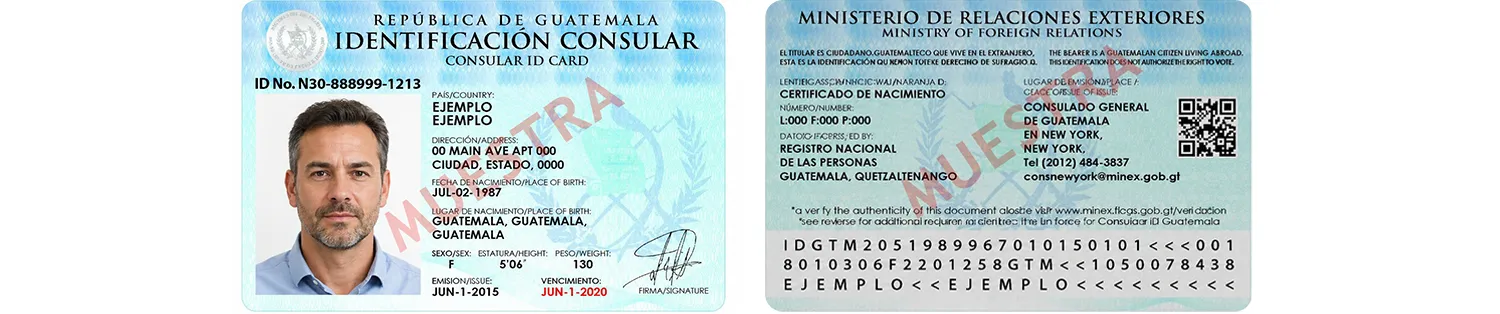
Guatemala Consular ID card, 2015 series.
Guatemalan passports: minor changes can create recognition risks
Guatemalan passports bring the same version-control challenge into a document processing context. Several passport series may still be valid, including 2011, 2018, 2021, and 2023 versions. The updates might be subtle, but a document processing software should be able to identify the exact series.
Capture quality raises the stakes. Guatemalan passport data pages are laminated, which means they can bend, curve, or lie unevenly during capture. In a remote onboarding flow, the image may also include glare, blur, shadows, or skew. These issues can hide the small visual cues that separate one valid version from another.
.webp)
.webp)
.webp)
Barcodes in Guatemalan passports include the holder’s name, birth date, document dates, place of birth, sex, place of issue, and personal number. Accurate processing means extracting this data and comparing it with the MRZ and visual zone.
Driver’s licenses: familiar format, local category logic
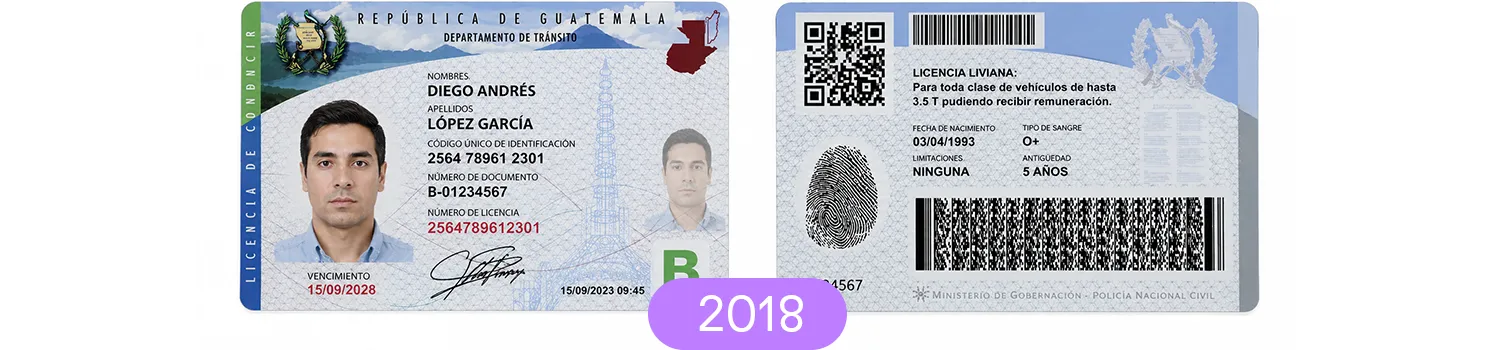
Guatemala’s driver’s license has also been refreshed several times, including versions from 2013, 2018, and the most recent 2021 series.
An interesting detail is how license categories are presented. This is different from the table-based category format common in many other countries, where categories, dates, and restrictions are often displayed in a structured grid. In Guatemala, the category may appear more compactly, for example as a large letter at the bottom corner of the front side.
Guatemala uses five main categories based on vehicle type:
-
Type A / Professional – Heavy transport, school buses, and commercial passenger transport over 3.5 metric tons
-
Type B / Professional – Vehicles up to 3.5 metric tons used commercially, including paid transport
-
Type C – Light vehicles for personal use
-
Type M – Motorcycles
-
Type E – Agricultural and industrial machinery
.webp)
.webp)
2018 and 2021 series include the QR code which leads to the official website, where you can check the driver’s license number.
How to effectively process Guatemalan documents
For Guatemala, document coverage should be checked at the template level, as a generic “Guatemala supported” claim doesn’t say much. The important question is whether the system knows the actual versions and layout variants that may appear in a verification flow: older and newer ID cards, passport versions, driver’s licenses, foreign resident IDs, front and back sides, barcodes, MRZs, field positions, and expected security features.
This depends on the depth of the document template database. The broader and more detailed the database, the less the system has to guess from a captured image. It can identify the exact document design first, then apply the right extraction and validation logic.
Regula has the world’s largest database of identity documents, with 16,500 document templates from 254 countries and territories. This includes Guatemalan IDs, passports, driver’s licenses, and residence-related documents, helping businesses process Guatemalan documents by exact type and version, not by country name alone.
If Guatemala is part of your onboarding, border control, travel, or compliance workflow, get in touch with the Regula team.