
In brief: Regula IDV Platform brings identity verification, fraud prevention, workflow orchestration, and identity lifecycle management into one solution. It combines document and biometric verification with screening, persistent profiles, risk-based workflows, case management, and a continuing verification history.
Businesses can integrate their systems and third-party services, adapt verification processes to their requirements, and maintain control over sensitive data with flexible deployment options.
A customer’s first identity check may take only a few seconds, but the entire relationship tends to last for many years. During that time, a lot can change as customers renew their passports or make attempts to recover their accounts.
That is why your team needs to keep assessing whether previous identity checks can be trusted — and which must be repeated based on current risk signals.
Regula IDV Platform brings that work together as an all-in-one identity verification workflow orchestration solution. It combines the checks themselves with the tools to manage identities, investigate issues, and apply your verification policies throughout the customer relationship.
What can you verify with Regula IDV Platform?
Regula IDV Platform brings multiple verification and risk assessment capabilities into a single, orchestrated workflow.
With it, companies can combine document authentication, facial biometrics, age assurance, AML screening, and device and location risk signals to build verification processes tailored to different use cases, customer journeys, and levels of risk.
The document and biometric foundation comes from Regula’s proprietary Regula Document Reader SDK and Regula Face SDK. Workflows also support third-party checks through APIs and customizable connectors, so verification isn’t limited to those two products.
Depending on the workflow, the checks include:
-
Document verification: Reads identity data, examines document authenticity, and cross-checks printed text, machine-readable zones, barcodes, and RFID chip data where available.
-
Facial biometrics: Compares faces, checks liveness and image quality, and searches a configured face database.
-
Age assurance: Estimates age from a selfie or verifies age using the date of birth in an identity document.
-
AML/PEP and database screening: Uses connected services and watchlists for anti-money laundering (AML), politically exposed person (PEP), sanctions, and other screening checks.
-
Geo and IP checks: Adds IP-based and device-based location information to the verification context.
-
Device checks: Uses device information and activity across attempts to help identify patterns that need attention.
Regula’s own verification technology also includes layered protection against deepfake and injection attacks. This is especially relevant today, as an injected image or video may replace the expected camera input, rather than being shown to the camera.
The collected evidence and results can be linked to a persistent customer profile and its verification sessions. Your team then has the relevant information together, without first having to find and match records from separate systems.
How can you build verification workflows around your business?
Regula IDV Platform uses workflow orchestration to connect identity verification, risk-based decisions, and identity lifecycle management. Ready-to-use workflows, including KYC and reverification, are meant to give your team a starting point, with checks and rules that can be adapted to your processes and policies.
What’s more, built-in risk predictors add predefined rules for suspicious activity. Your team chooses which predictors to activate and configures the appropriate responses (e.g., stopping the session, blocking a device, or opening a case for review).
These settings are managed separately from the workflow, so adjusting a supported risk threshold doesn’t mean rebuilding its steps.
Meanwhile, session review shows what happened when someone went through that workflow. A session records one run through a verification workflow, including its checks, results, and outcome. Your team can inspect completed sessions as well as those that failed, were abandoned, or were terminated.
How can you manage identities throughout the customer relationship?
With identity lifecycle management, Regula IDV Platform connects each person’s identity information with their verification history in a persistent profile. Depending on what your organization collects and retains, that record can include documents, biometric data, geo and device data, screening results, and the sessions associated with them.
Regula IDV Platform also supports proactive management through configured checks of document expiration dates. When those checks identify a document that needs updating, a follow-up workflow requests a replacement for verification. The new results are added to the customer’s existing profile alongside earlier checks.
You can also retain context from the devices and locations involved in verification:
-
Geo and IP checks preserve IP-based and device-based location information collected during interactions.
-
Device history keeps the device attributes collected across sessions associated with a profile.
When enabled, these records give analysts and configured risk rules more information to work with.
The response can always stay proportionate to the situation. You can define when a returning customer needs another check and what that check should involve, allowing routine interactions to continue normally.
How does Regula IDV Platform help your team investigate issues?
Case management gives analysts a centralized workspace for investigating identity, compliance, and fraud issues. Regula IDV Platform brings the relevant profiles, verification sessions, and supporting evidence together, so the person reviewing a case can understand what needs attention and work through it.
Cases are created automatically when configured workflow conditions are met. A potential screening match, an expired document, or a suspected duplicate profile can each lead to a case, with an assigned reviewer responsible for investigating it.
During a review, an analyst can examine the evidence and earlier activity, request additional checks, and record their findings. Assignment and status tracking help colleagues follow the work, particularly when an investigation needs input from more than one person.
The record continues as the case develops.
Actions are logged with the person who performed them, the time, and the rationale, giving your team a history to consult during a later review or audit.
How does Regula IDV Platform support regulatory compliance?
Regula IDV Platform helps your team apply verification policies, maintain ongoing due diligence, and explain how your decisions were made.
AML/PEP and database screening can connect your verification workflows with selected screening services and watchlists. This way, you will be able to identify potential matches against sanctions lists, politically exposed person records, and other relevant sources.
Risk-based workflows can help you determine which checks run for each customer and when findings need investigation.
The supporting records also help with:
-
Ongoing due diligence: Persistent customer profiles and verification history connect periodic reviews, document renewals, and additional checks with information already held about the customer.
-
Investigations and audits: Session records, case histories, and audit logs preserve the checks performed, findings recorded, and actions taken, so authorized staff have evidence to examine.
Roles and permissions restrict who can view or change information, including access to particular profile groups and workflows. Your organization defines the policies and review responsibilities, while Regula IDV Platform helps your team apply them and keep the supporting records together.
Can customers reuse a verified identity with Regula IDV Platform?
Yes. Once a person’s identity has been verified, selected details can become part of a reusable digital credential. The customer keeps it in a digital wallet and later presents it to a service that accepts it, reducing the need to submit the same documents again.
Regula IDV Platform supports this through its Microsoft Entra Verified ID integration. An issuing organization uses Microsoft Entra Verified ID to issue the credential, which the customer holds in Microsoft Authenticator.
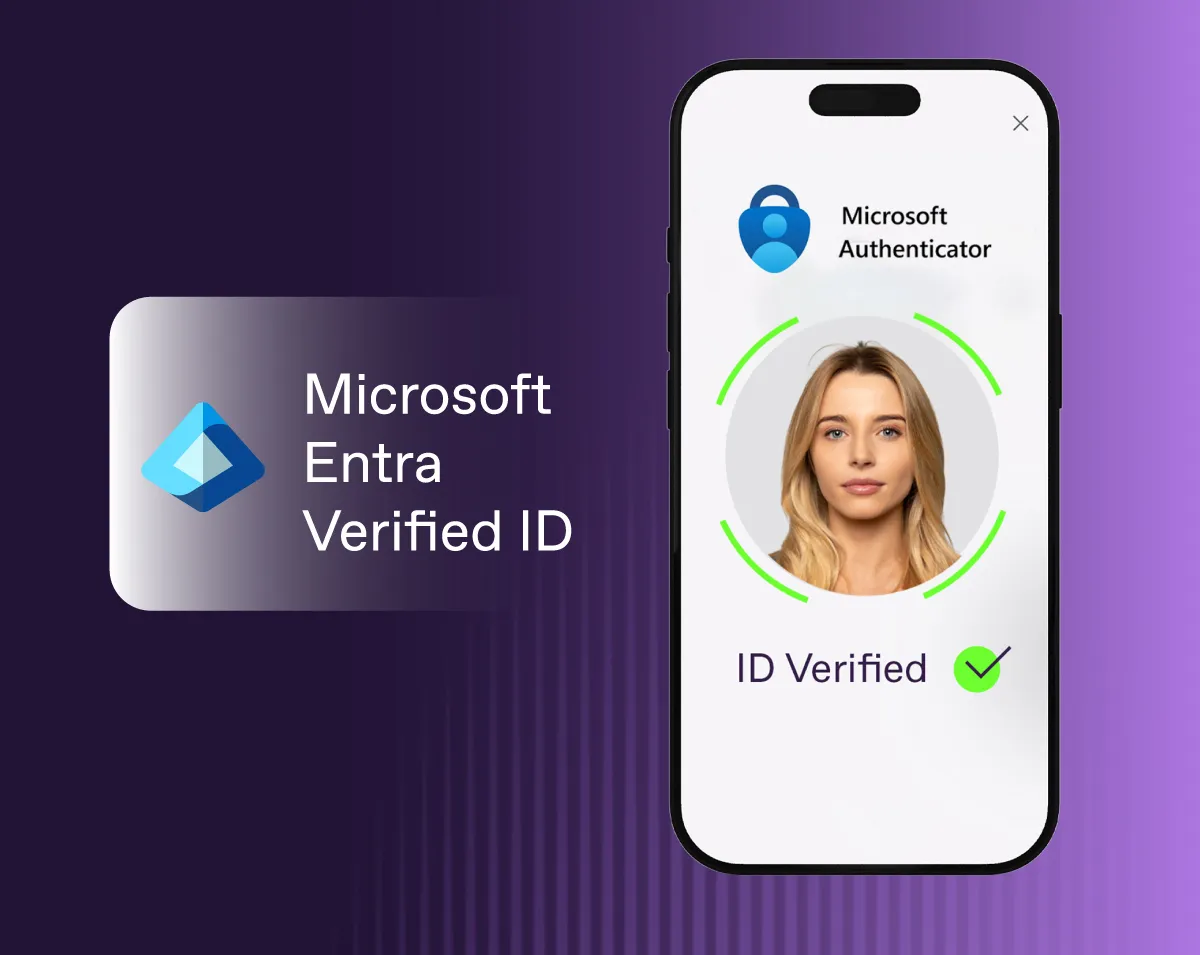
Acceptance still depends on the receiving service’s requirements, including the credential’s issuer and contents.
How does Regula IDV Platform work with your existing systems?
Regula IDV Platform uses a vendor-agnostic architecture with customizable connectors, APIs, and webhooks to connect existing applications, legacy systems, and third-party services.
For example, a configured CRM integration can let an agent start verification from a support ticket, with the ticket number attached to the session as metadata. When the session status changes, a configured webhook notifies your backend. The integration then retrieves the results and updates the same ticket, so the agent continues working in a familiar tool.
Verification can begin through different channels:
-
Mobile and web applications, where customers provide documents and biometrics remotely
-
Document readers, fingerprint scanners, and kiosks, for supported in-person and self-service scenarios
-
APIs and connected business systems, which exchange data and results as part of a broader process
Moreover, ready-to-run white-label components provide a starting point for the customer-facing experience. Branding, interface wording, and localization can be adapted to your audience, with support for any user interface language.
Where can you deploy Regula IDV Platform?
Regula IDV Platform can run on premises or in a customer-managed hosted cloud, giving your organization control over the verification environment and its identity data. You can align processing, storage, and access with your infrastructure policies and data residency requirements.
Storage options include Amazon S3 and S3-compatible storage, Azure Blob Storage, Google Cloud Storage, and local file storage.
For isolated environments, an offline work mode supports operation within a local network. Workflows that use external screening or digital credential services need the relevant connectivity, so those connections form part of deployment planning.
Regula also supports initial deployment and configuration, with ongoing 24/7/365 support available by subscription.
WORTH NOTING | Keeping identity data under control
Regula IDV Platform also combines access controls, configurable retention settings, and customer-controlled deployment to support data governance. Your organization defines how identity information is used and protected throughout the relationship.
Those decisions cover:
-
Access: Roles and permissions determine which records and functions staff can use, including whether they can view or change information.
-
Retention: Settings control how long records such as session data and device logs are kept.
-
Operation: The deployment arrangements assign responsibility for security updates, monitoring, backups, encryption keys, and deletion.
How does Regula IDV Platform scale?
Regula IDV Platform supports growth in verification volumes and stored identity data through distributed deployment options. Services that handle incoming requests and run workflows support multiple instances, allowing additional capacity for those workloads.
The deployment may use multiple servers in your own data center or customer-managed cloud. The resources needed depend on your checks, peak traffic, and data growth.
Regula works with your team to assess expected workloads and infrastructure requirements. Availability and recovery arrangements form part of that planning, with recovery measures implemented within the infrastructure your organization manages.
As operations expand, your team can also adapt workflows, add integrations, and introduce verification processes for additional services or markets.
Growth also brings more people into the process. And role-based access control (RBAC) can help you manage access in an expanding environment through groups that reflect branches, departments, or review teams. Staff cannot edit their own accounts or group memberships.
One platform for the entire identity lifecycle
Regula IDV Platform brings together identity verification, fraud prevention, age checks, regulatory compliance, and ongoing identity management in one configurable solution. It combines risk-based workflows, persistent customer profiles, and case management to support identity checks and decisions throughout the customer lifecycle.
That leaves room to shape verification around your own customers, policies, and infrastructure. You can choose the evidence required for each situation, define when an analyst should become involved, and decide how the process will develop as your business grows.
If you’re exploring how Regula IDV Platform could fit your organization, we’re ready to discuss your verification workflow. We can work through your onboarding and returning-customer scenarios, the systems involved, and the deployment you need.

.webp)