
Malaysia was early to the biometric passport initiative. In March 1998, it became the first country in the world to issue one, well before the modern ICAO ePassport standard emerged. That first version looked and worked differently from today’s electronic passports, but it put Malaysia ahead of a shift that would later reshape travel documents worldwide.
Let’s see how Malaysian identity documents have evolved nearly three decades later, and what makes the latest versions worth a closer look.
💡 If you’re new to this series, you may also like our other posts:
Malaysian passport got a 2026 redesign
Malaysia introduced a new passport design in 2026, replacing the series first issued in 2017. The overall structure remains familiar, but the data page and several visible security features have been refreshed.
One of the clearest changes is the holder’s portrait. The 2017 passport used a black-and-white image, while the 2026 version displays it in color. The new data page also includes a transparent window and an MLI element with additional personalized information.
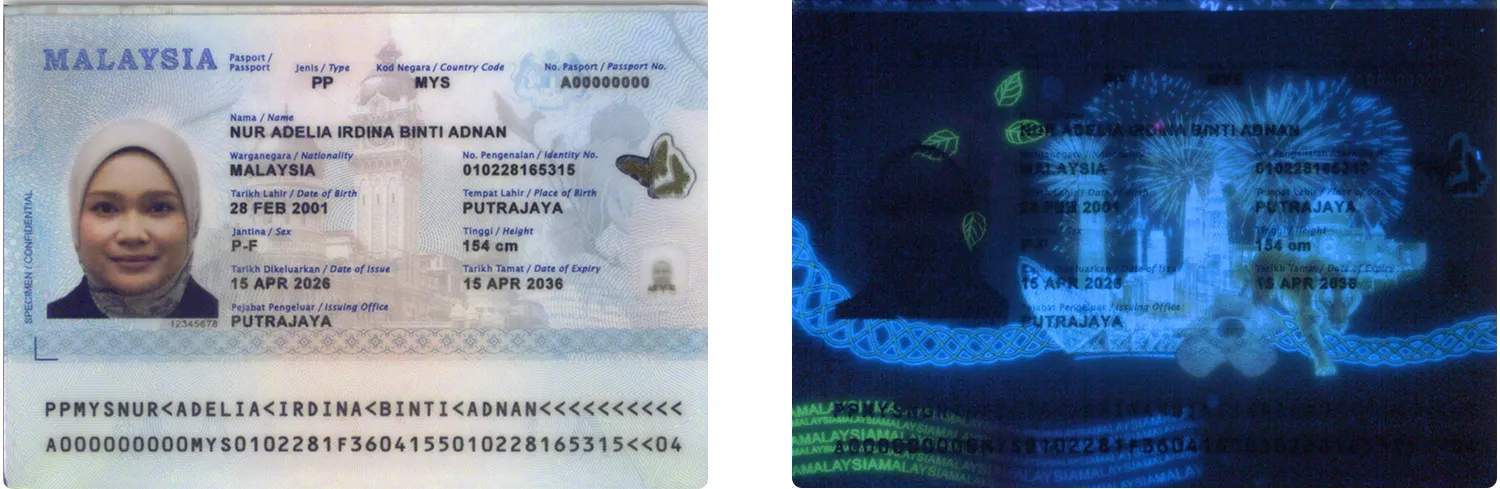
A new Malaysian passport has a two-letter document type code (PP) in accordance with ICAO requirements issued in 2025.
The redesign is the latest step in a much longer sequence of passport updates. Malaysia has issued several electronic passport series since introducing its first biometric passport in 1998, with later versions appearing in 2006, 2010, 2013, 2017, and now 2026.
.gif)
.gif)
.gif)
.gif)
.gif)
The 2013 edition of a Malaysian passport switched to a black-and-white portrait; the 2026 redesign returns to a color image while updating the data page around it.
One peculiarity of Malaysian passports is how names are structured. The document doesn’t distinguish between surname and given names, and the MRZ may contain the full name without the usual << separator. This can create discrepancies when passenger data is transferred to systems such as APIS, which often expect separate surname and given-name fields.

The holder’s name is Nur Adelia Irdina Binti Adnan. In Malay naming conventions, “Binti” means “daughter of” and links the person’s name to her father’s name.
Malaysia also updated its national ID card in 2026
MyKad is a Malaysian national smart ID card, used for identification and access to government and digital services. Malaysia began issuing a new MyKad series in September 2026.
The Malaysian ID card redesign introduces a polycarbonate body, a transparent window, updated visual security features, and a dual-interface chip that supports both contact and contactless reading.
The previous MyKad remains valid, so the two generations will circulate in parallel. Verification systems need to recognize the new design while continuing to support existing cards.
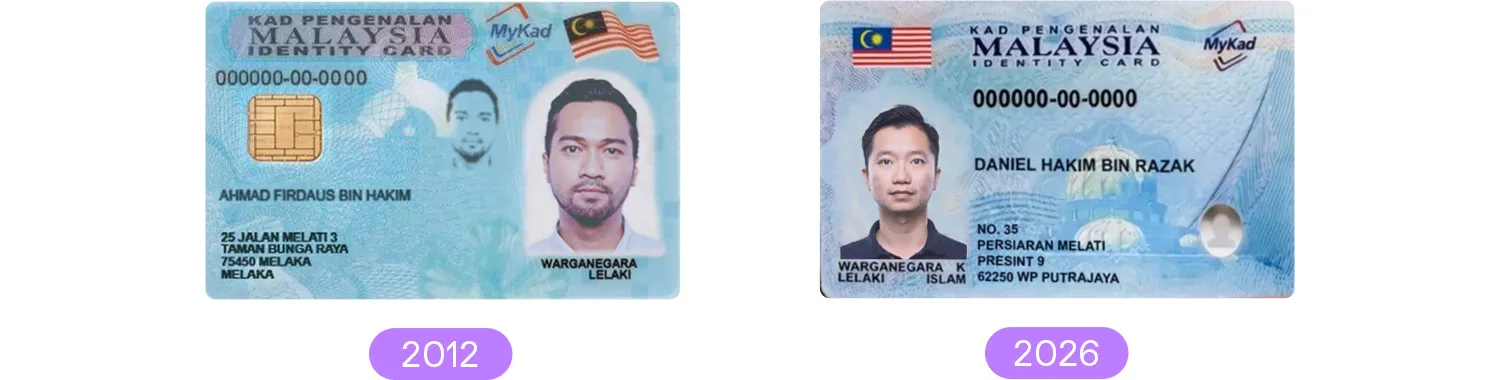
Around 24 million MyKad cards were in circulation by the release date of the new Malaysian ID card series, so the 2026 redesign will coexist with the previous generation rather than replace it overnight.
Malaysia has a family of look-alike ID cards
MyKad — for Malaysian citizens
MyPR — for permanent residents
MyKAS — for temporary residents
MyTentera — for active members of the Malaysian Armed Forces
These ID cards share a similar format but differ in color, designation, and some status-specific data. MyKAS, for example, includes an expiry date because it is issued to temporary residents, while MyPR identifies permanent resident status. MyTentera uses its own military designation and visual markers.
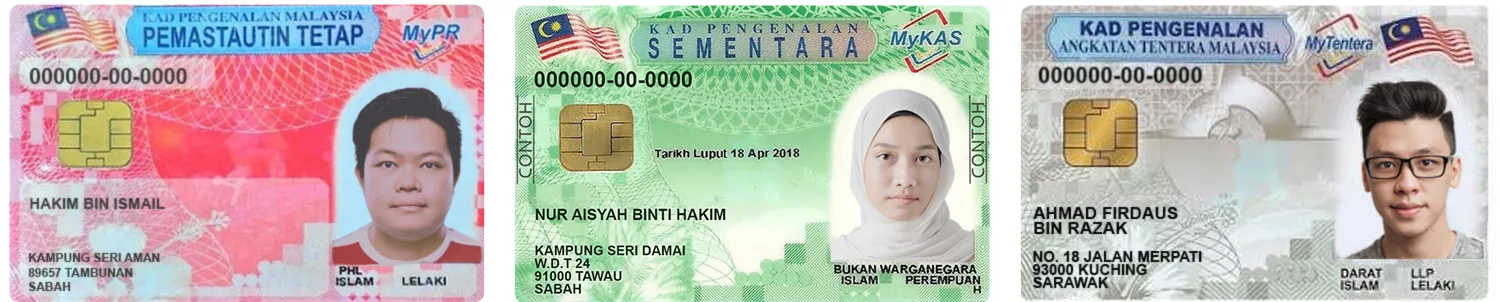
Malaysia’s card landscape also includes immigration IDs — iKad cards. Unlike MyKad-family cards, iKad cards reflect immigration status.
Malaysia moved driver’s licenses online (but kept the physical cards, too)
Malaysia introduced its digital driving license, e-LMM, through the MyJPJ app in 2023. For many drivers, it has become the primary way to present their license information — for holders of a competent driving license (CDL) and private vehicle owners, carrying the physical card is no longer mandatory.
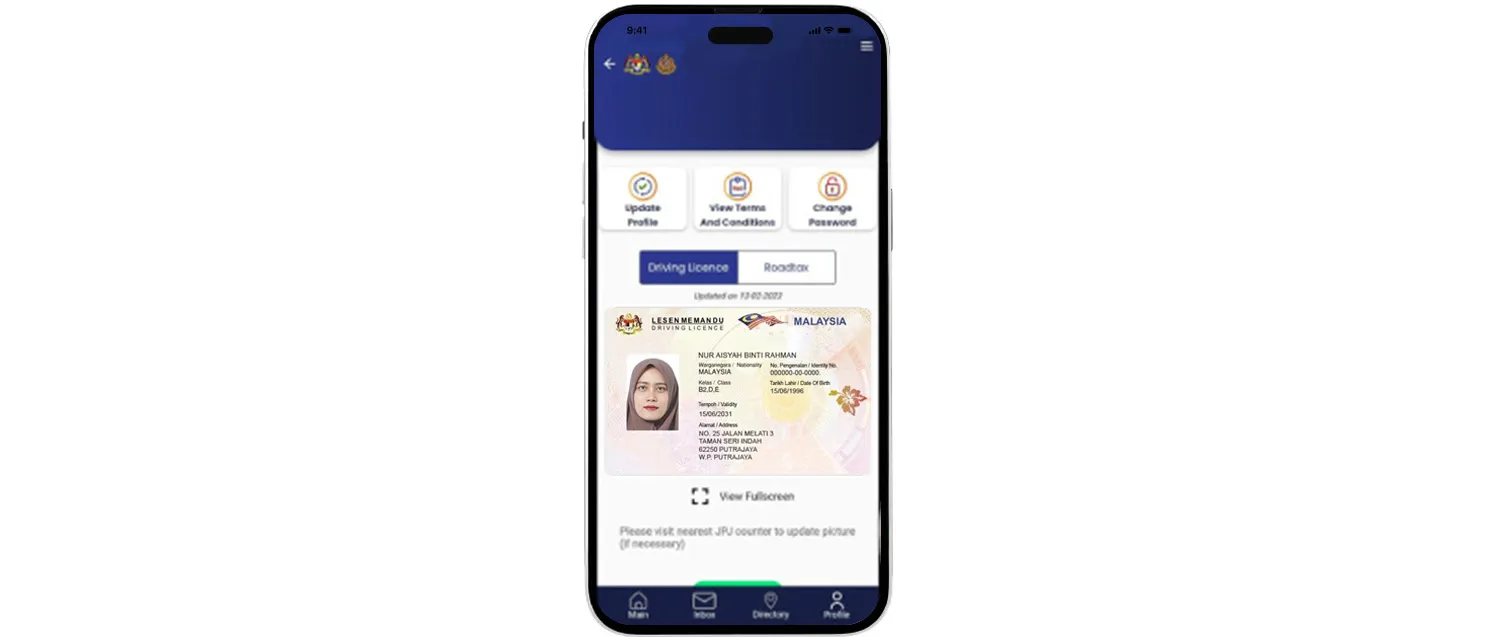
The digital driver’s licenses are domestic-only. They are valid within Malaysia, but drivers will need a physical license for driving abroad.
At the same time, Malaysia has continued updating the physical document. A redesigned driving license was introduced in 2025, so the country isn’t simply replacing cards with an app. Physical and digital credentials now coexist, with the format used depending on the holder and situation.
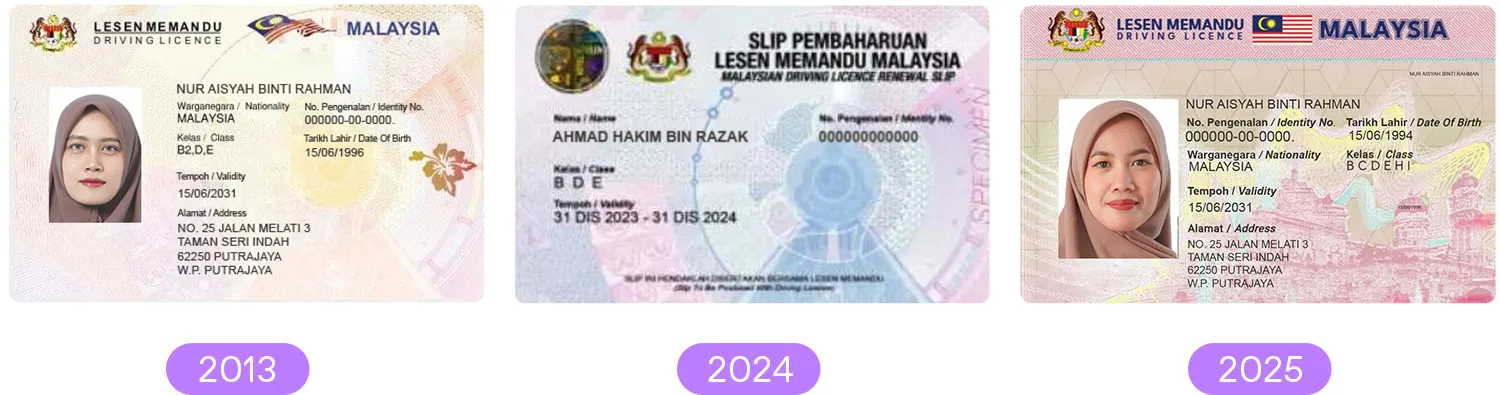
Earlier Malaysian driver’s licenses featured the floral motif on both sides; in the latest design, it appears only on the reverse.
How to process Malaysian ID documents effectively
Regula supports 147 Malaysian document templates, including passports, national ID cards, driver’s licenses, and their current and legacy series.
The database covers 9 passport generations, 5 MyKad family card types, MyKid for children, and 7 driver’s license designs. The latest 2026 passport and MyKad are already included.
Malaysian documents are handled within the same global reference base that Regula uses for identity documents from around the world.
Not sure whether the documents you see in practice are covered? Send us a sample list, and we’ll help you check.